







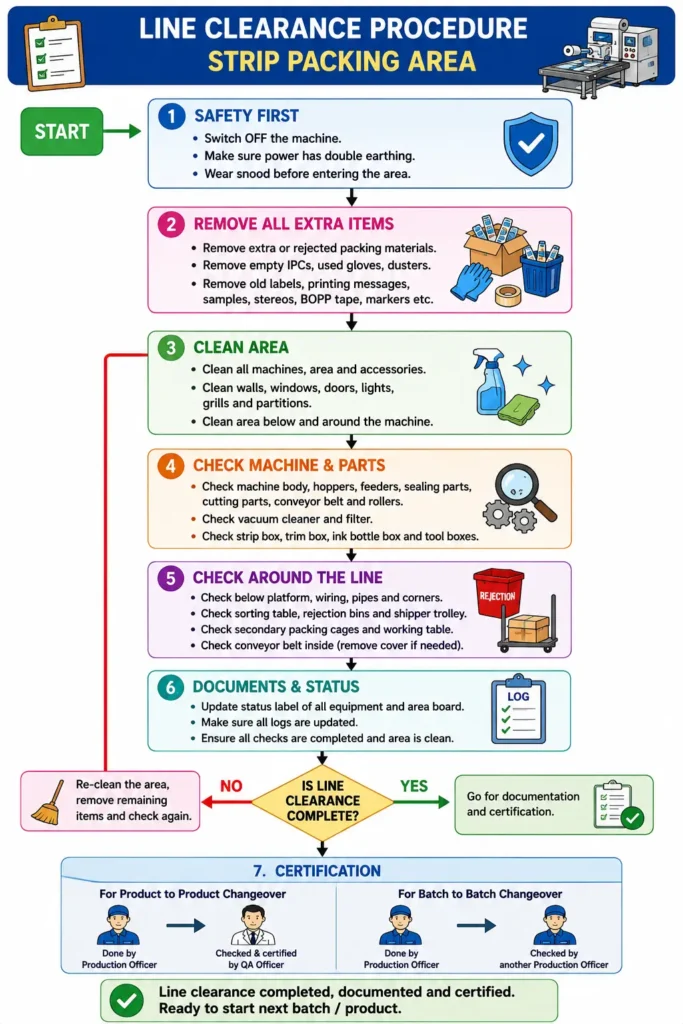
This SOP explains the line clearance procedure for the strip packing area and related equipment. It is used during batch-to-batch and product-to-product changeovers to make sure no material, product, document, or residue from the previous batch remains on the packing line. The procedure includes removal of rejected and excess packing materials, used gloves, dusters, labels, stereos, samples, and previous printing messages. Machines, conveyors, hoppers, feeding channels, sealing rollers, cutting parts, rejection bins, vacuum cleaners, checkweighers, and surrounding areas must be checked and cleaned properly. Equipment status labels, area status boards, and logbooks must also be updated. For product changeover, line clearance is performed by a Production Officer and certified by Quality Assurance. For batch changeover, it is checked by a second Production Officer. The SOP also provides detailed checklists for assembled and disassembled machine conditions to ensure proper verification and documentation before starting the next packing activity safely and correctly.
Impact Assessment
This SOP will have a positive impact on the strip packing area by improving cleanliness, safety, and control during batch-to-batch and product-to-product changeovers. It helps ensure that no tablet, capsule, packing material, label, stereo, sample, document, or residue from the previous batch remains on the line. Proper checking of machines, conveyors, hoppers, sealing parts, rejection bins, vacuum cleaners, working tables, and surrounding areas will reduce the risk of mix-up and cross-contamination. Updating equipment status labels, area status boards, and logbooks will improve traceability and documentation. The defined responsibility of Production and Quality Assurance staff will ensure that line clearance is properly performed, checked, and certified before starting the next batch. The use of detailed checklists for assembled and disassembled conditions will make verification easier and more consistent. Overall, this SOP will support safe packing operations, GMP compliance, better documentation, and reliable product quality while reducing errors during routine packing activities.
Questions & Answers
1. What is the purpose of this SOP?
The purpose is to explain the procedure for line clearance of the strip packing area and its equipment.
2. When is line clearance required?
Line clearance is required during batch-to-batch changeover and product-to-product changeover.
3. Who is responsible for line clearance?
Packing staff and Quality Assurance staff are responsible for this activity.
4. What safety precautions should be followed before starting line clearance?
The machine should be switched OFF, electrical supply should have double earthing, and a snood should be worn before entering the cubicle.
5. What should be removed from the previous batch?
Excess or rejected packing materials, empty IPCs, used gloves, dusters, samples, old labels, stereos, and other previous batch materials should be removed.
6. What parts of the machine should be checked?
The machine body, change parts, hopper, feeding channel, sealing heaters, conveyor, rollers, NFD head, vacuum cleaner, cutting parts, and collection boxes should be checked for previous product residue.
7. Why are status labels and logbooks checked?
They are checked to make sure equipment status, area status, and usage records are properly updated.
8. Who certifies line clearance during product-to-product changeover?
A Production Officer performs the line clearance, and a Quality Assurance Officer certifies it.
9. Who checks line clearance during batch-to-batch changeover?
A Production Officer performs the activity, and a second Production Officer checks it.
10. Why is line clearance important?
It helps ensure that no material, product, document, or residue from the previous batch remains before the next batch or product starts. This reduces the risk of mix-up and contamination.