







1. Introduction to Batch Packing Record (BPR) of Iron, Cyanocobalamin, Sorbitol, Folic Acid with Zinc Syrup
The Batch Packing Record (BPR) of Iron, Cyanocobalamin, Sorbitol, Folic Acid with Zinc Syrup is an essential pharmaceutical document designed to ensure systematic documentation, traceability, and compliance with Good Manufacturing Practices (GMP) during pharmaceutical packaging operations. This formulation contains Ferric Ammonium Citrate, Cyanocobalamin (Vitamin B12), Folic Acid (Vitamin B9), Zinc Sulphate, and Sorbitol, which collectively contribute to nutritional supplementation and support the management of certain vitamin and mineral deficiencies. The BPR provides comprehensive information regarding batch identification, packaging material dispensing, line clearance, filling, sealing, labeling, coding, and final packing activities. It also establishes documentation requirements for material reconciliation, in-process quality checks, packaging equipment verification, and finished product accountability. Critical packaging parameters, including fill volume, container integrity, cap sealing, labeling accuracy, batch coding, and packaging material reconciliation, must be monitored to maintain consistent product quality. The Production and Quality Assurance departments are responsible for verifying packaging activities and ensuring that established procedures are followed. Proper implementation of the BPR helps prevent packaging errors, product mix-ups, contamination, and labeling discrepancies while maintaining regulatory compliance, data integrity, and complete batch traceability. This document serves as an important reference for batch review, quality assurance, product release, and regulatory inspections.
Skip to PDF content2. Description of Batch Packing Flow Diagram for Iron, Cyanocobalamin, Sorbitol, Folic Acid with Zinc Syrup (BPR)
The Batch Packing Flow Diagram of Iron, Cyanocobalamin, Sorbitol, Folic Acid with Zinc Syrup illustrates the systematic sequence of pharmaceutical packaging operations performed in accordance with Good Manufacturing Practices (GMP). The process ensures product quality, packaging integrity, accurate labeling, and complete batch traceability.

The packaging process begins with the receipt and verification of approved bulk syrup, followed by dispensing and checking of packaging materials against authorized specifications. Area and line clearance are performed to prevent cross-contamination, product mix-ups, and packaging errors. Clean and inspected bottles are transferred to the filling machine, where the required quantity of syrup is filled under controlled conditions. Critical parameters, including filling volume, machine speed, and container cleanliness, are monitored throughout the operation. Following filling, bottles undergo capping and sealing to ensure container closure integrity. Labeling and batch coding operations are performed with verification of product details, batch number, manufacturing date, and expiry date. The filled bottles are subsequently packed into cartons and shippers, followed by packaging material reconciliation. Finally, the Quality Assurance department reviews the completed Batch Packing Record to verify compliance, documentation accuracy, and packaging quality before authorizing the finished goods for further disposition.
3. Description of Critical Process Parameters (CPPs) and Critical Quality Attributes (CQAs) of Iron, Cyanocobalamin, Sorbitol, Folic Acid with Zinc Syrup
Critical Process Parameters (CPPs) and Critical Quality Attributes (CQAs) play an essential role in ensuring the quality, safety, consistency, and regulatory compliance of Iron, Cyanocobalamin, Sorbitol, Folic Acid with Zinc Syrup during pharmaceutical packaging operations.
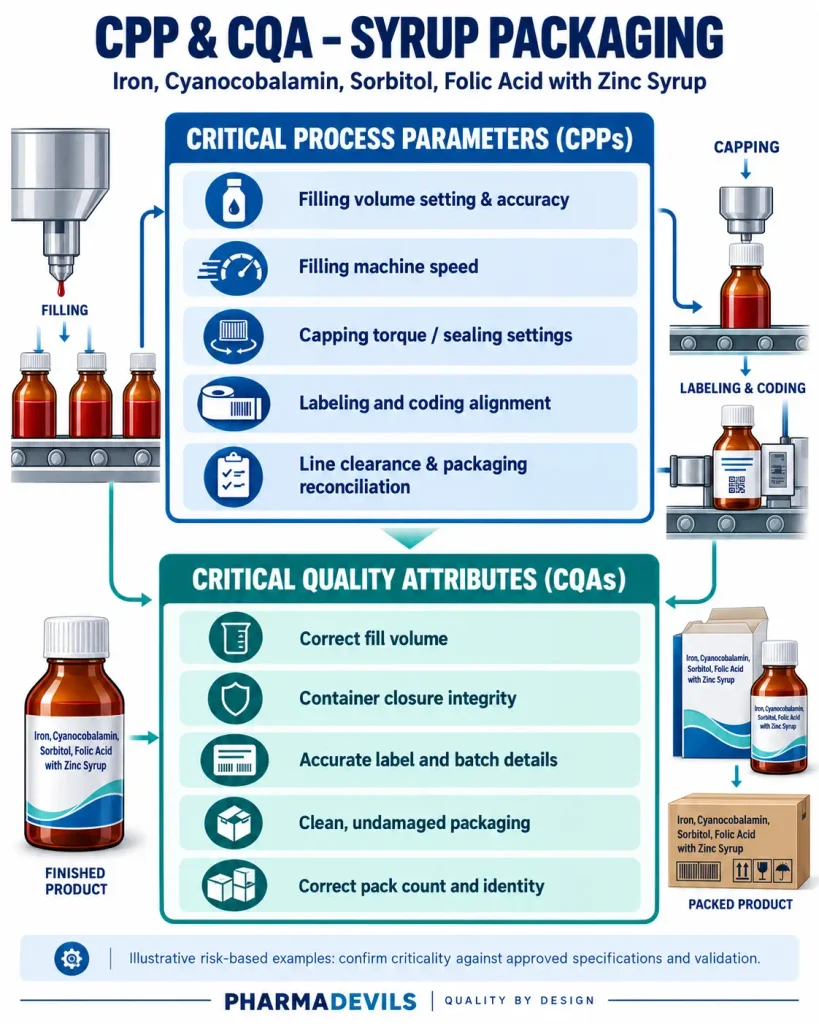
CPPs are process variables whose variability can significantly affect product quality and therefore require appropriate monitoring and control. Important packaging parameters include filling volume settings, filling machine speed, capping torque, sealing conditions, labeling accuracy, batch coding, and packaging line performance. Proper control of filling operations ensures accurate product quantity, while effective capping and sealing help maintain container closure integrity and prevent leakage or contamination. CQAs represent measurable physical, chemical, biological, or microbiological characteristics that must remain within established acceptance criteria to ensure product quality. Important packaging-related CQAs include correct fill volume, container closure integrity, accurate product identification, legible labeling, appropriate batch coding, and acceptable packaging condition. In-process quality checks, equipment verification, line clearance, and packaging material reconciliation support the consistent achievement of established quality requirements. Systematic monitoring, documentation, and verification of CPPs and CQAs strengthen GMP compliance, minimize packaging defects, support batch traceability, and ensure that finished pharmaceutical products consistently meet approved quality specifications and regulatory expectations.