






Understanding Warehouse in Pharma
A pharmaceutical warehouse is much more than a storage space. It is a GMP-controlled area where medicines, raw materials, packaging components, and intermediates are received, stored, protected, and issued in a way that preserves their quality, safety, and traceability.
1. Role of the Warehouse in Pharma
The warehouse links suppliers, production, quality, and distribution. Its main functions are:
- Receipt and verification of incoming materials
- Quarantine, sampling, and release by Quality Unit
- Controlled storage under defined environmental conditions (e.g. 2–8°C, 15–25°C)
- Issuance of materials to production as per FIFO/FEFO
- Storage of finished goods prior to dispatch
- Documentation and traceability of every movement and status change
Any failure at warehouse level can lead to mix-ups, cross-contamination, degradation, or mislabeling, directly impacting patient safety and regulatory compliance.
2. Types of Areas in a Pharma Warehouse
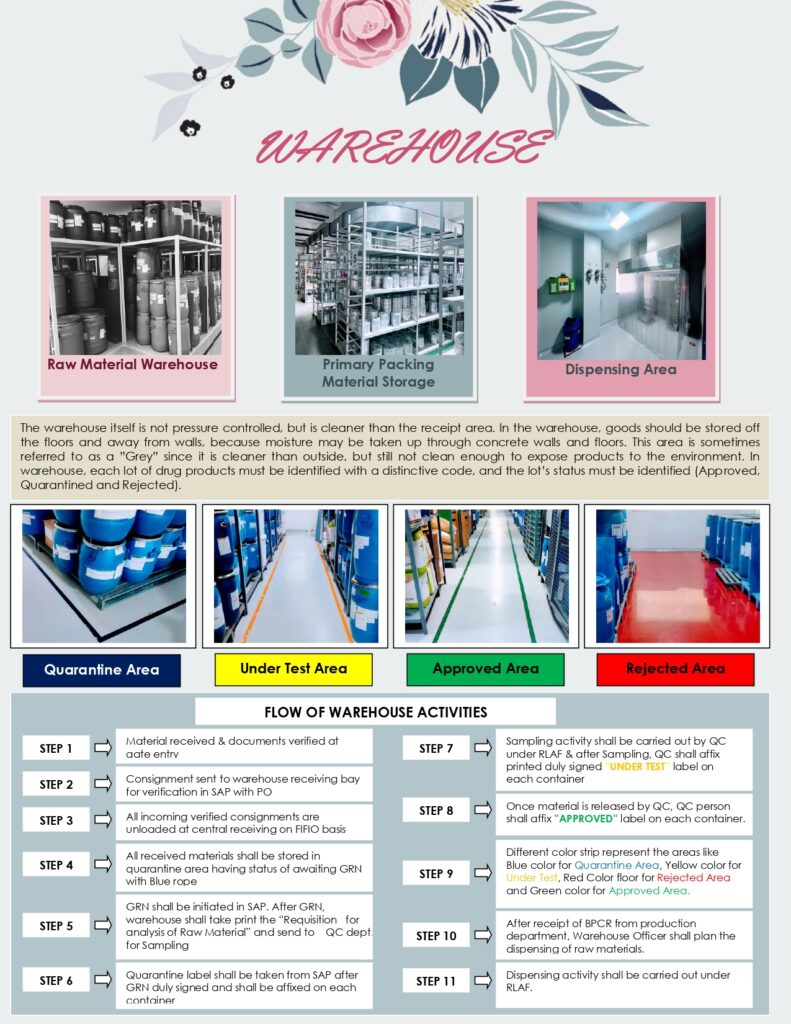
A typical pharmaceutical warehouse is divided into clearly defined, segregated zones:
- Material Receipt Area – unloading, preliminary checks, and identification
- Quarantine Area – materials kept “On Hold” until QC/QA release
- Approved / Released Area – only materials passed by QA are stored here
- Rejected / To Be Returned Area – physically segregated and clearly labeled
- Cold Room / Refrigerated Storage – for temperature-sensitive products
- Controlled Drugs / High-Value Area – with restricted access and extra security
- Dispensing / Issuance Area – line clearance, weighing, and issuing to shop floor
Clear material flow (unidirectional) and personnel movement control reduce the risk of mix-ups and contamination.
3. GMP and GDP Requirements
Warehouse operations in pharma must comply with GMP (Good Manufacturing Practices) and GDP (Good Distribution Practices). Key expectations include:
- Clean, dry, pest-free, and structurally sound facility
- Qualified temperature and, where needed, humidity control
- Continuous monitoring with alarms and periodic mapping
- Status labeling (Quarantine / Approved / Rejected / Returned / Under Test)
- Use of Validated Computerized Systems for inventory (ERP/WMS)
- SOP-driven activities for receiving, sampling, storage, and dispatch
- Full traceability and documentation for all materials and lots
4. Material and Inventory Control
To maintain control and avoid mix-ups, warehouses typically implement:
- Unique identification and coding (GRN, material code, batch/lot number)
- FIFO/FEFO (First In First Out / First Expiry First Out)
- Segregation by product, strength, and dosage form
- Regular stock reconciliation and investigation of discrepancies
- Controlled returns, recalls, and destruction procedures
5. Common Risks and How Warehousing Prevents Them
A well-designed warehouse helps mitigate risks like:
- Degradation due to temperature/humidity excursions
- Mix-ups of similar packs or strengths
- Cross-contamination from poor segregation or housekeeping
- Theft or diversion of high-value or controlled drugs
- Data gaps from poor documentation or manual errors
By enforcing good storage practices, robust documentation, and trained staff, the warehouse becomes a critical quality gate rather than a passive storage area.