Chemical SOP
Microbiology SOP
Warehouse SOP
Manufacturing SOP
Information technology SOP
admin

admin

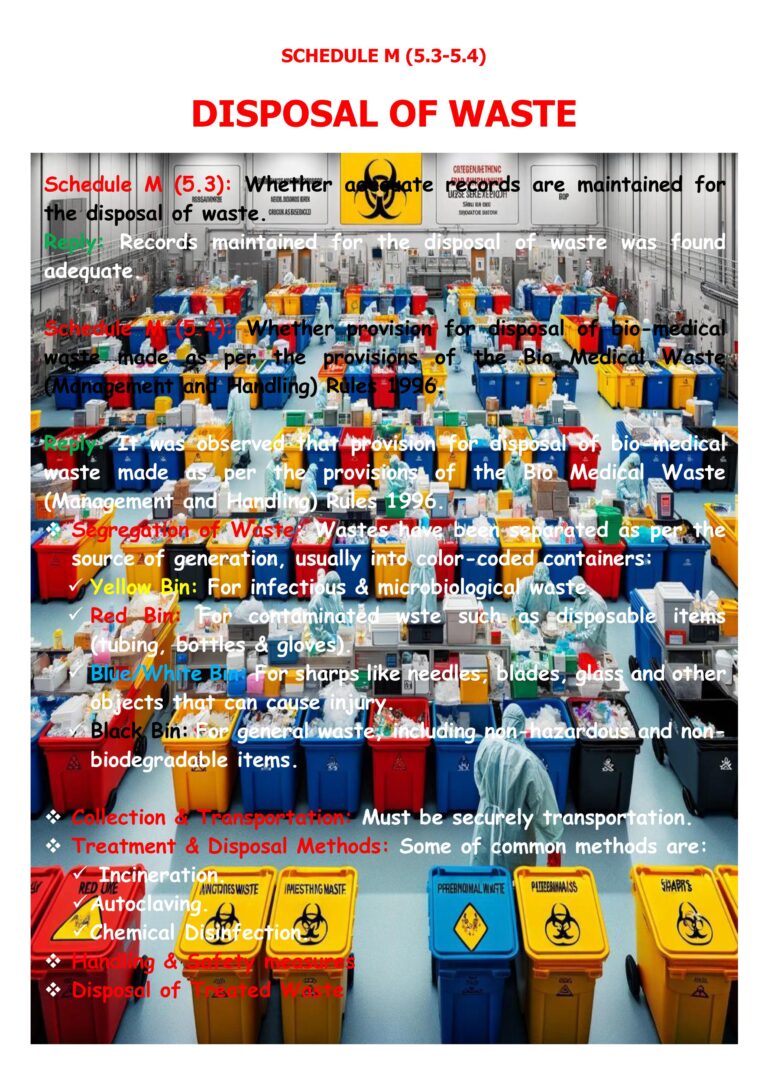
RISK BASED INSPECTION (SCHEDULE M -POINT (5.3-5.4)

RISK BASED INSPECTION (SCHEDULE M -POINT (5.3-5.4)

Risk-Based Inspection (RBI) is a GMP approach where regulators adjust inspection frequency, depth and scope based on the estimated risk to patients and product quality (and can widen scope when risk signals appear). ECA Academy In Schedule M, Point 5.3–5.4…

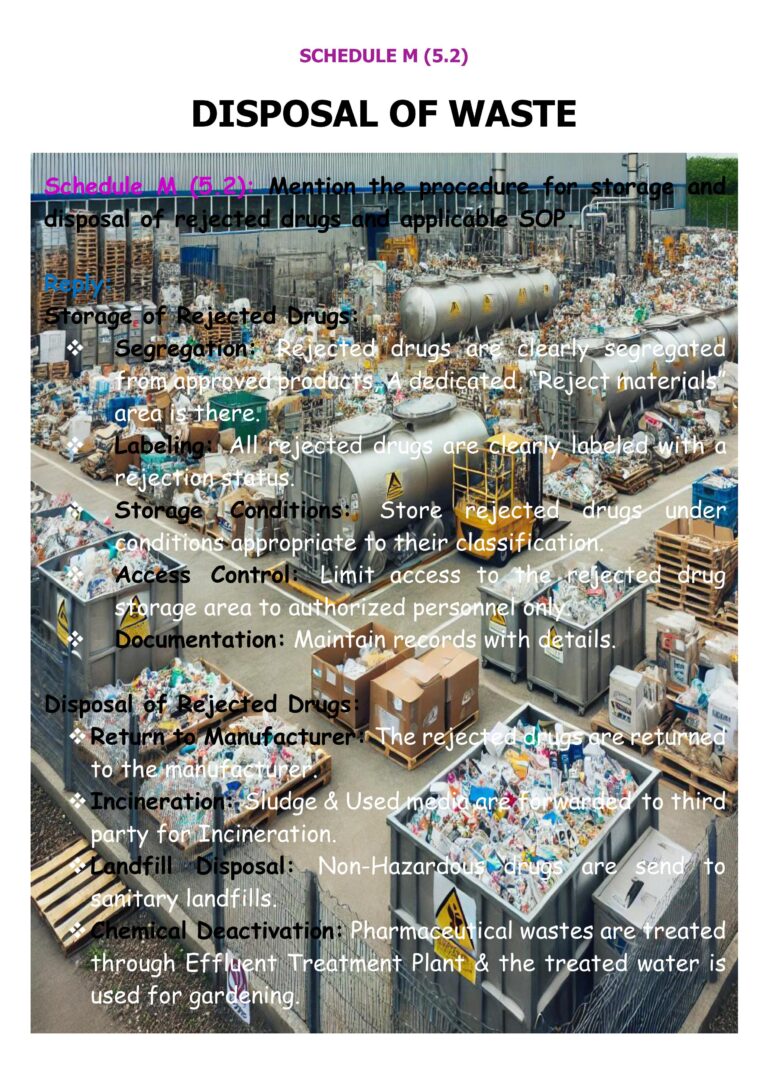
RISK BASED INSPECTION (SCHEDULE M -POINT (5.2)

RISK BASED INSPECTION (SCHEDULE M -POINT (5.2)

Risk-Based Inspection (RBI) means the inspector allocates time, depth and sampling to the systems that create the highest patient/product-quality risk and adjusts scope based on risk signals. Schedule M – Point 5.2 (Quality Control Laboratory Design) Schedule M 5.2 requires…

RISK BASED INSPECTION (SCHEDULE M -POINT (5.1)

RISK BASED INSPECTION (SCHEDULE M -POINT (5.1)

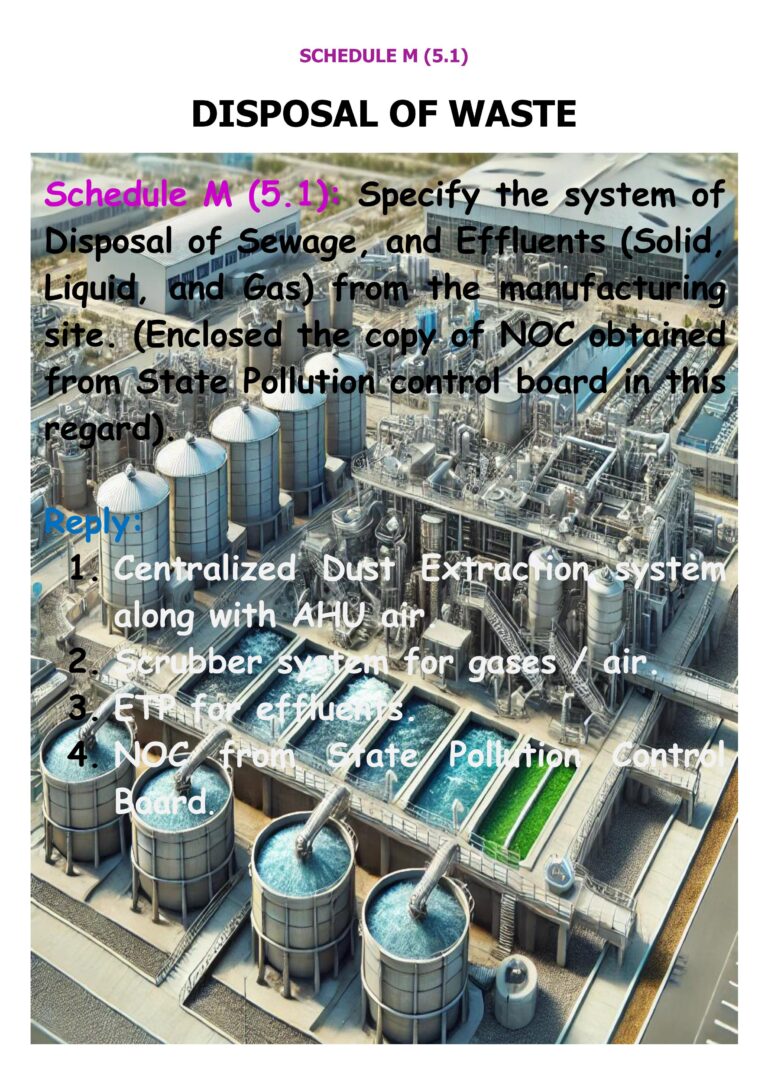
In a risk-based inspection (RBI), Schedule M point 5.1 (Disposal of waste / environmental protection) is treated as a high-impact compliance and contamination-control checkpoint, because poor waste handling can create cross-contamination risks, attract pests, generate mix-ups (rejected/returned materials), and trigger…

RISK BASED INSPECTION (SCHEDULE M -POINT (4.30-4.31)

RISK BASED INSPECTION (SCHEDULE M -POINT (4.30-4.31)

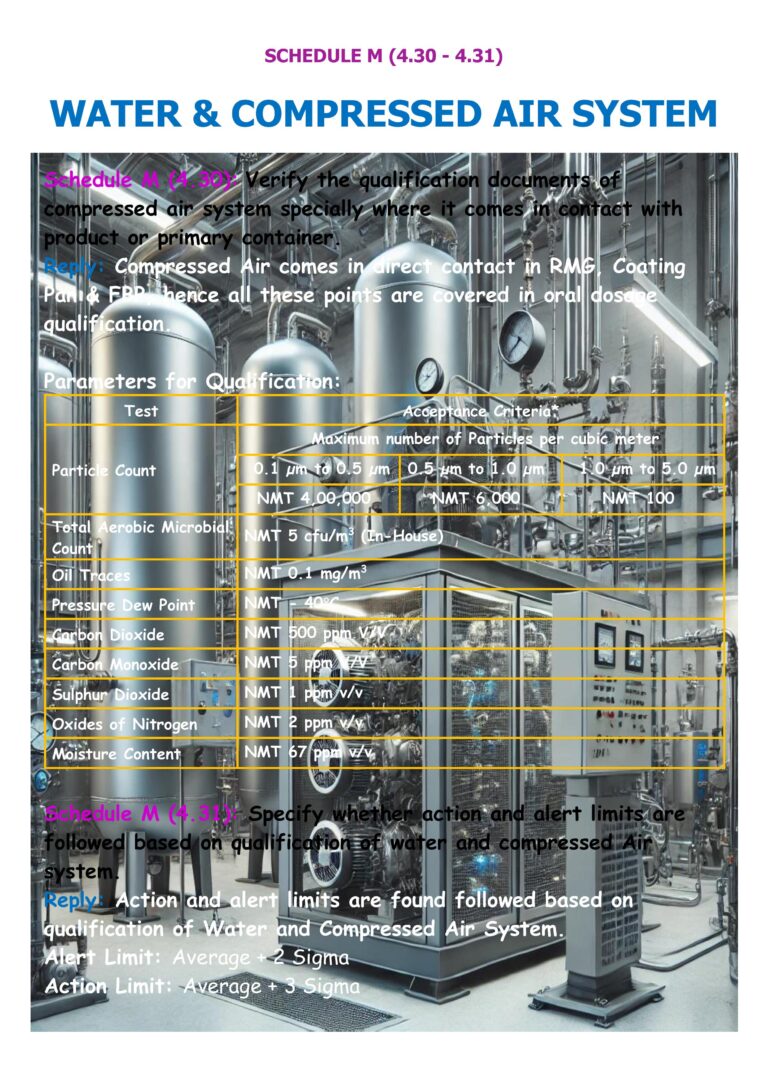
In risk-based inspection (RBI) aligned to Schedule M expectations for utilities, points 4.30–4.31 in the CDSCO RBI checklist target a high-impact risk source: compressed air (and other process gases) that contacts product or primary containers. Even when “invisible”, contaminated air…

RISK BASED INSPECTION (SCHEDULE M -POINT (4.29)

RISK BASED INSPECTION (SCHEDULE M -POINT (4.29)

In a risk-based inspection (RBI), Schedule M point 4.29 expects you to “specify the system in place for the compressed gases / air used in the facility.” CDSCO RBI treats this as high risk because compressed air/gases can introduce oil,…

RISK BASED INSPECTION (SCHEDULE M -POINT (4.27-4.28)

RISK BASED INSPECTION (SCHEDULE M -POINT (4.27-4.28)

Risk-Based Inspection (RBI) uses quality risk management to decide the frequency, depth and breadth of inspections based on risk to patients and product quality. CDSCO In the CDSCO RBI checklist for sterile utilities, Schedule M point 4.27 and the linked…

RISK BASED INSPECTION (SCHEDULE M -POINT (4.26)

RISK BASED INSPECTION (SCHEDULE M -POINT (4.26)

Risk Based Inspection (RBI) – Schedule M Point 4.26 asks the firm to “Specify the arrangement for preparation of pure steam & its use.” CDSCO In RBI, this is treated as a critical utility check because pure steam is commonly…

RISK BASED INSPECTION (SCHEDULE M -POINT (4.18-4.25)

RISK BASED INSPECTION (SCHEDULE M -POINT (4.18-4.25)

Risk-Based Inspection (RBI) under India’s CDSCO approach uses Quality Risk Management to decide the frequency, depth and breadth of inspection based on the site’s risk to patients/product quality, and then applies a structured checklist (Schedule M + WHO + PIC/S…

RISK BASED INSPECTION (SCHEDULE M -POINT (4.17)

RISK BASED INSPECTION (SCHEDULE M -POINT (4.17)

In a risk-based inspection (RBI), Schedule M – point 4.17 (as captured in the CDSCO RBI checklist under water systems) is treated as a critical utility control because Water for Injection (WFI) can rapidly become a contamination source if storage/distribution…

RISK BASED INSPECTION (SCHEDULE M -POINT (4.16)

RISK BASED INSPECTION (SCHEDULE M -POINT (4.16)

Risk Based Inspection (RBI) – Schedule M Point 4.16 focuses on one core question in sterile manufacturing: Is Water for Injection (WFI) actually being used where Schedule M expects it, and is the use controlled and documented? In the CDSCO…

error: Content is protected !!