






1. INTRODUCTION – CETIRIZINE HYDROCHLORIDE IP SYRUP:
The Batch Packing Record (BPR) of Cetirizine Hydrochloride IP Syrup is an essential pharmaceutical documentation system designed to ensure that all filling, sealing, labeling, packing, inspection, and reconciliation activities are performed systematically in accordance with approved procedures and Good Manufacturing Practices (GMP). Cetirizine Hydrochloride IP Syrup, marketed in the provided record as Alergin Syrup, contains Cetirizine Hydrochloride IP 5 mg per 5 mL in a flavoured syrup base. The product is packed in 30 mL amber PET bottles with polypropylene (PP) caps to maintain packaging integrity and protect product quality. The BPR provides detailed documentation of packing material dispensing, line clearance, bottle washing, filling operations, sealing verification, labeling, in-process quality checks, and final packing activities. Critical packing controls include verification of bottle cleanliness, filling volume accuracy, sealing quality, cap perforation, leak testing, labeling correctness, and overprinted batch information. These checks help prevent product mix-ups, contamination, leakage, incorrect labeling, and packaging defects. The document also includes rejection analysis, packing material reconciliation, yield calculation, sample accountability, finished product transfer, and destruction records for rejected materials. Production personnel perform and document packing activities, while Quality Assurance personnel verify critical operations and compliance with approved specifications. Proper implementation of the Cetirizine Hydrochloride IP Syrup BPR ensures complete batch traceability, data integrity, accountability, consistent packaging quality, and effective review before finished product release. It also supports regulatory inspection readiness and continuous improvement of pharmaceutical packaging operations.
Skip to PDF content2. FLOW DIAGRAM – BATCH PACKING RECORD (CETIRIZINE HYDROCHLORIDE IP SYRUP:
The Batch Packing Record (BPR) of Cetirizine Hydrochloride IP Syrup flow diagram illustrates the systematic sequence of pharmaceutical filling and packing operations in accordance with Good Manufacturing Practices (GMP). The process begins with the receipt of approved bulk syrup from manufacturing, followed by line clearance, equipment cleaning, and dispensing of approved packaging materials. Cleaned bottles are transferred for syrup filling, followed by cap sealing and in-process quality checks.
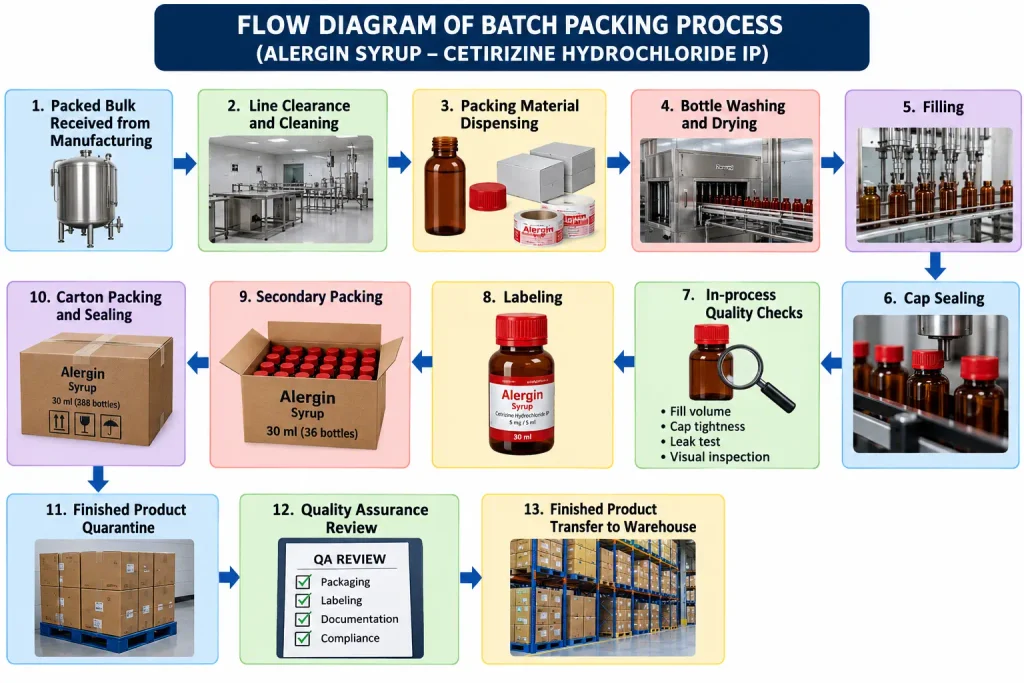
Critical inspections include fill volume verification, sealing quality, cap perforation, leakage testing, visual inspection, and labeling accuracy. Subsequently, properly labeled bottles undergo secondary packing, carton packing, and shipper sealing. The finished product is transferred to the designated storage area, where batch documentation, packing material reconciliation, rejection records, and packing yield are reviewed. Quality Assurance verifies the completed BPR and relevant quality records before authorizing product release. This systematic workflow ensures product quality, packaging integrity, batch traceability, regulatory compliance, and patient safety.
3. CETIRIZINE HYDROCHLORIDE IP SYRUP – CPP AND CQA:
The Batch Packing Record (BPR) of Cetirizine Hydrochloride IP Syrup includes essential process controls and quality checks to ensure consistent packaging quality, product integrity, and compliance with Good Manufacturing Practices (GMP).
Critical Process Parameters (CPPs) are process variables identified through risk assessment that require appropriate control to prevent adverse effects on product quality. Important packing parameters include bottle washing temperature and jet pressure, filling machine settings, fill volume, sealing machine settings, cap perforation, labeling accuracy, and leak testing.
Critical Quality Attributes (CQAs) are measurable product characteristics that must remain within established acceptance criteria. Relevant quality attributes include correct fill volume, packaging integrity, leak-free sealing, appropriate cap functionality, correct product identification, accurate labeling, and freedom from visible contamination.
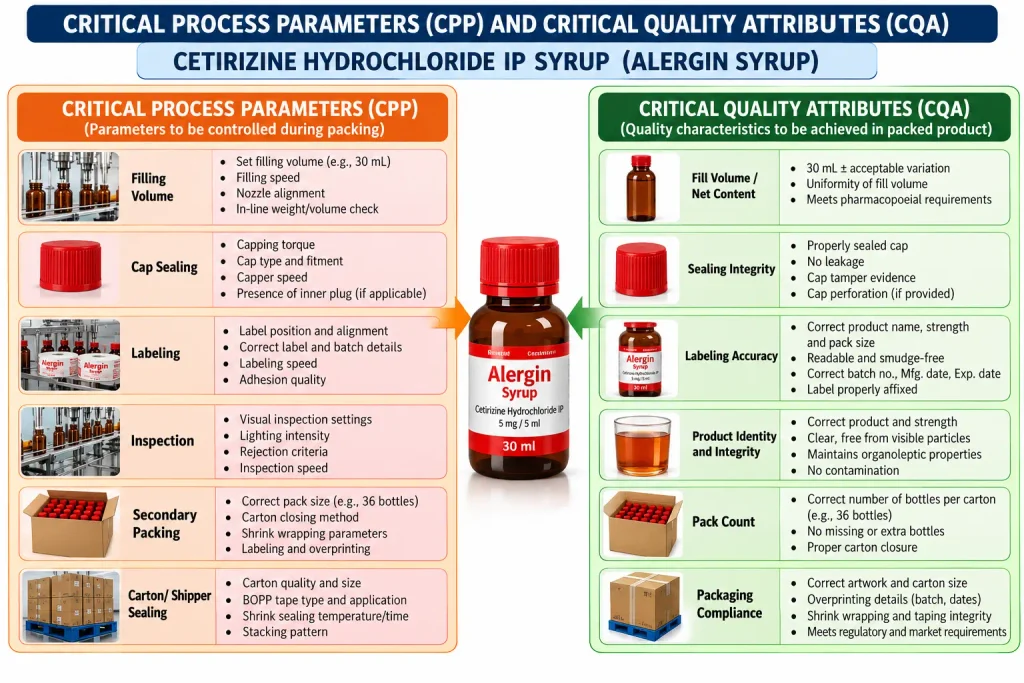
The BPR specifies hourly filling and sealing checks, periodic leak testing, PP cap inspection, packing line verification, rejection analysis, and material reconciliation. Systematic monitoring, documentation, and Quality Assurance verification help maintain batch consistency, product traceability, packaging integrity, regulatory compliance, and patient safety. The illustrated CPPs and CQAs are representative; their formal classification and acceptance criteria must be supported by approved specifications and documented quality risk assessments.