






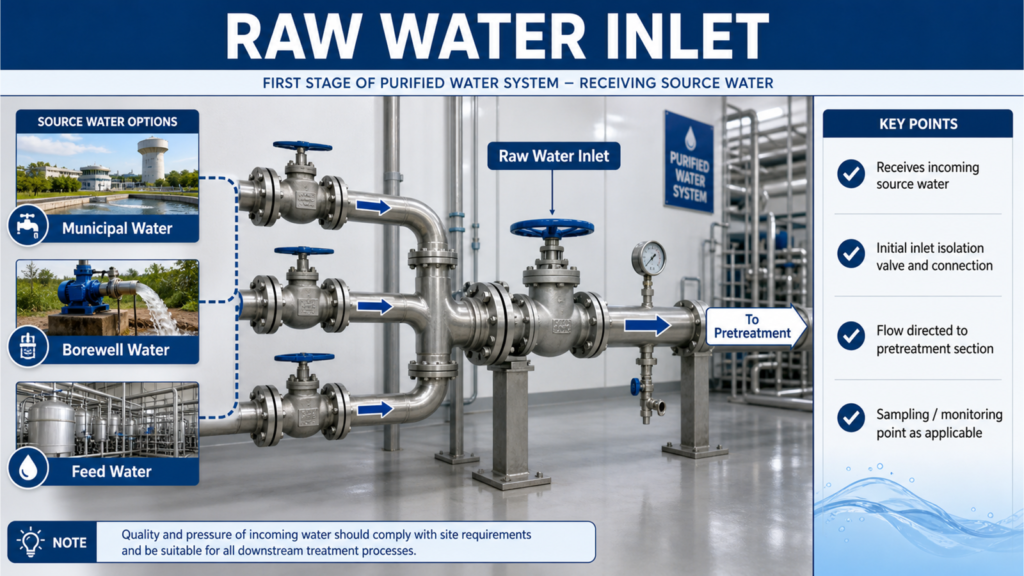
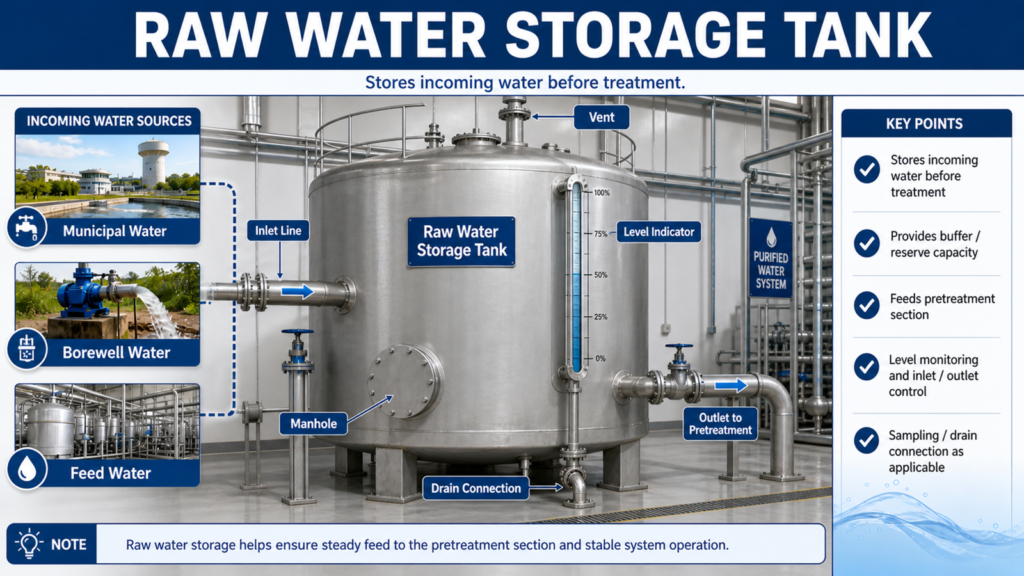
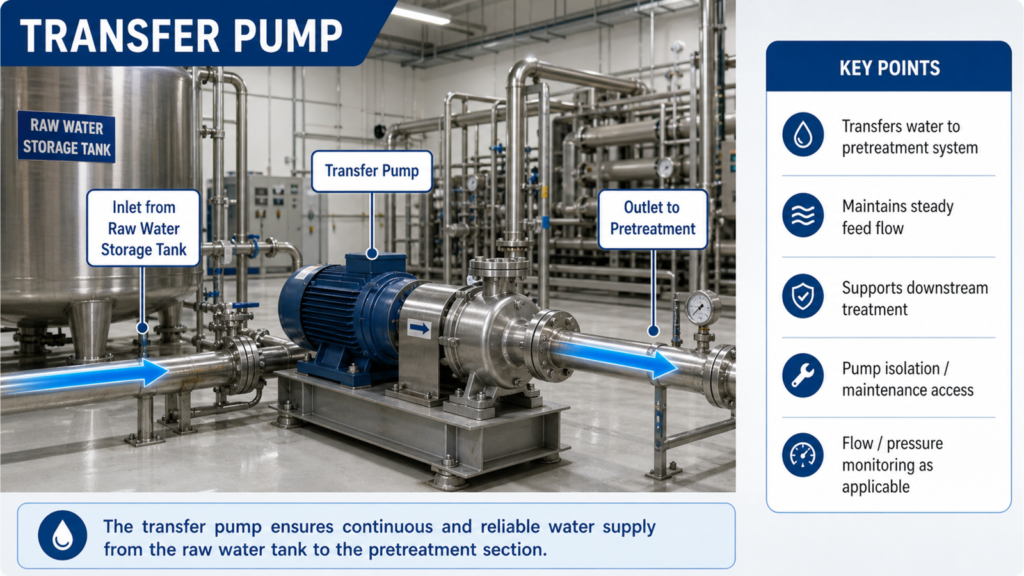
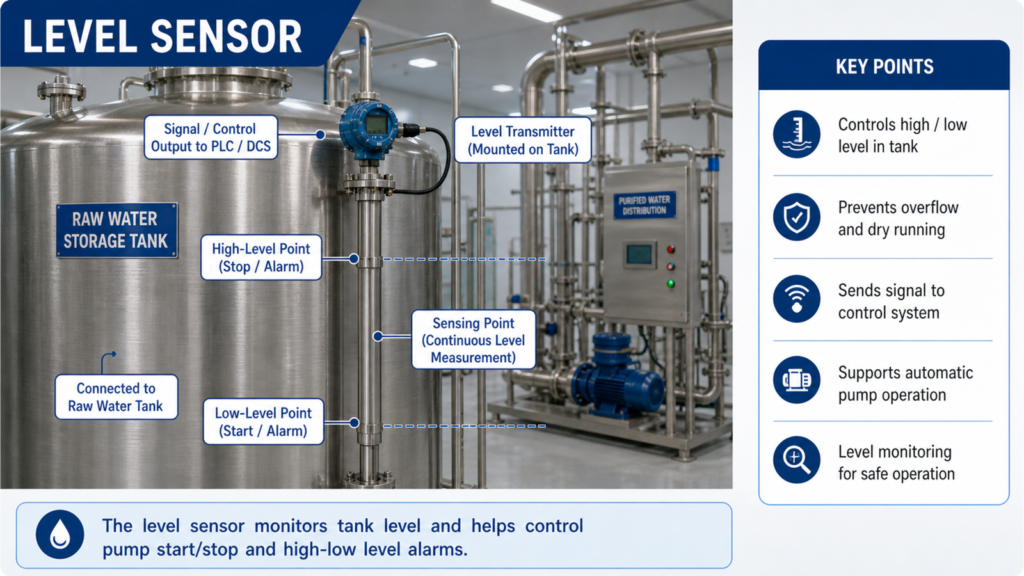
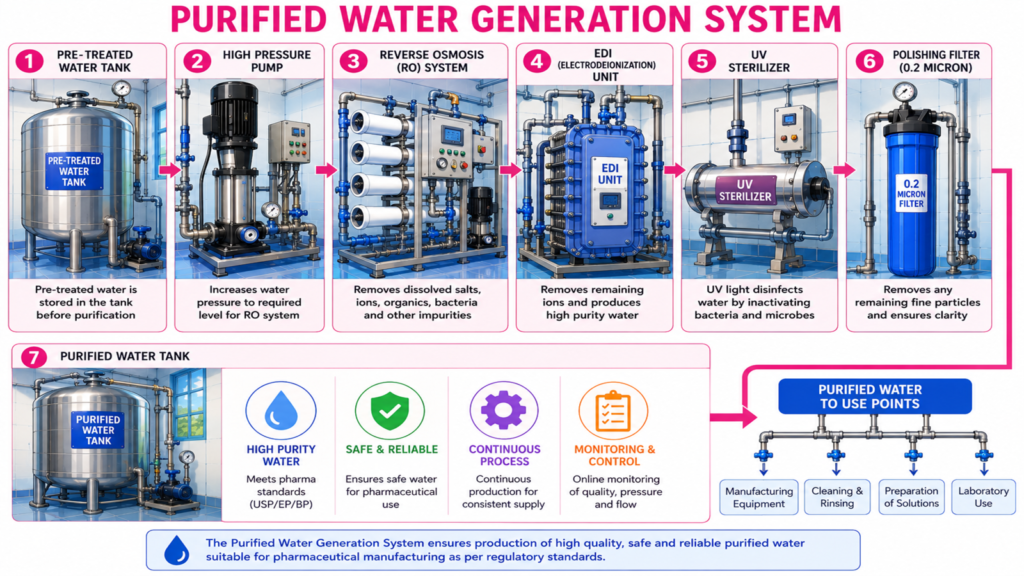
A Purified Water System is an essential utility used in pharmaceutical, biotechnology, healthcare, laboratory, food, and beverage industries to produce high-quality purified water. The system removes suspended particles, dissolved salts, microorganisms, organic contaminants, and unwanted odors from raw water through multiple purification stages. Each component in the system plays an important role in maintaining water purity, operational efficiency, and regulatory compliance.
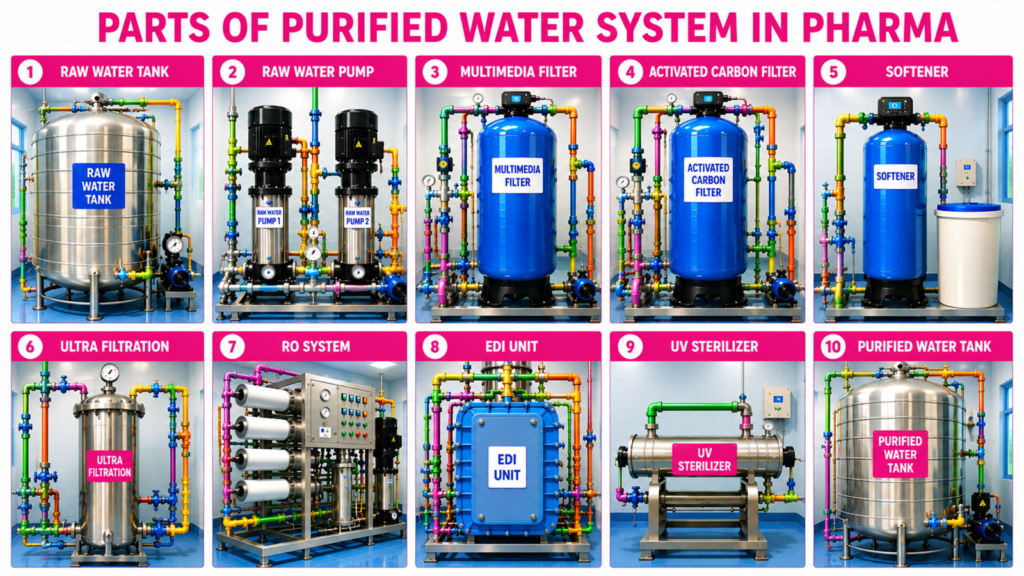
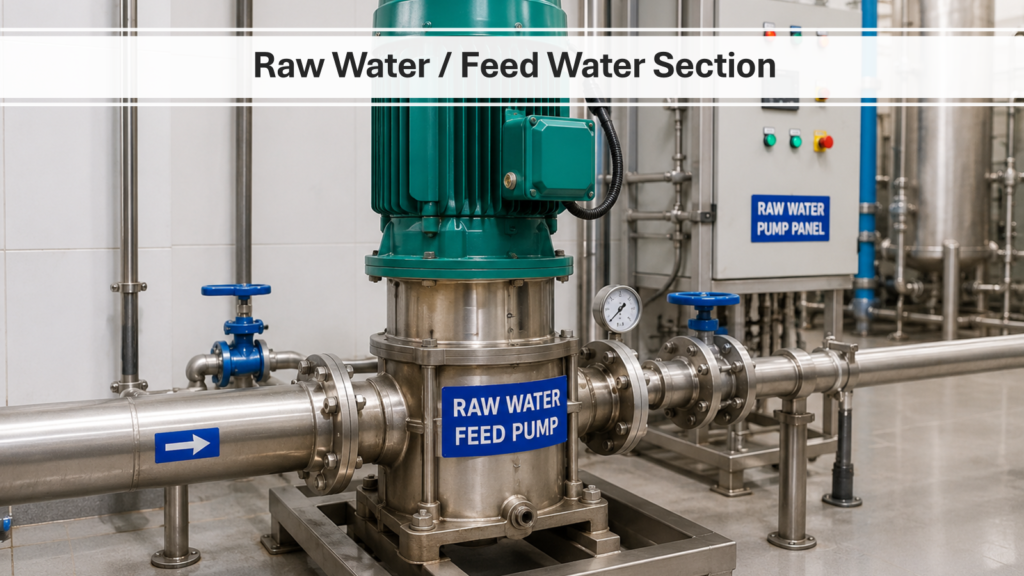
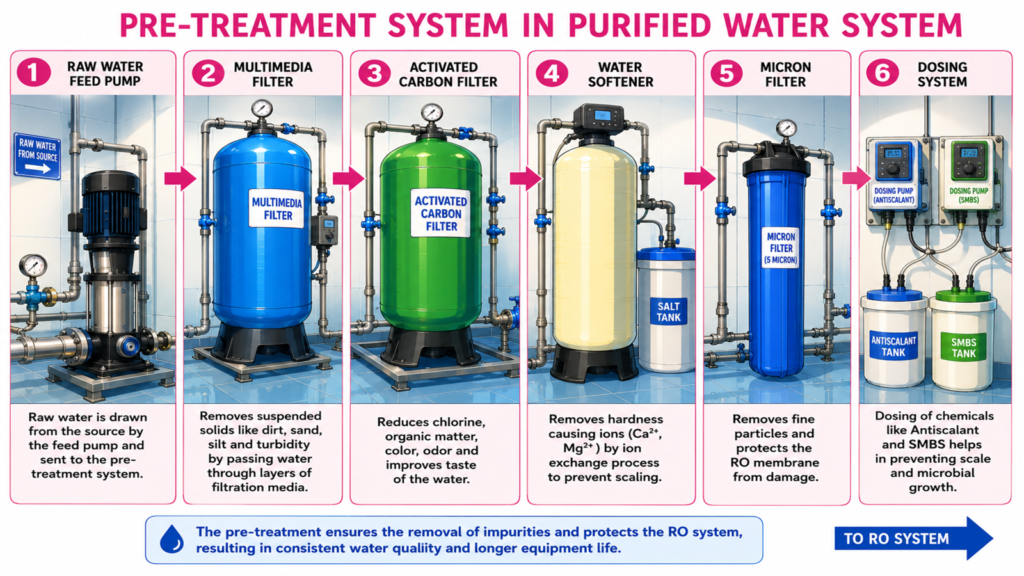
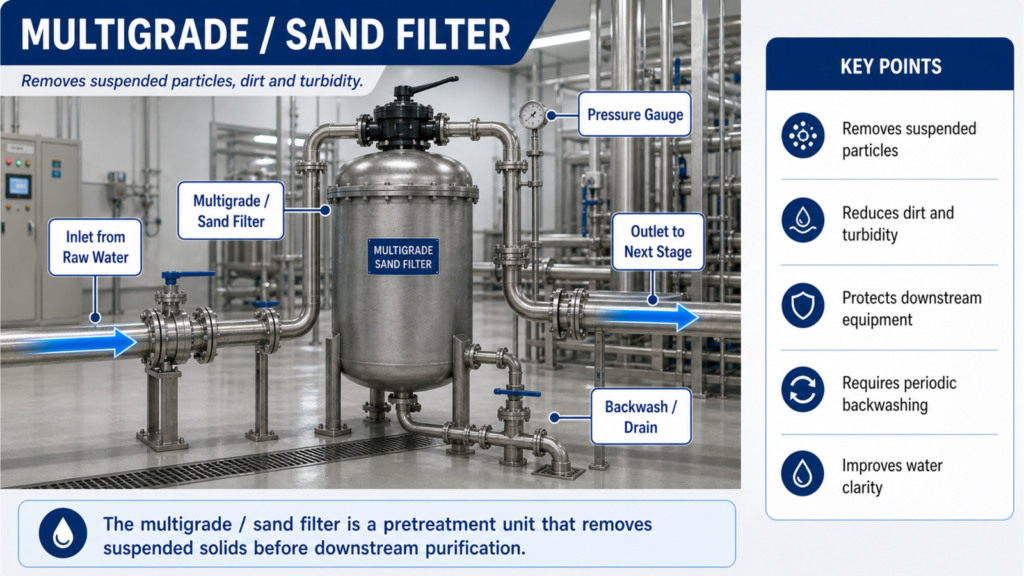
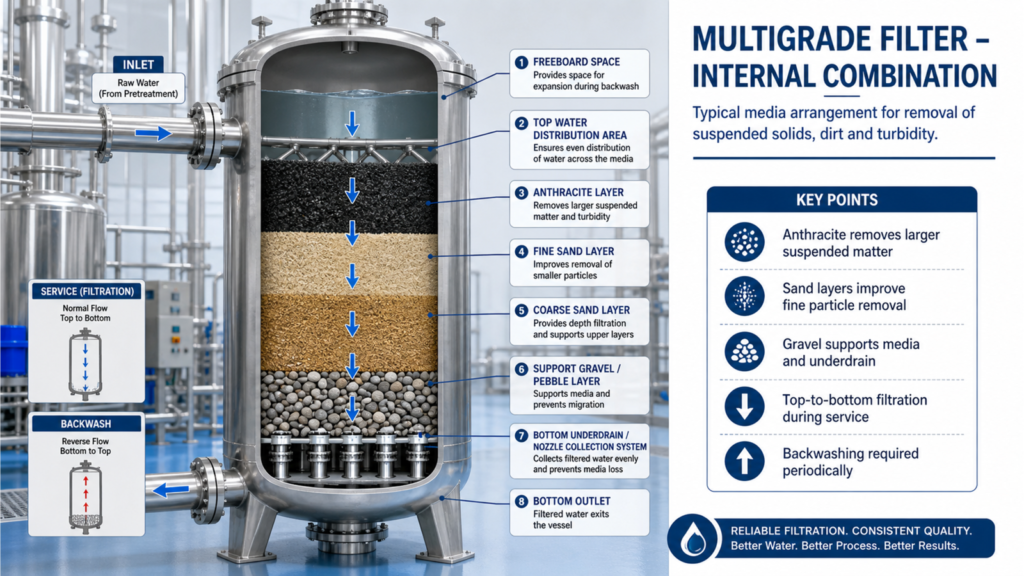
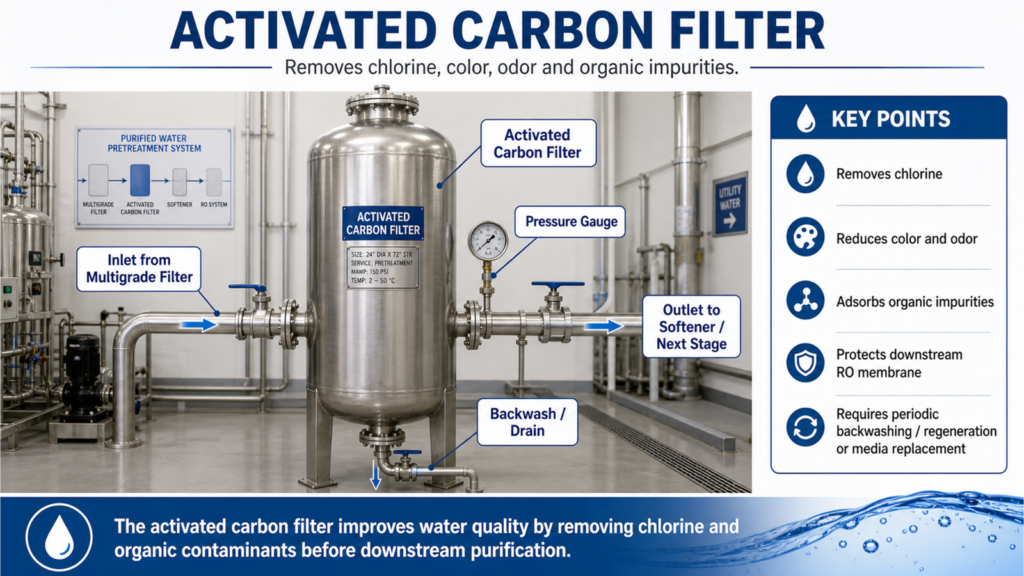
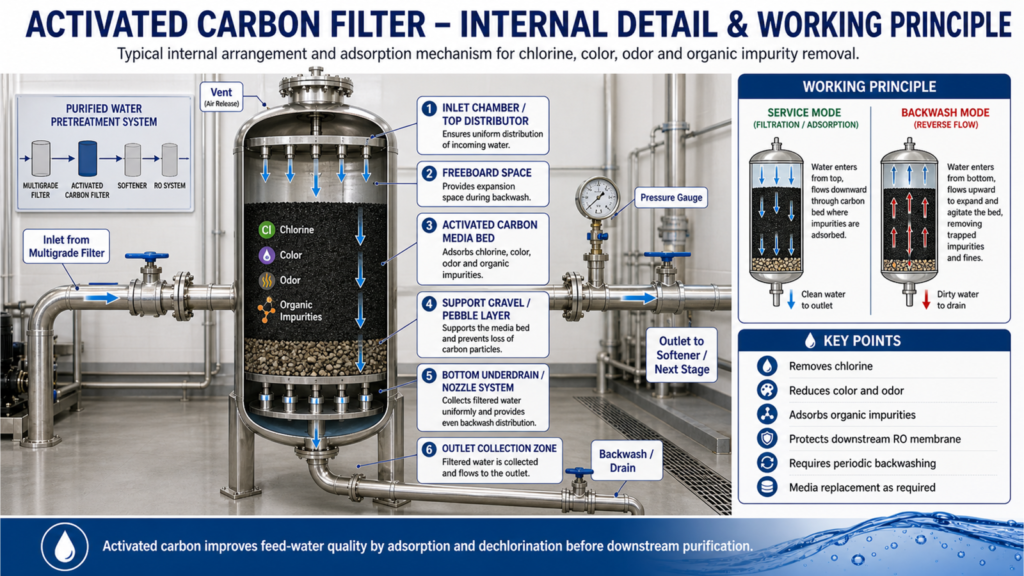
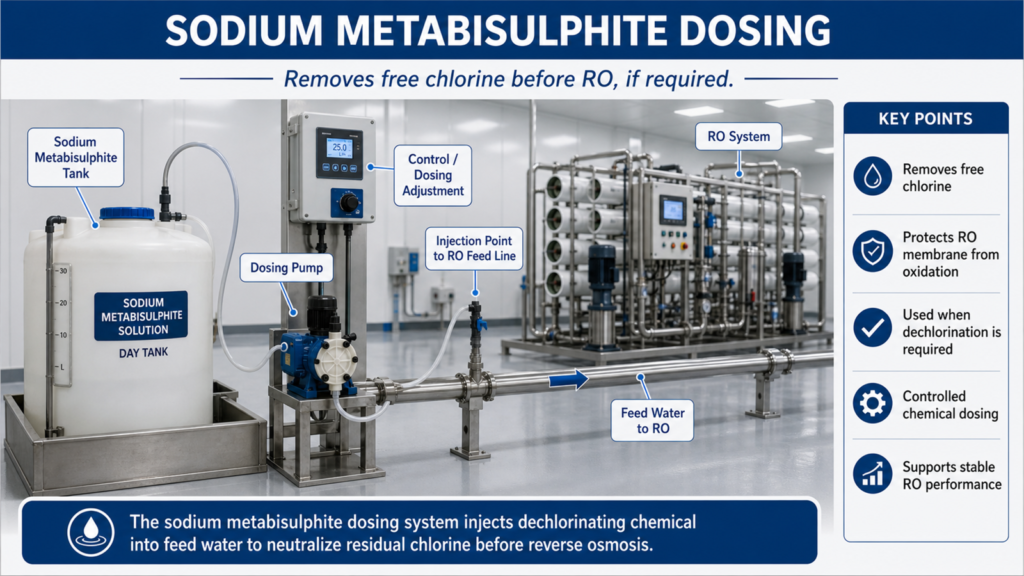
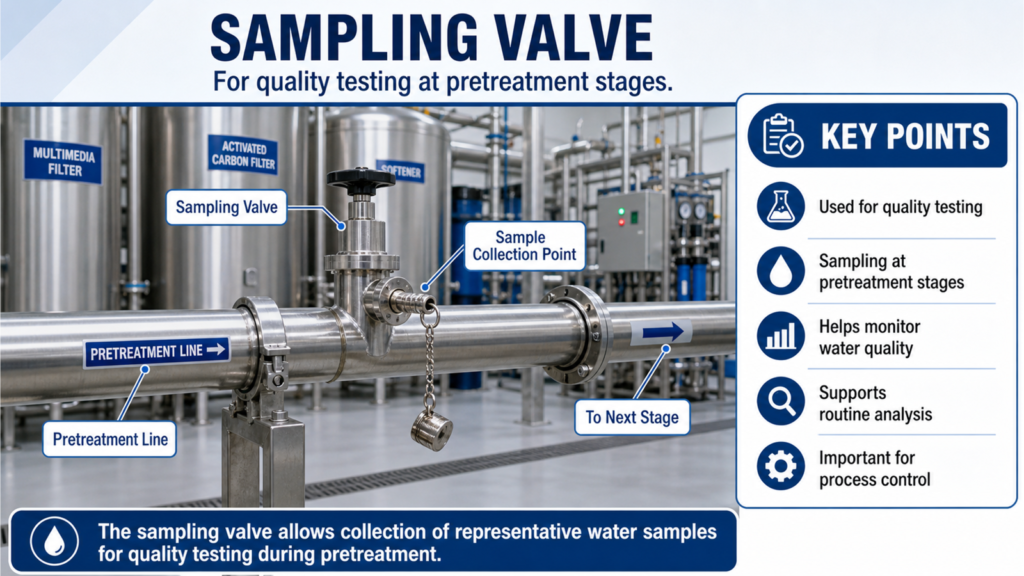
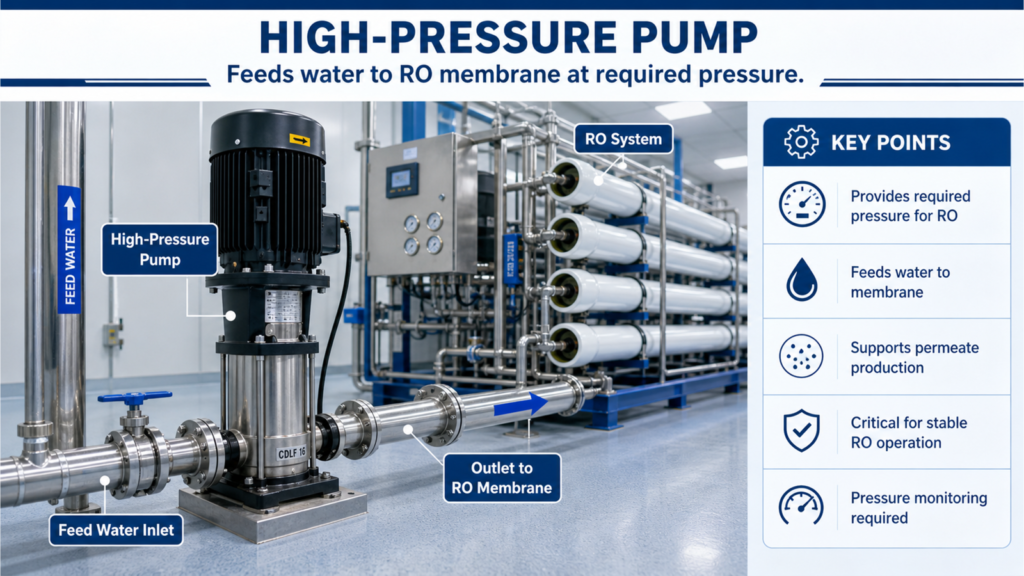
The process begins with the Raw Water Pump, which transfers incoming water into the treatment system at the required pressure. Water then passes through the Sand Filter, where dirt, silt, turbidity, and large suspended particles are removed. After this stage, the Carbon Filter eliminates chlorine, bad taste, odor, and organic impurities that may damage downstream equipment.
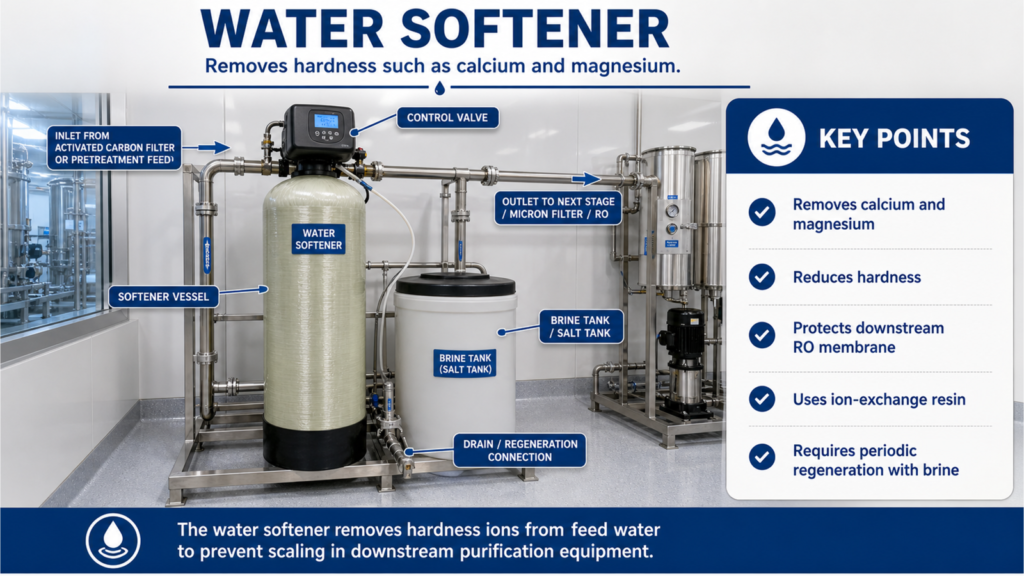
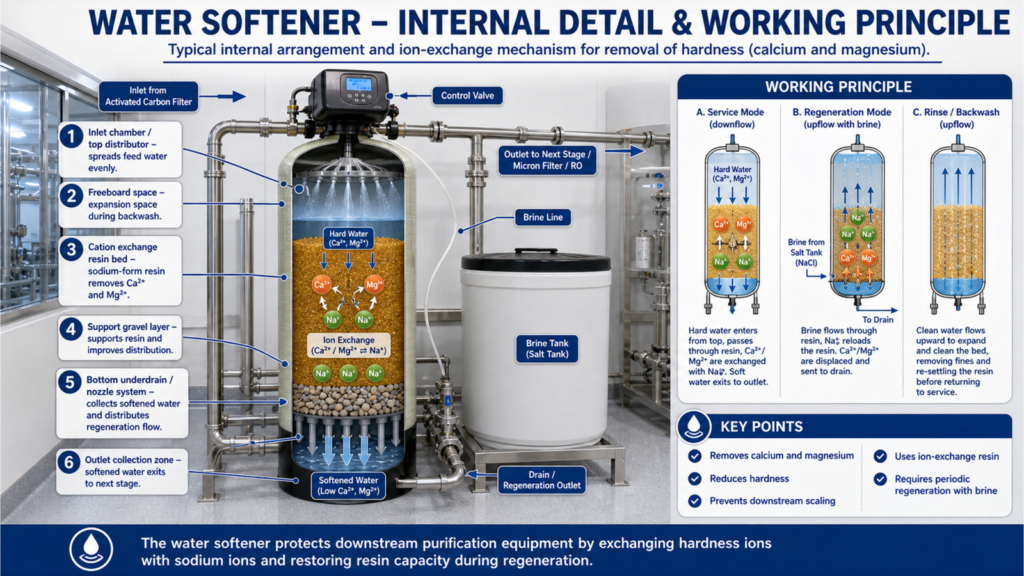
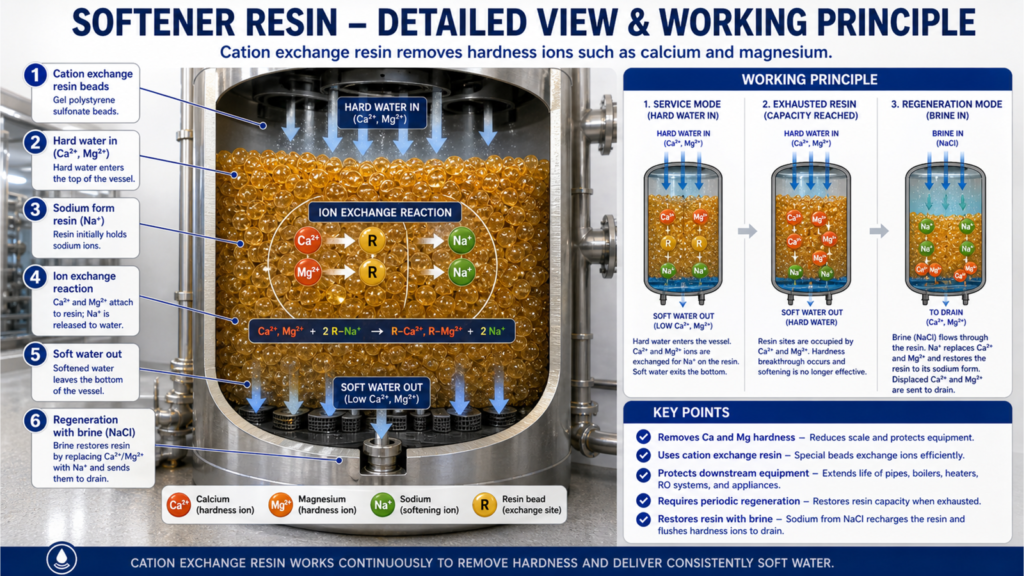
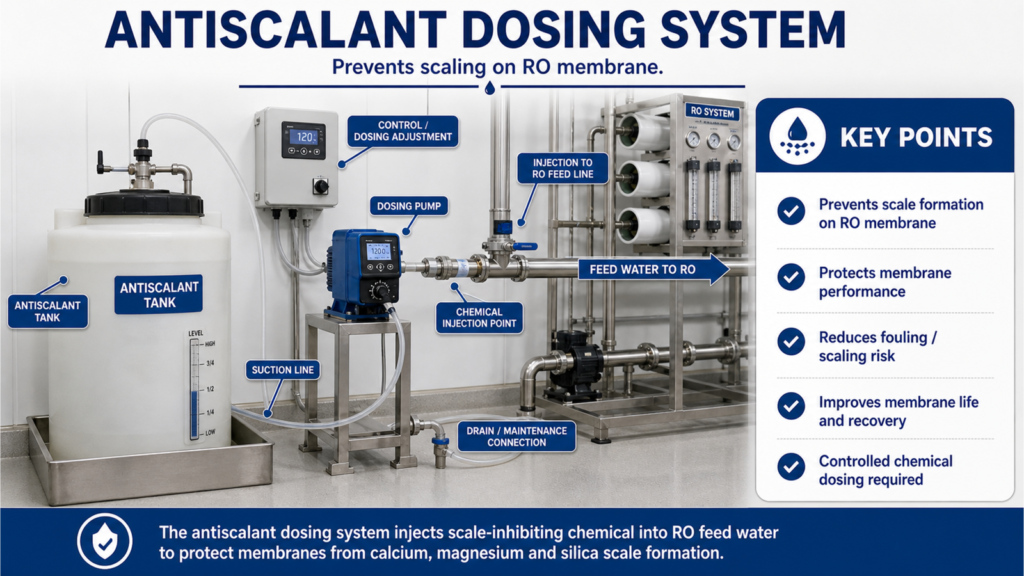
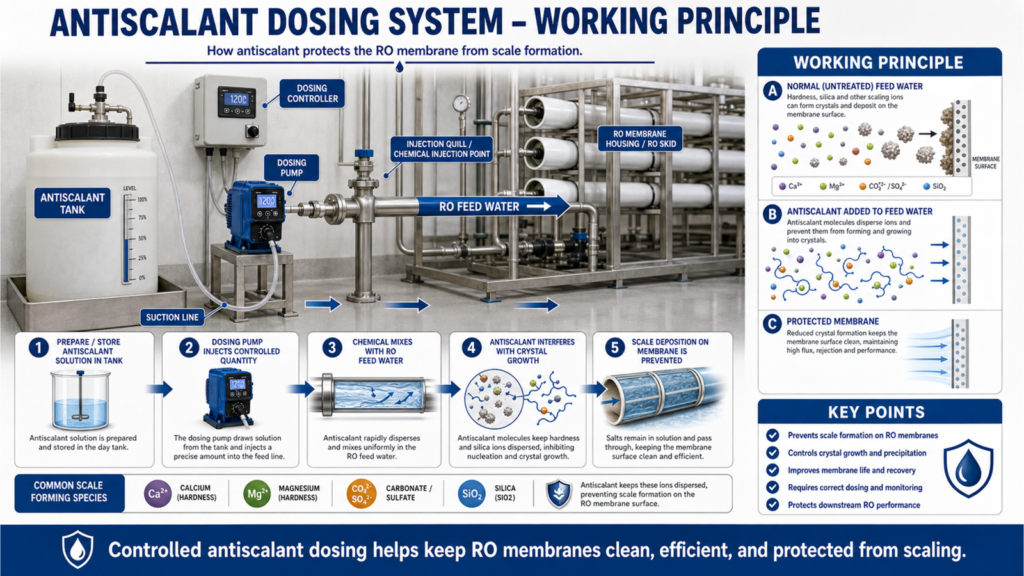
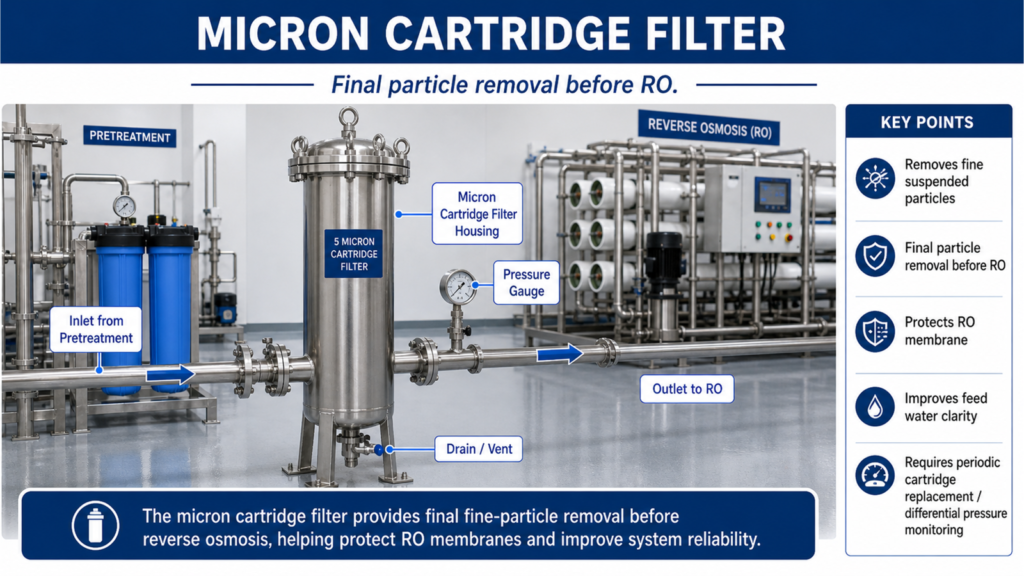
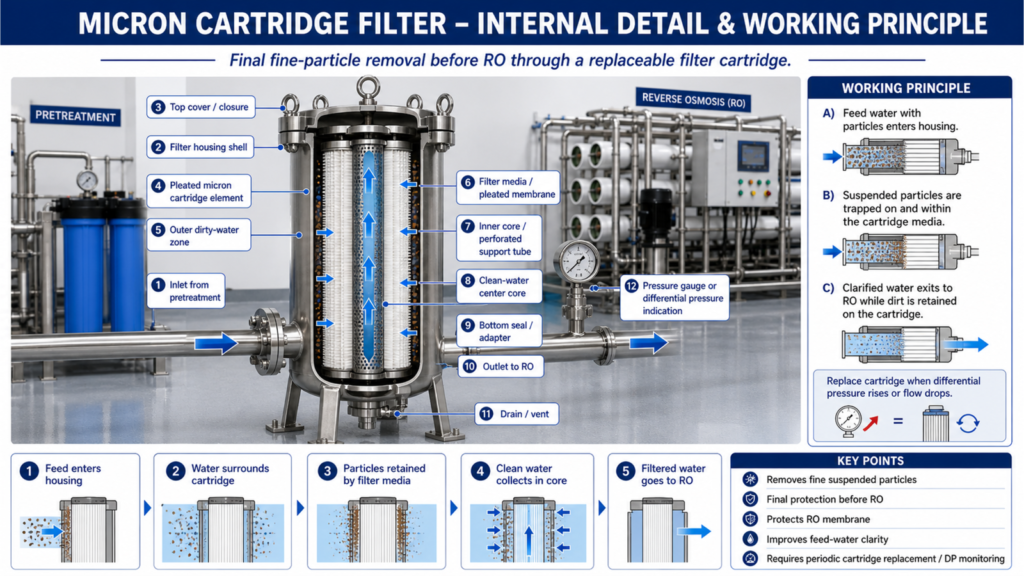
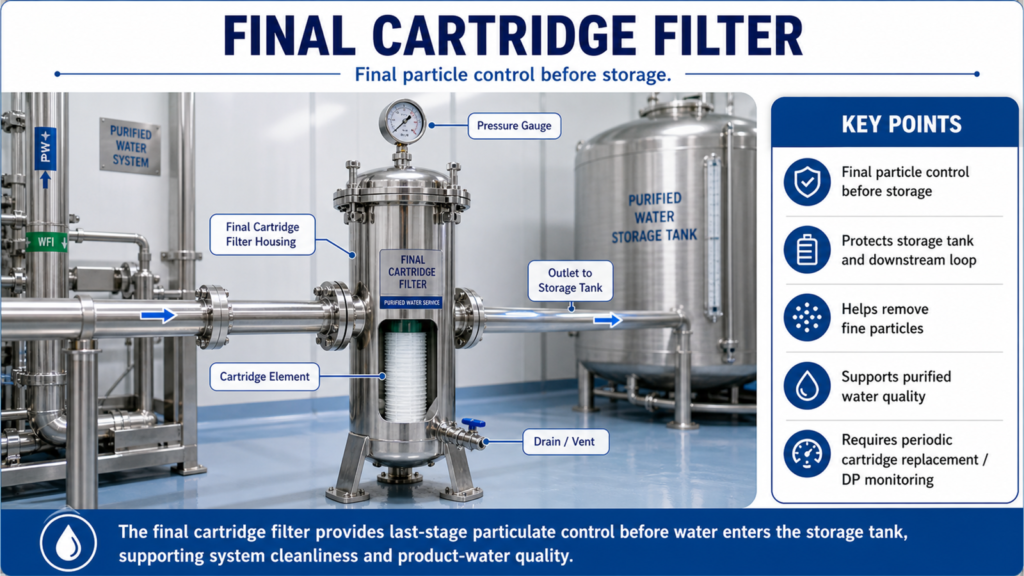
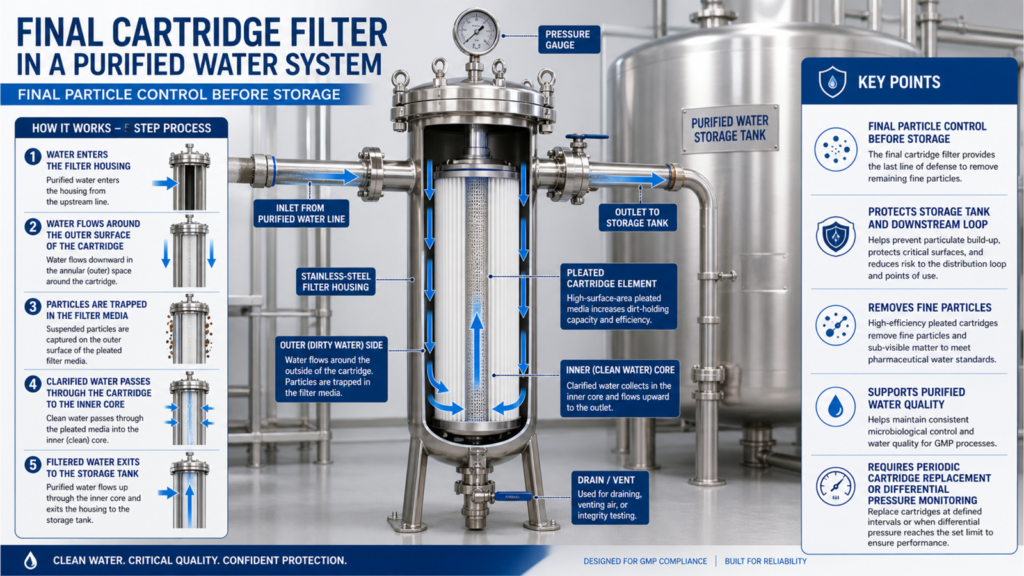
Next, the Micron Filter removes fine particles to protect sensitive membranes and purification units. In many systems, a Water Softener is installed to reduce hardness-causing minerals such as calcium and magnesium, preventing scale formation in pipelines and reverse osmosis membranes.
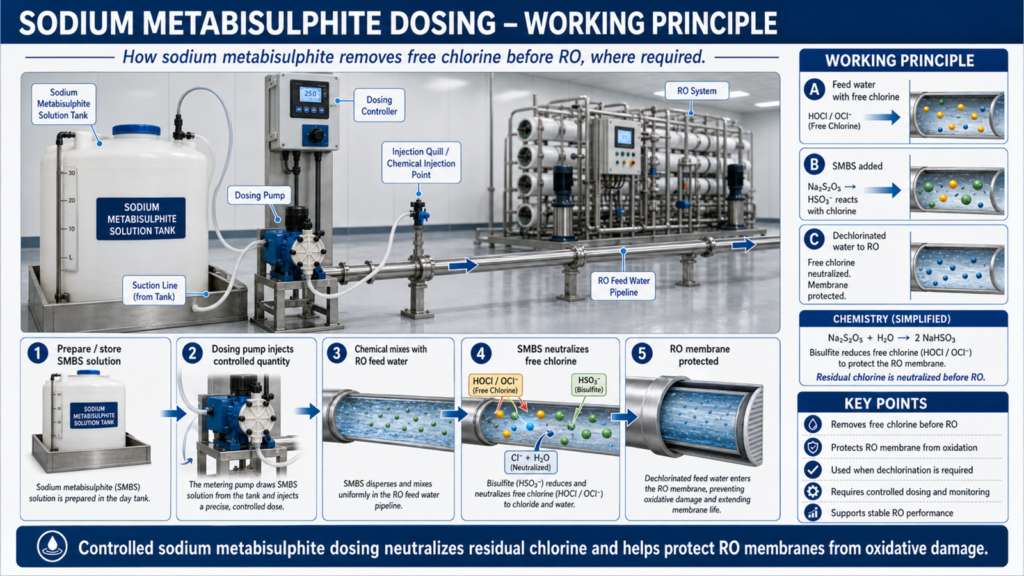
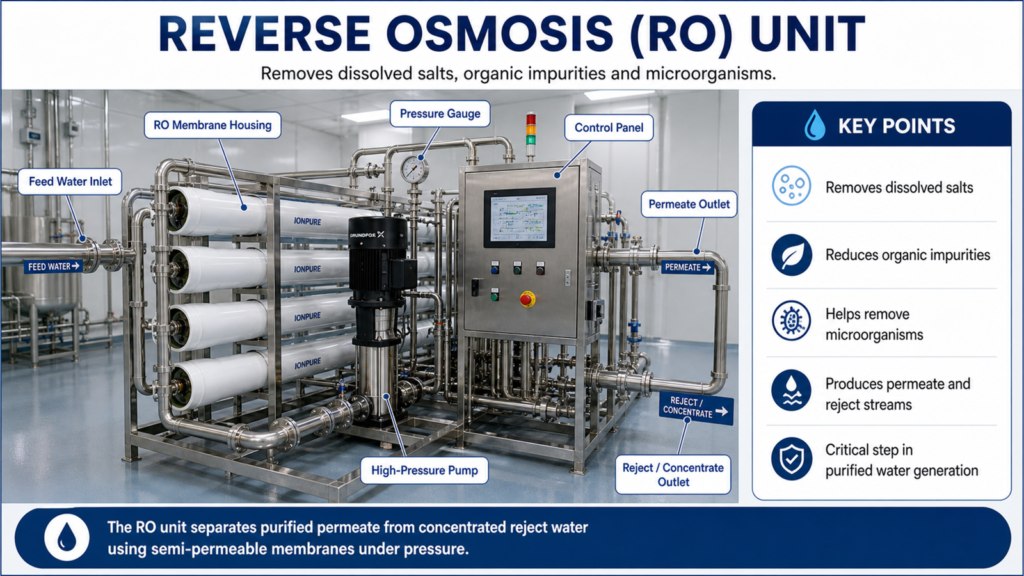
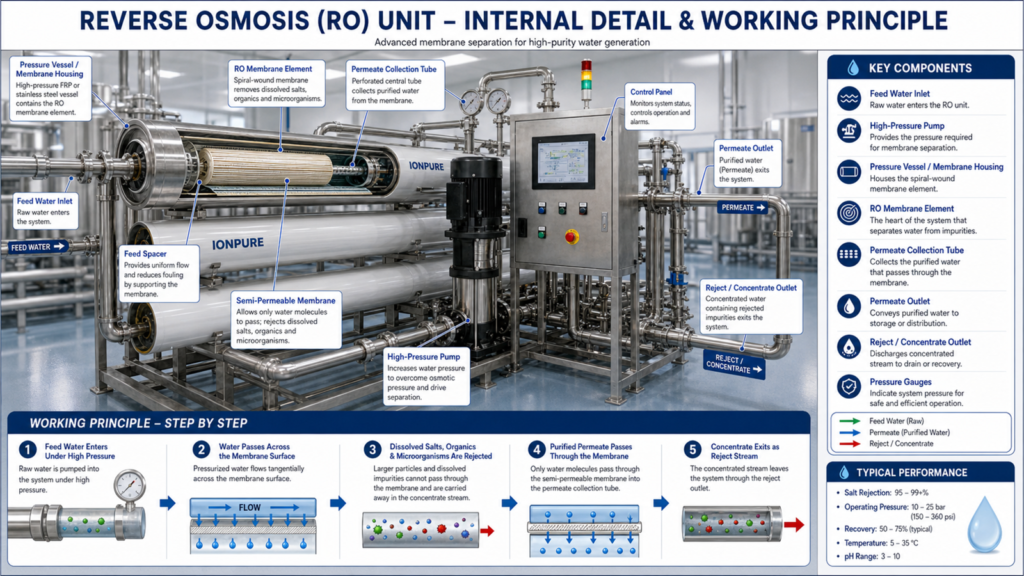
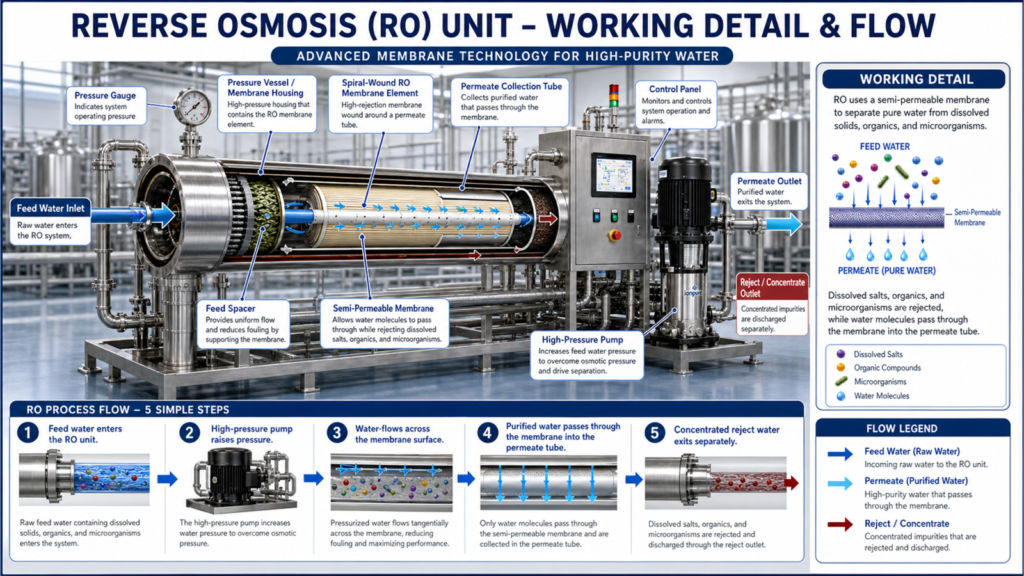
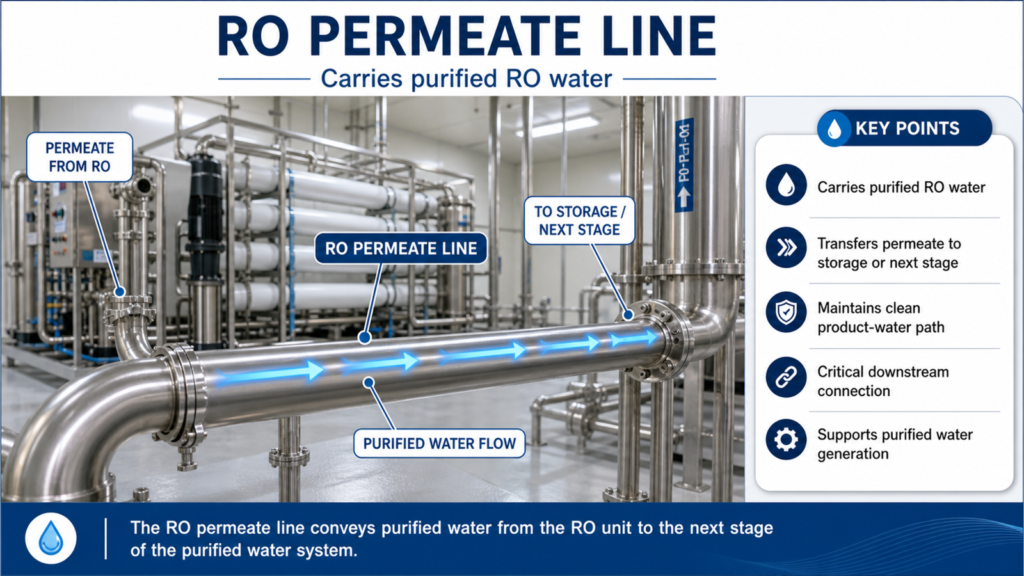
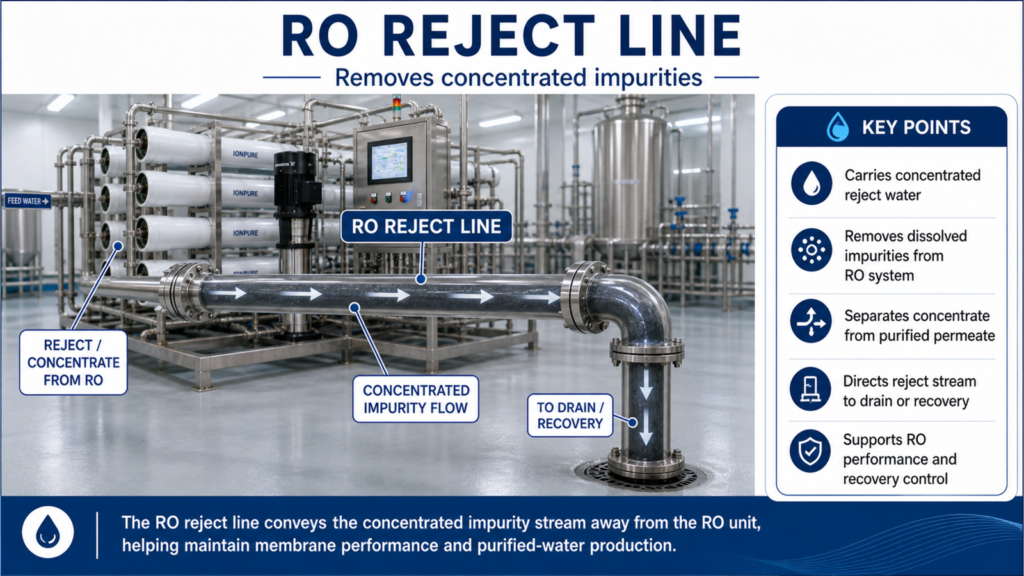
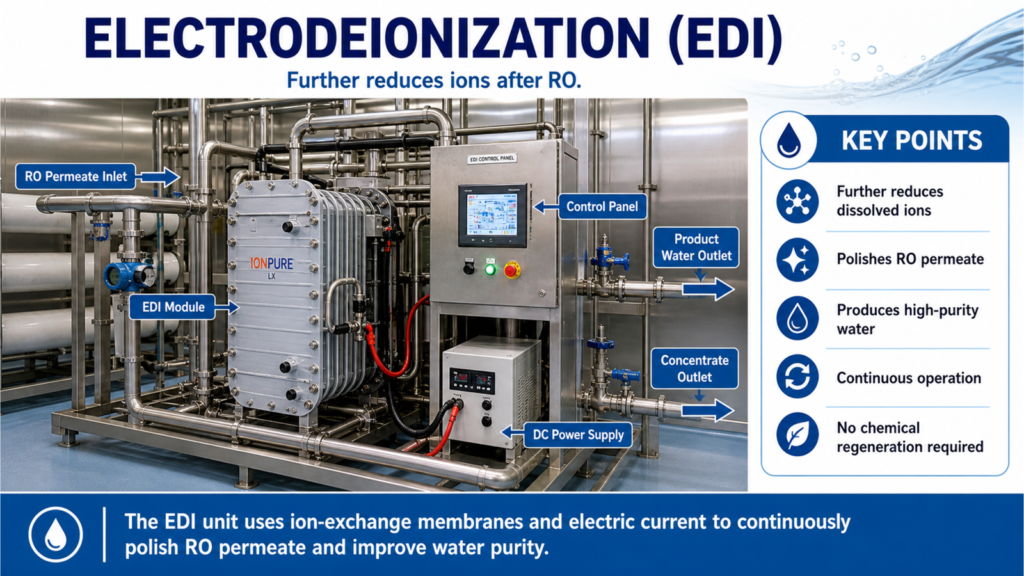
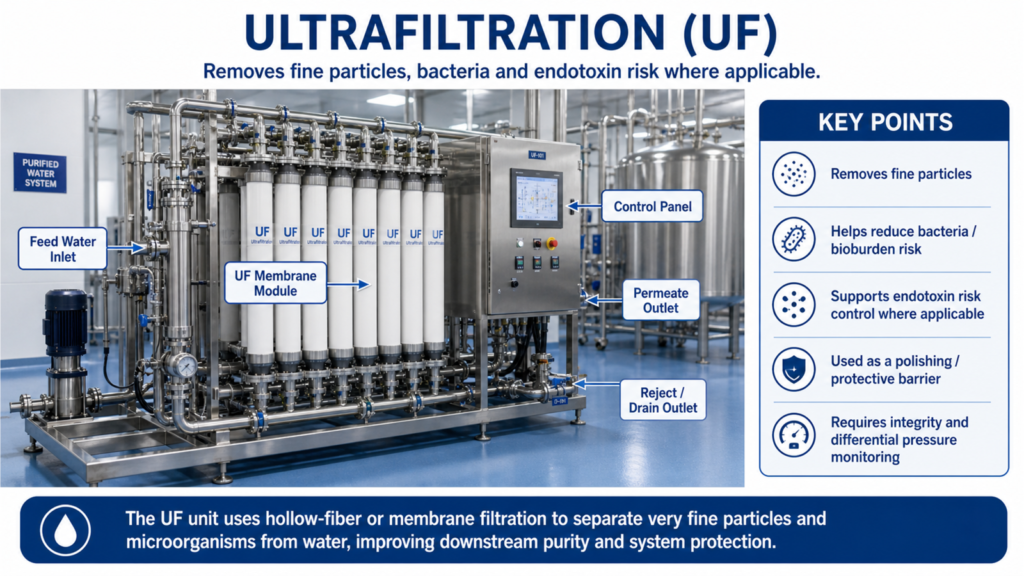
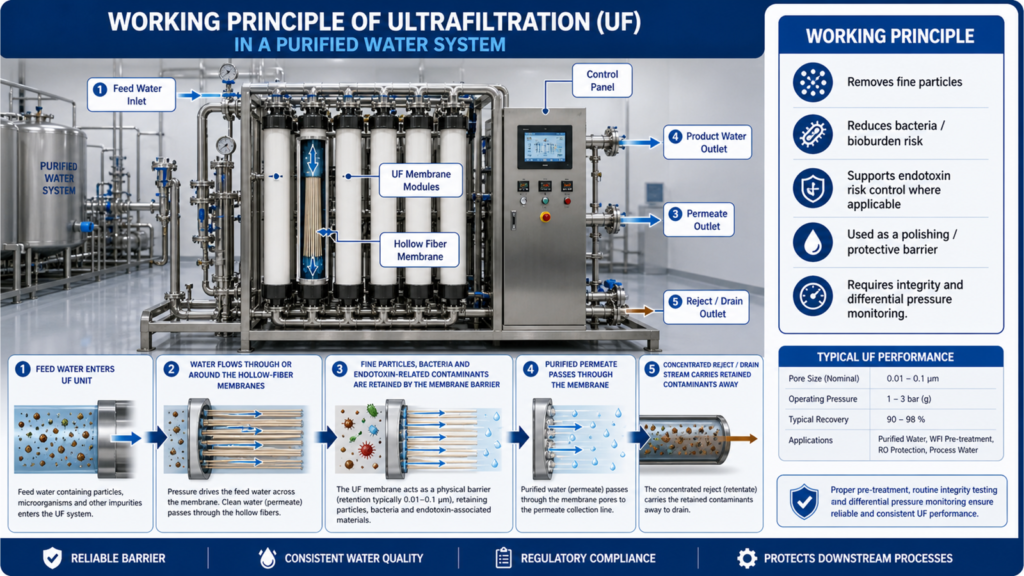
The Reverse Osmosis (RO) System is the heart of the purification process. It removes dissolved salts, bacteria, viruses, endotoxins, and chemical contaminants through semi-permeable membranes. After RO treatment, water may pass through a Post Carbon Filter for final polishing and improved quality.
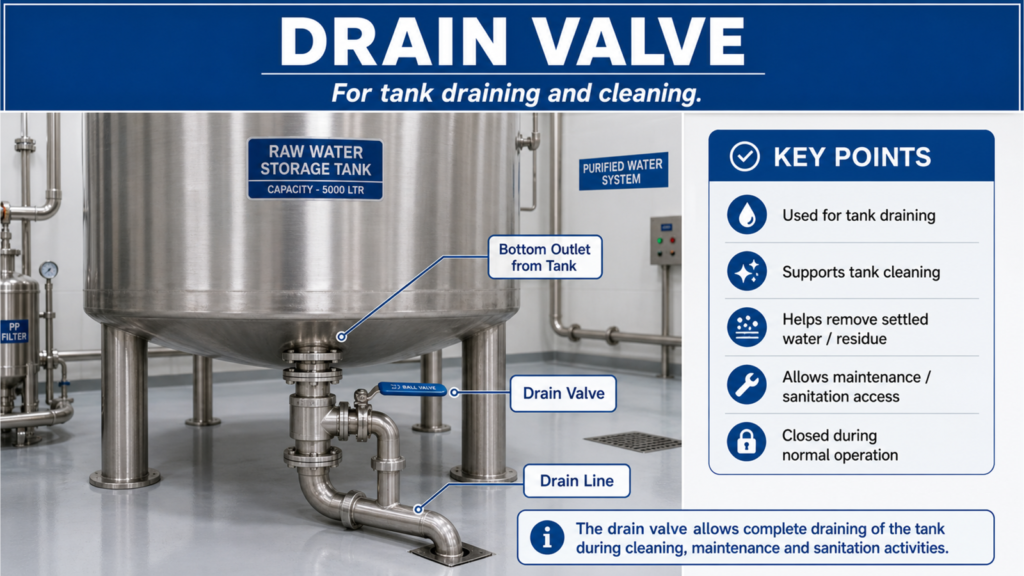
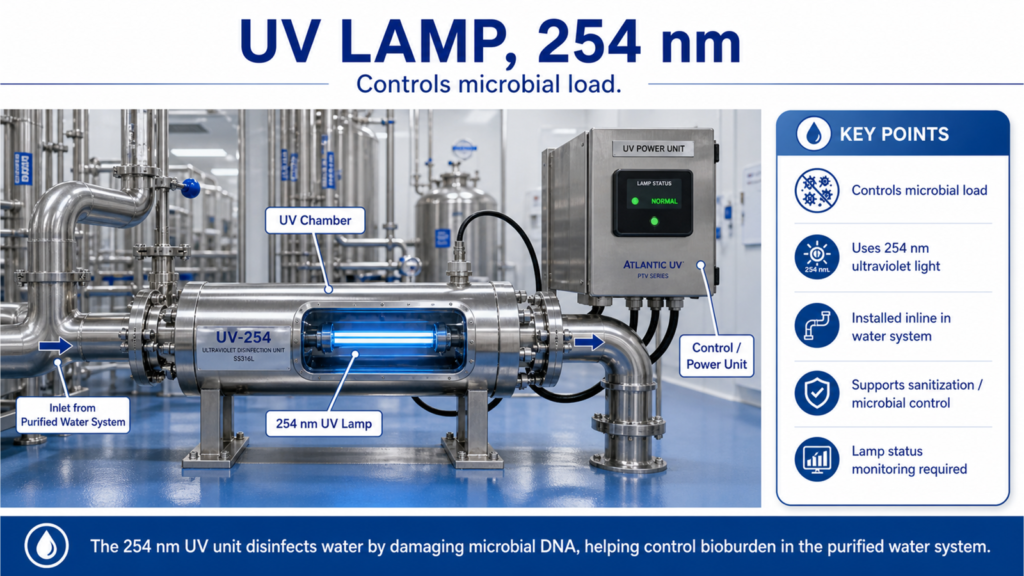
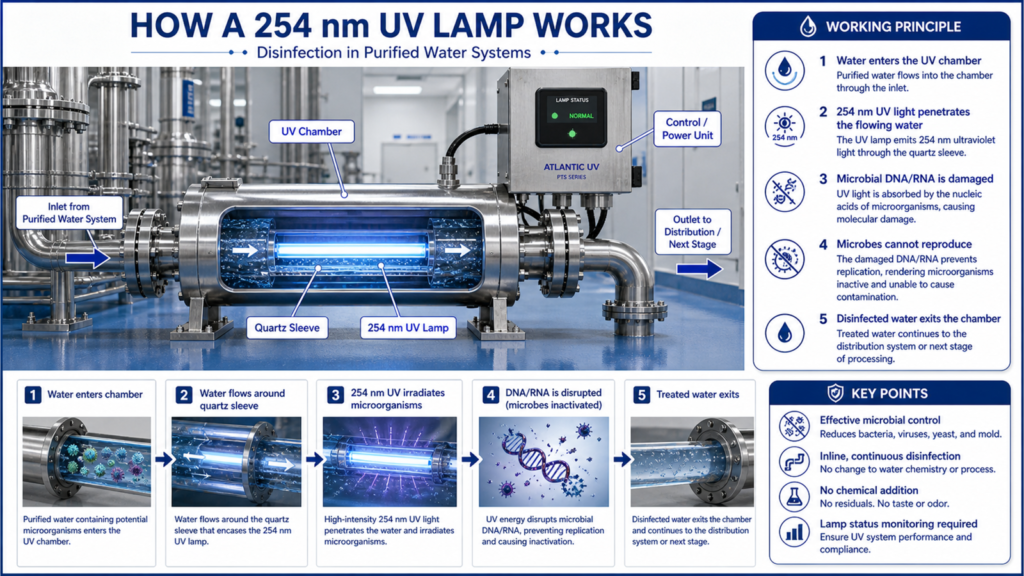
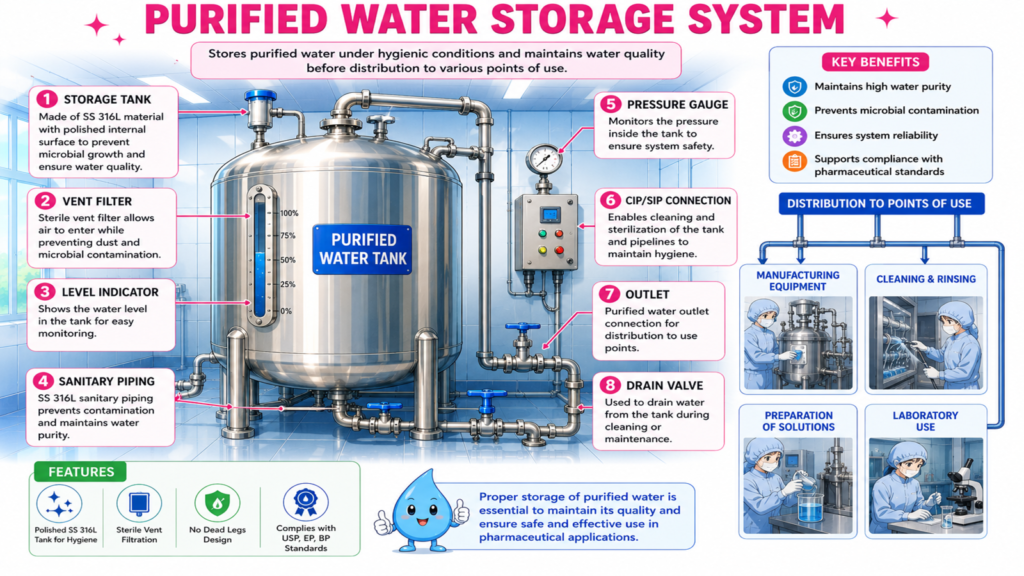
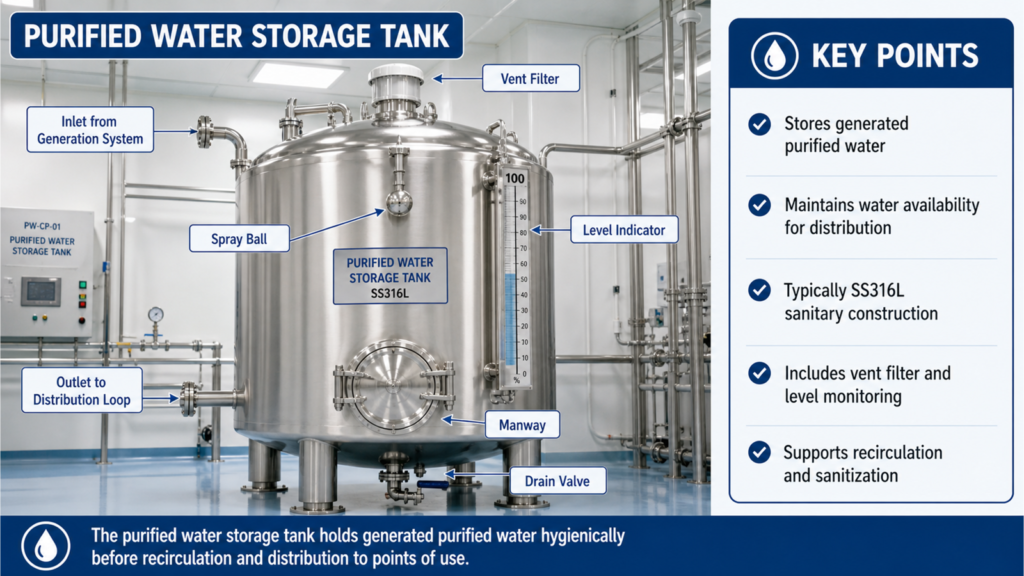
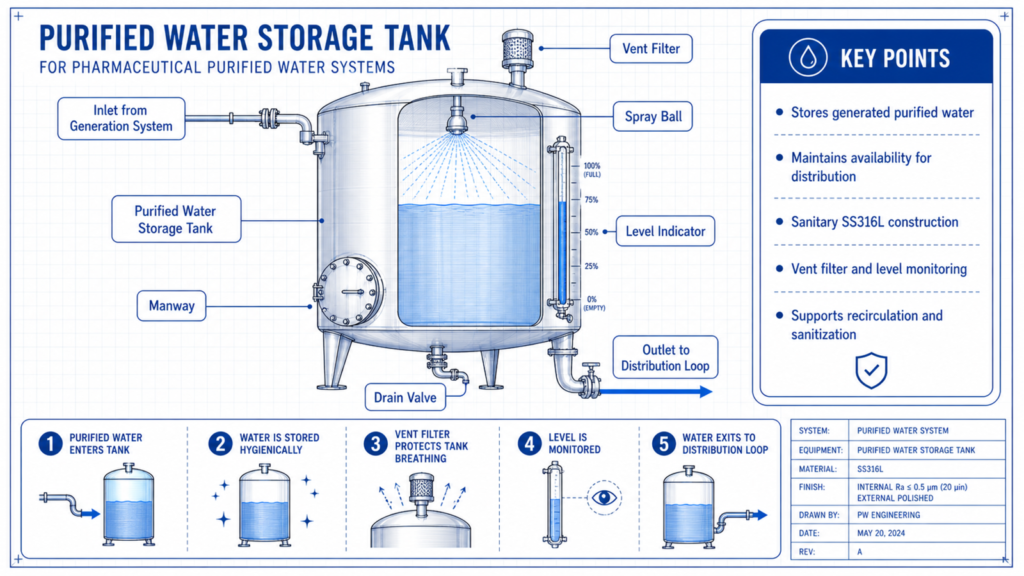
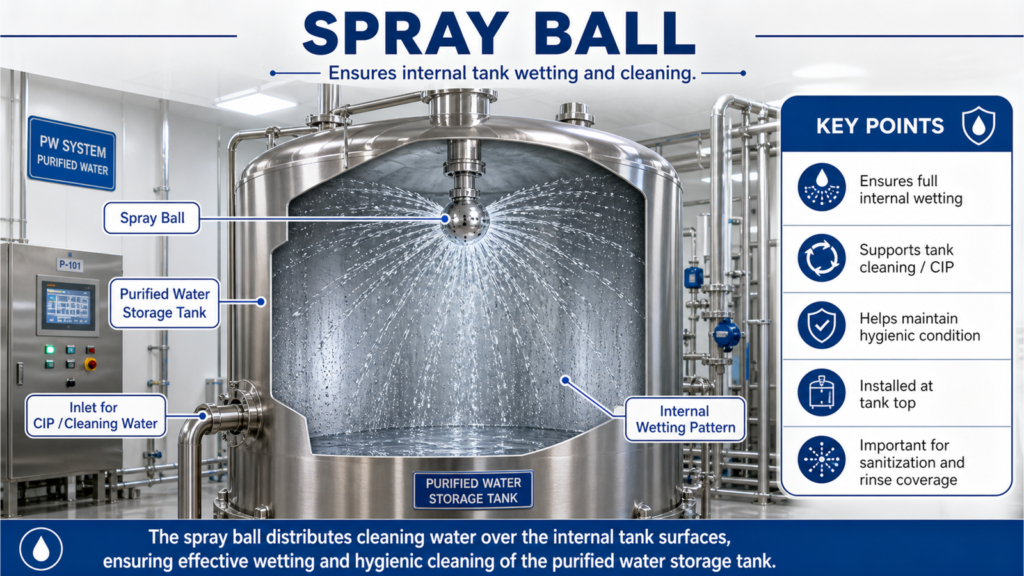
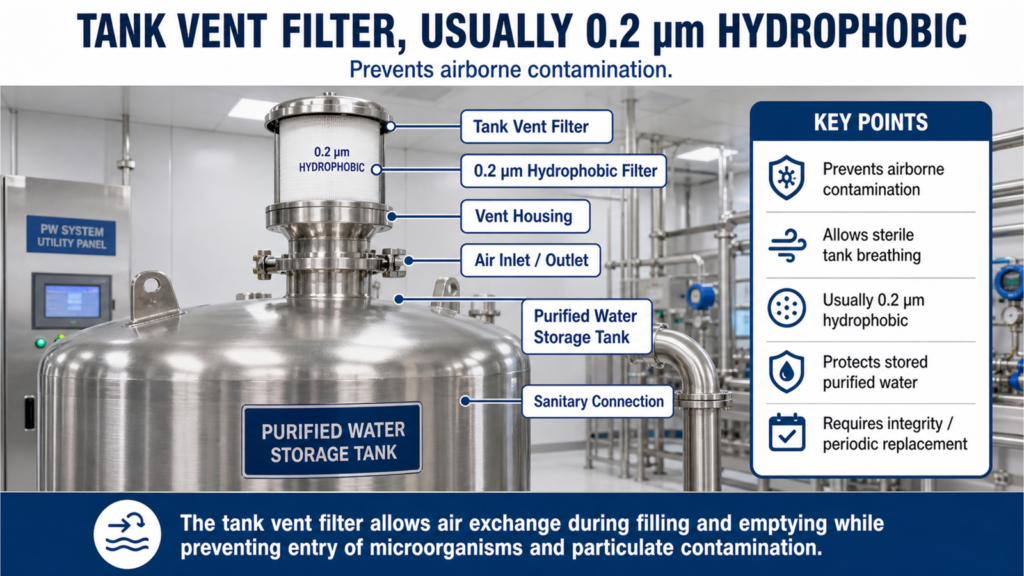
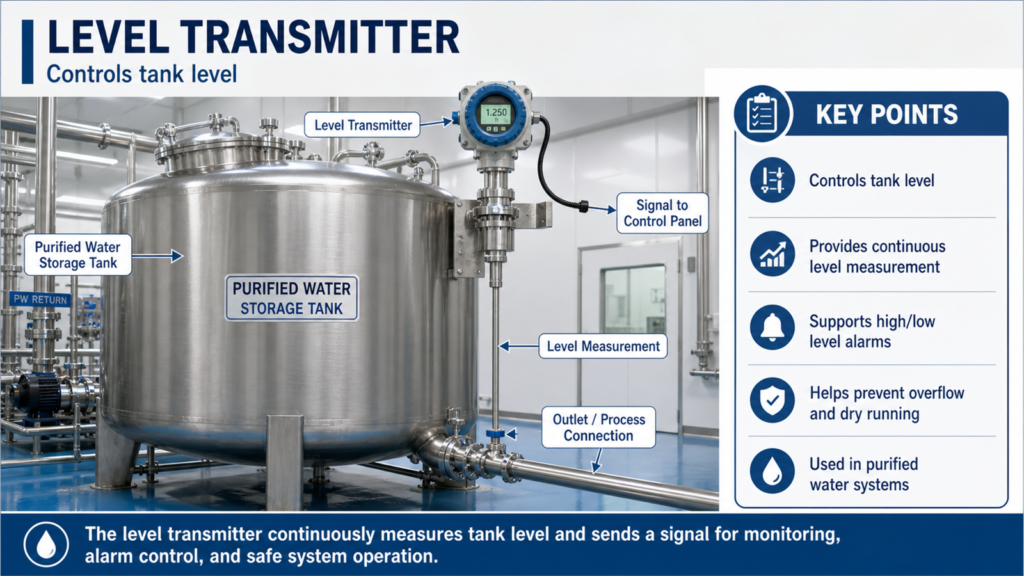
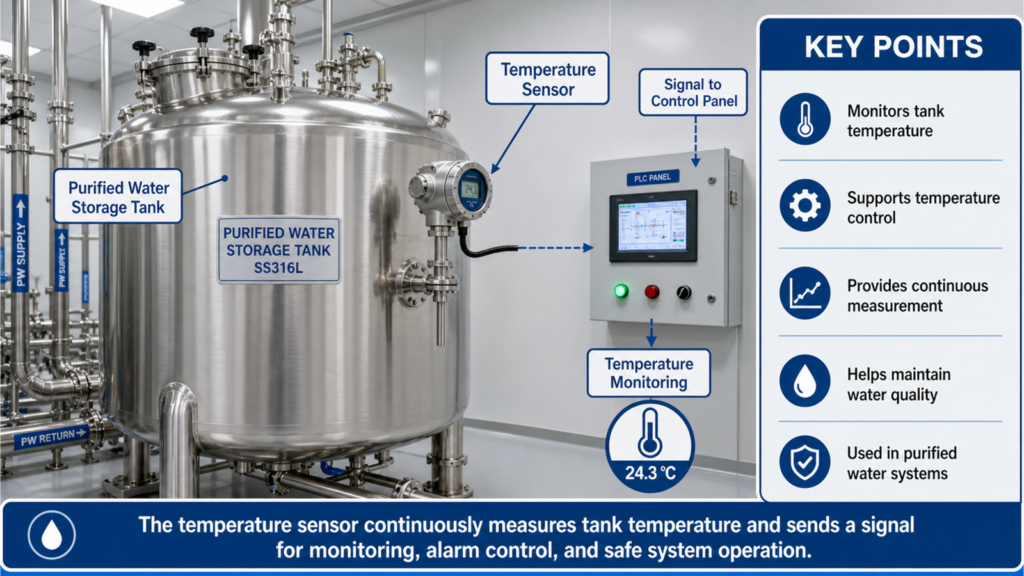
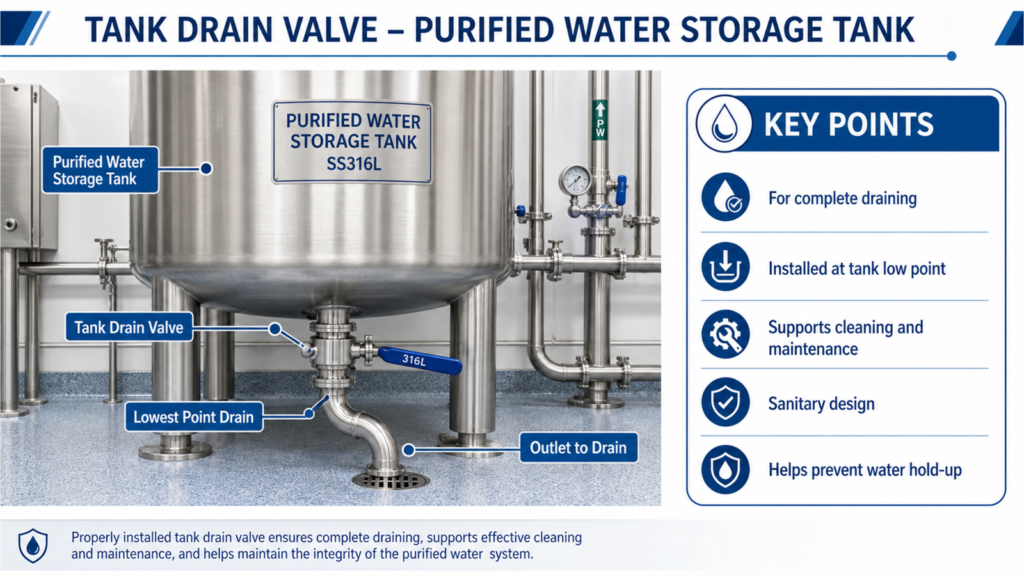
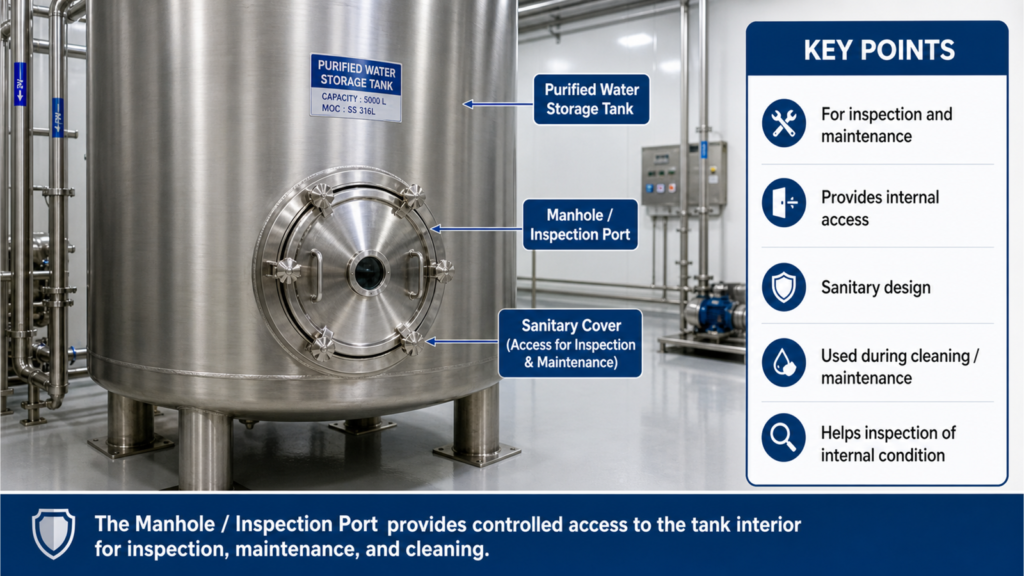
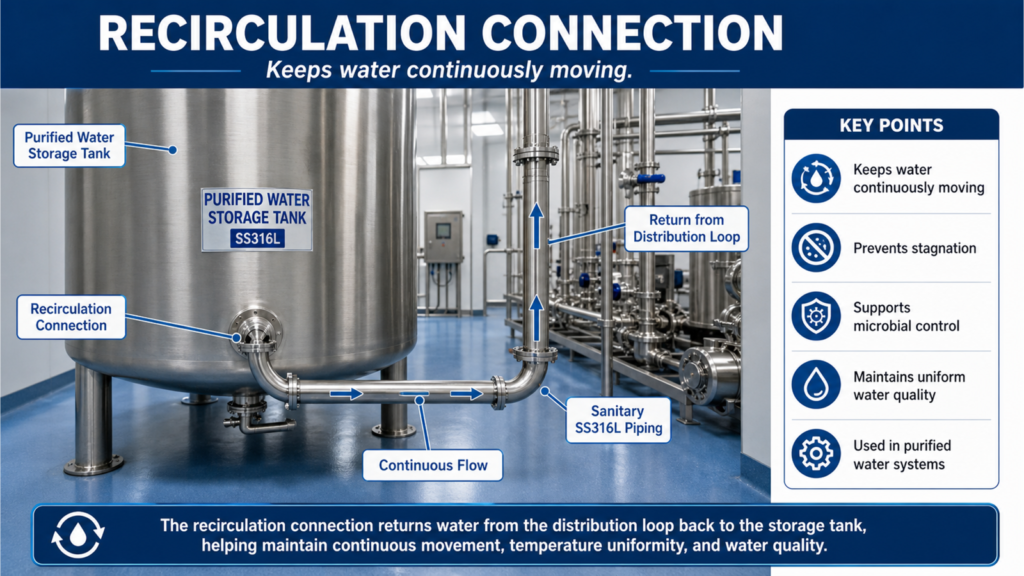
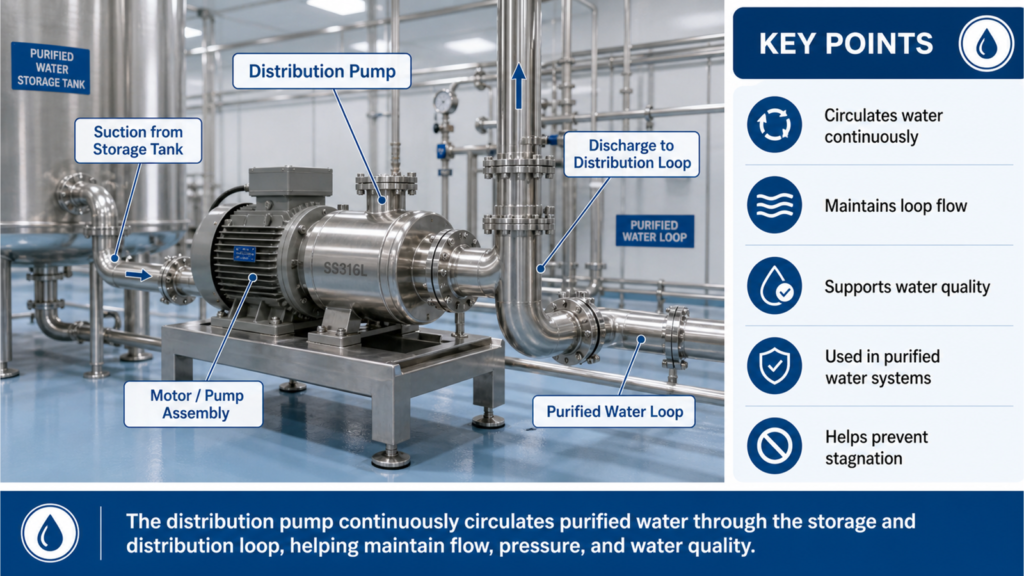
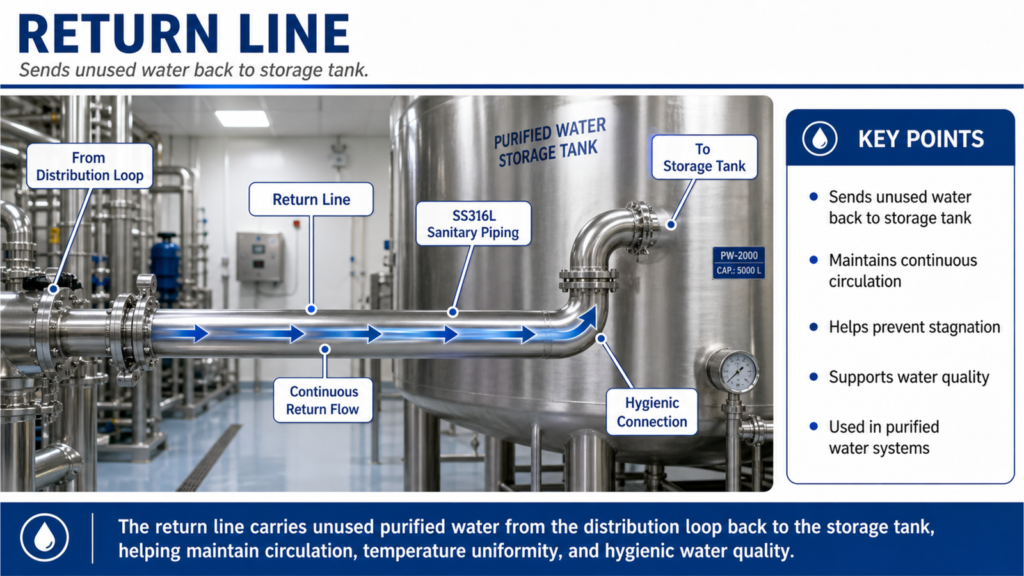
To ensure microbiological safety, the UV Sterilizer disinfects water by destroying microorganisms using ultraviolet light technology. The purified water is then stored in a Purified Water Storage Tank designed with hygienic stainless-steel construction to prevent contamination.
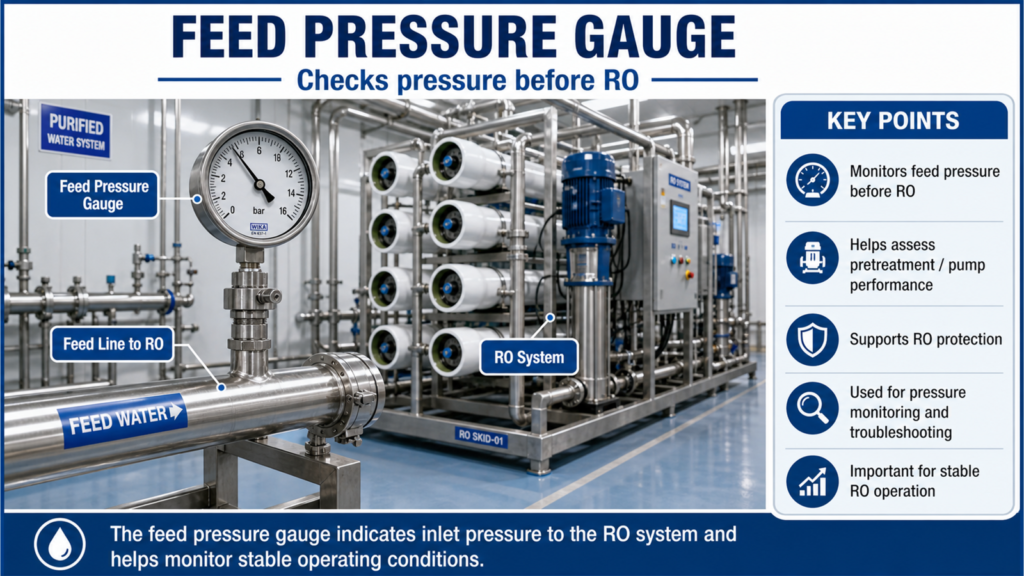
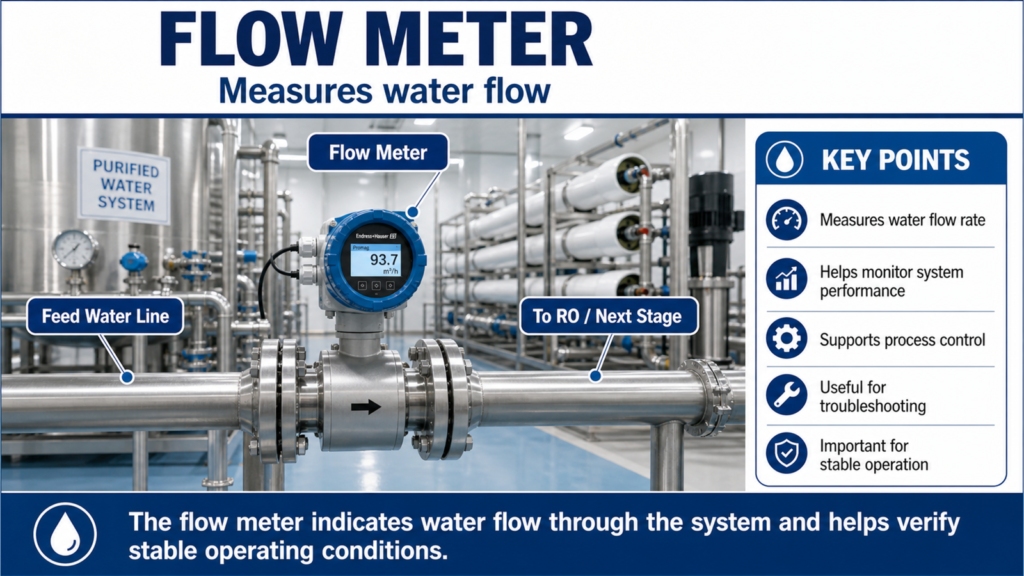
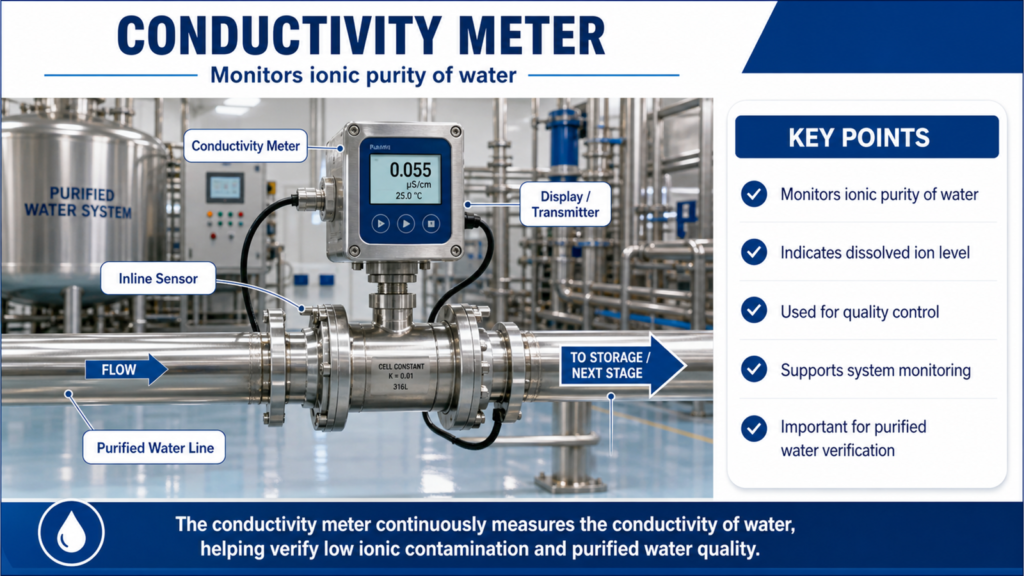
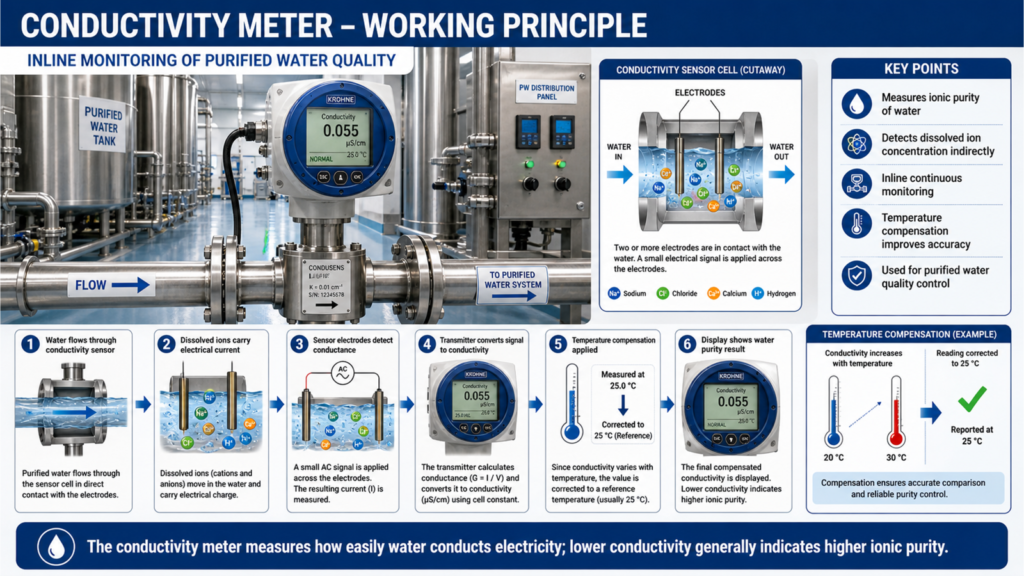
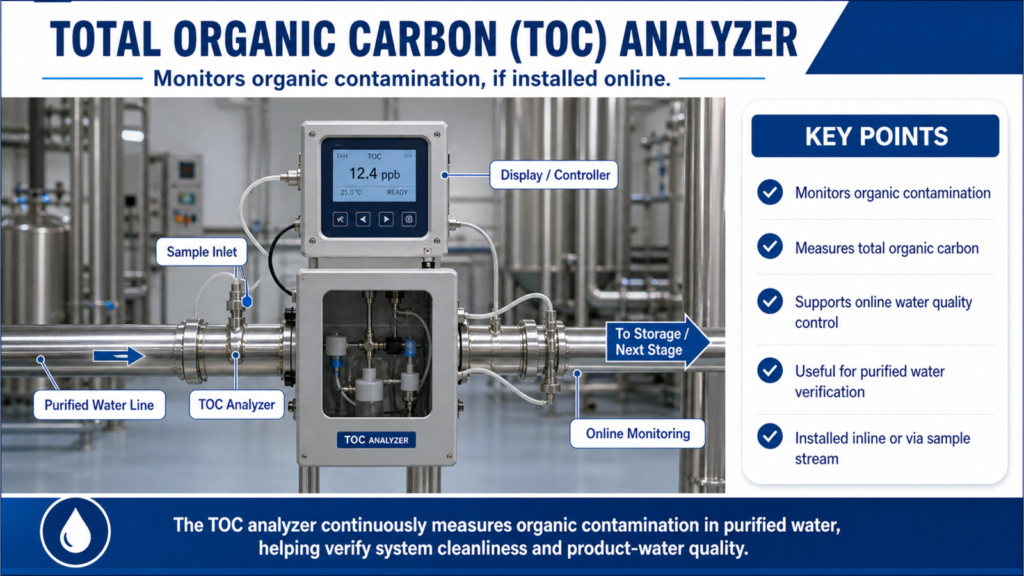
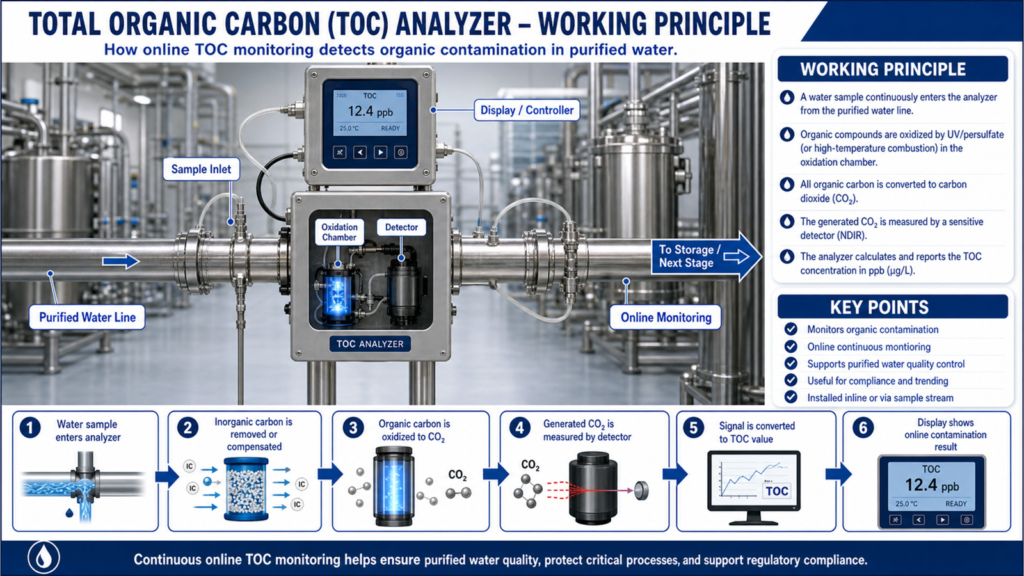
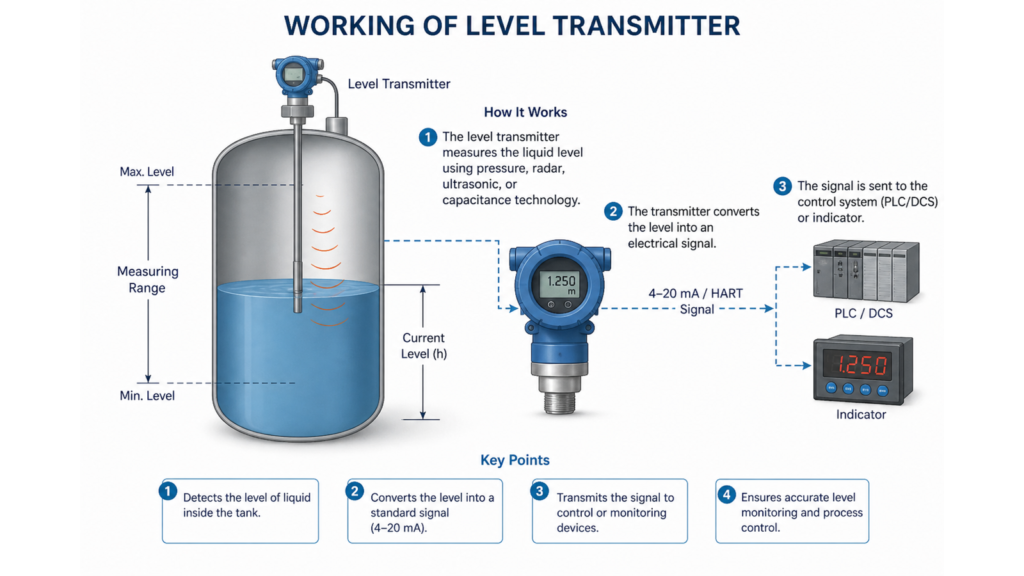
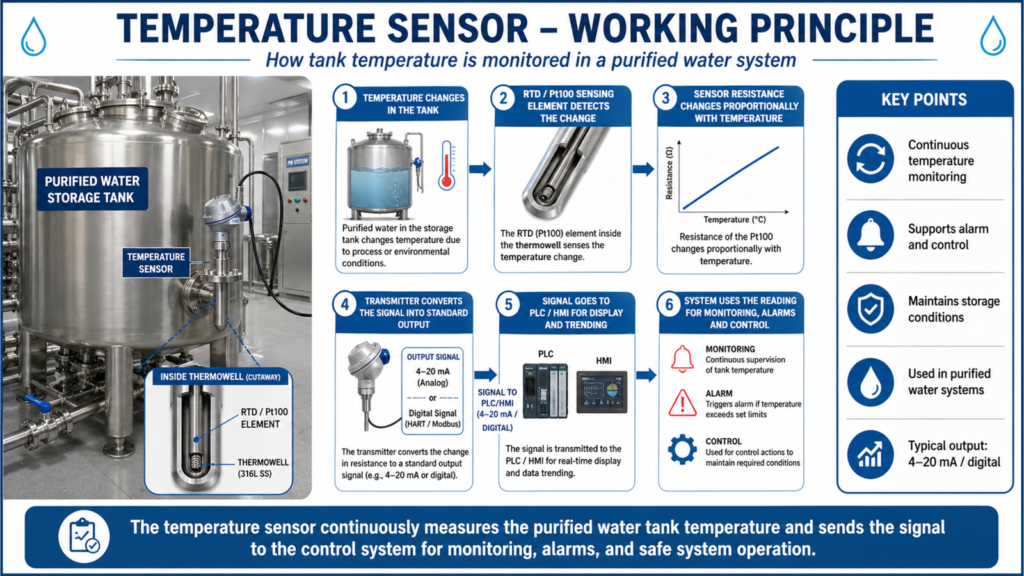
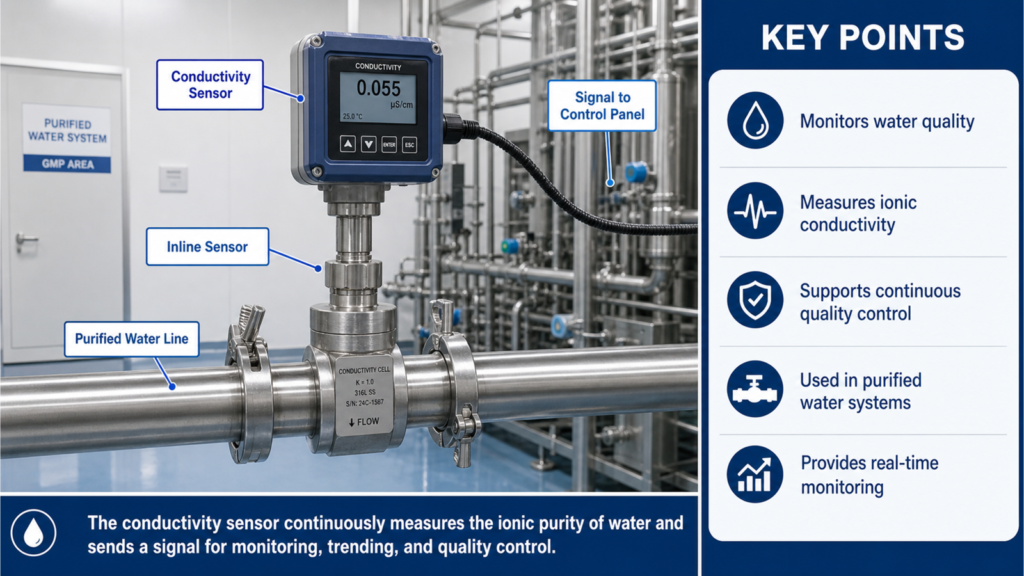
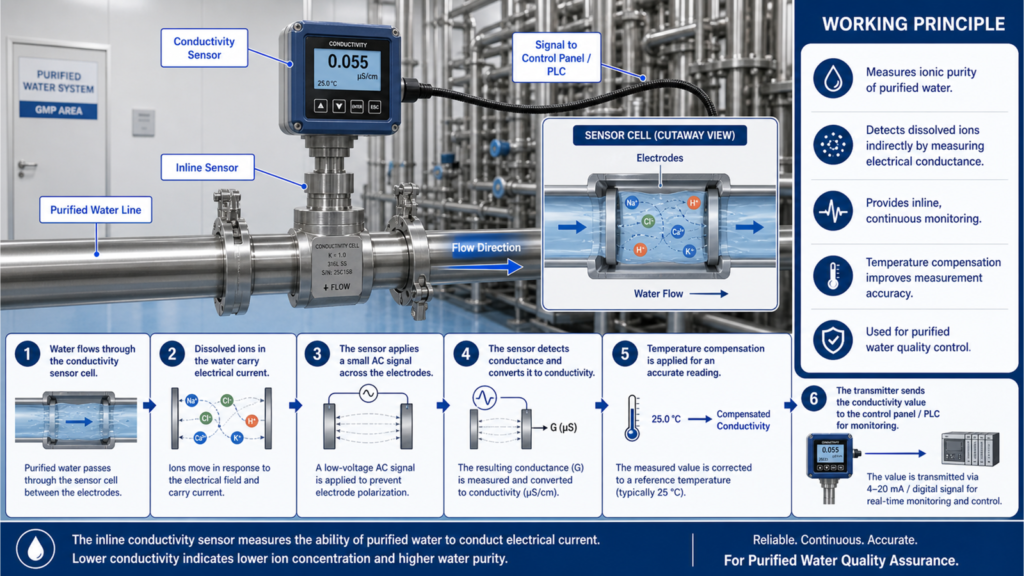
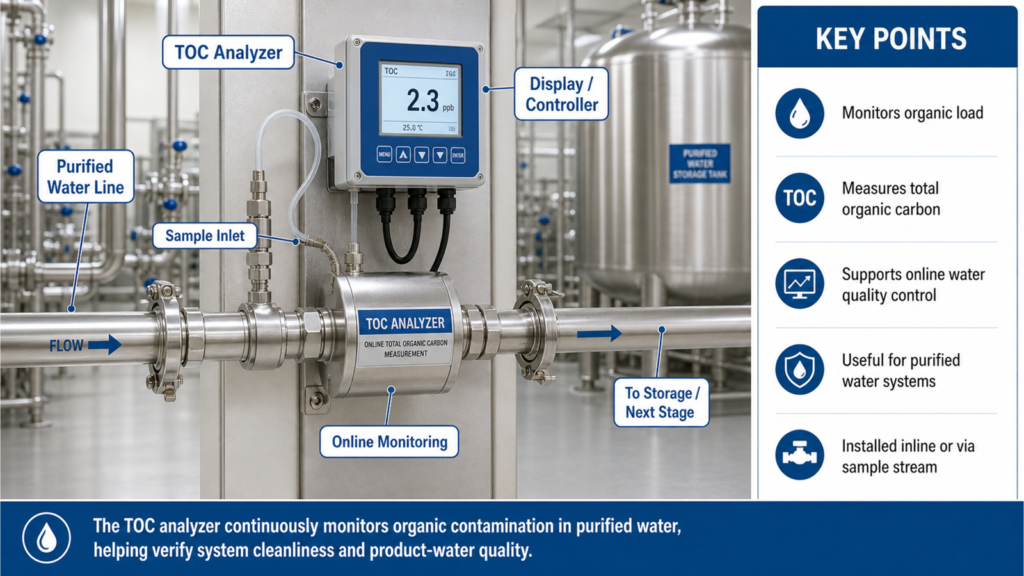
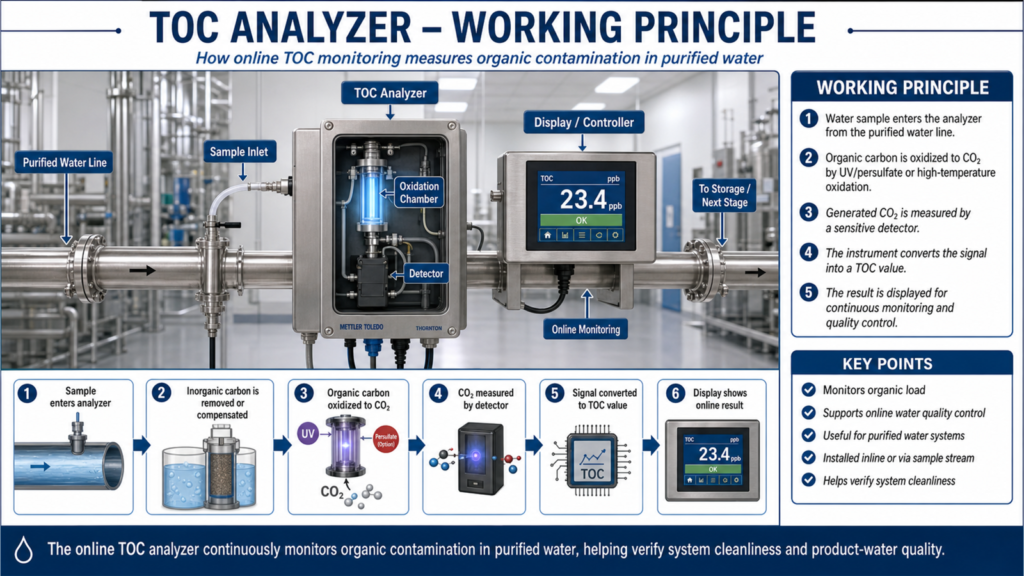
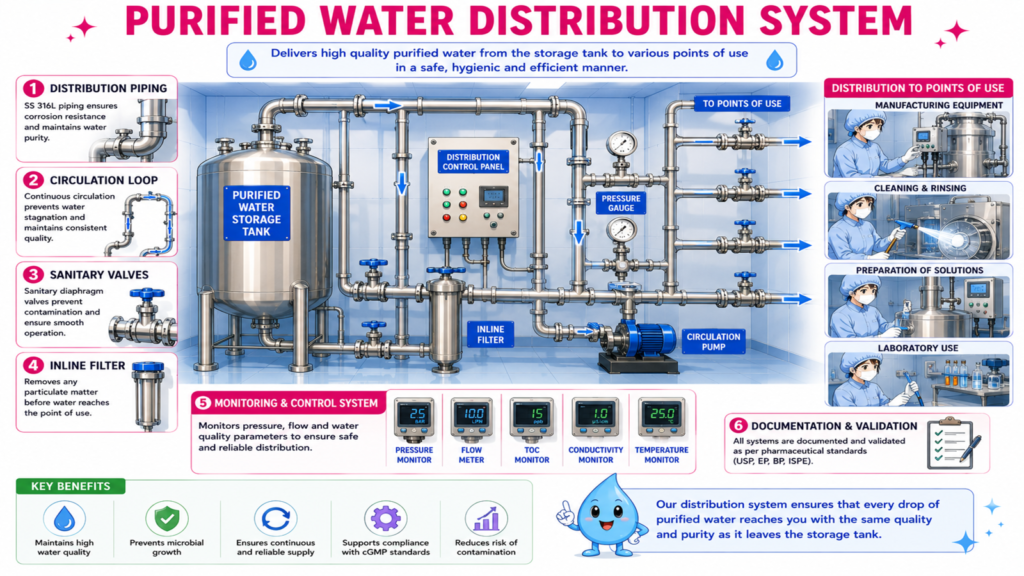
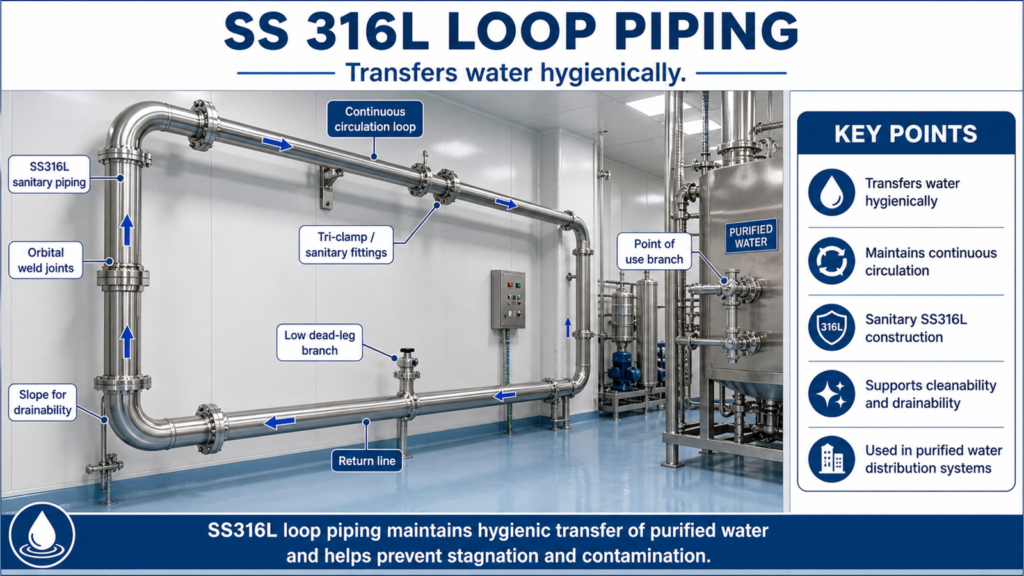
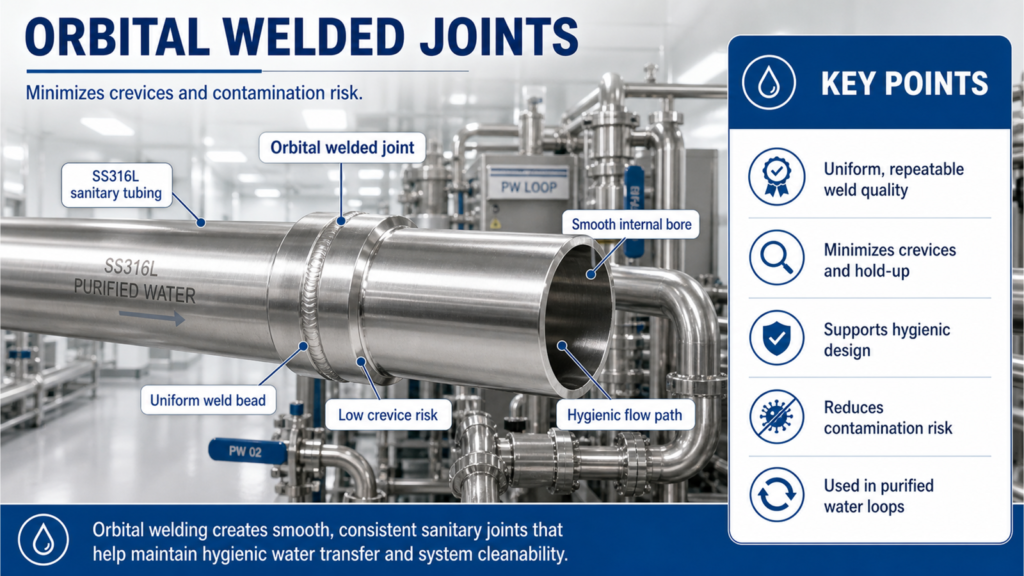
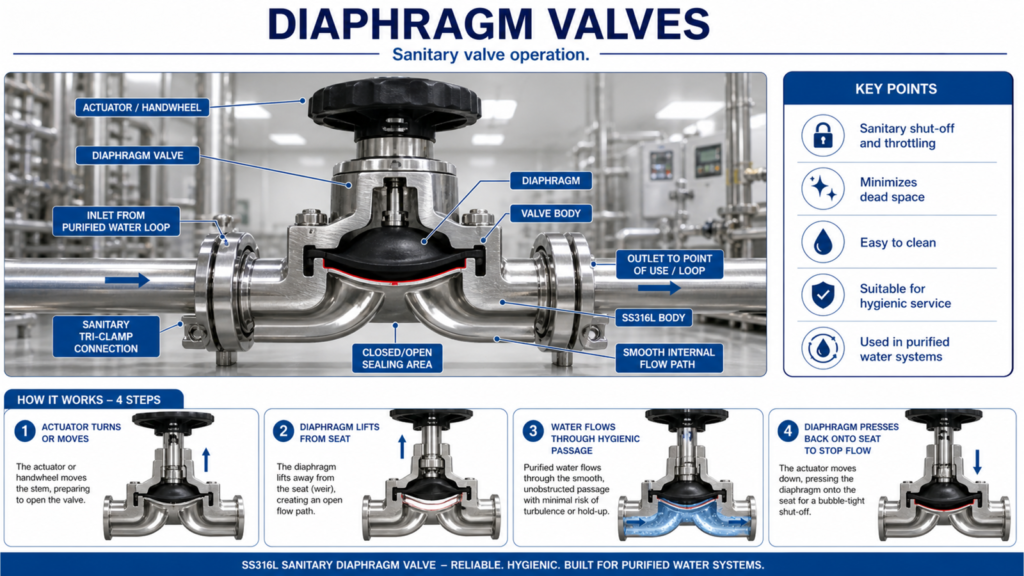
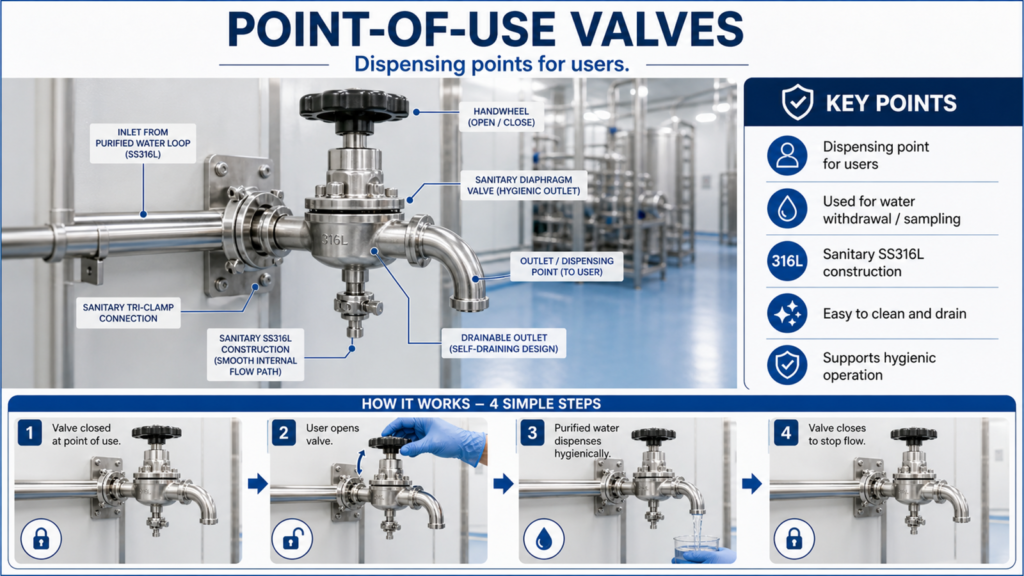
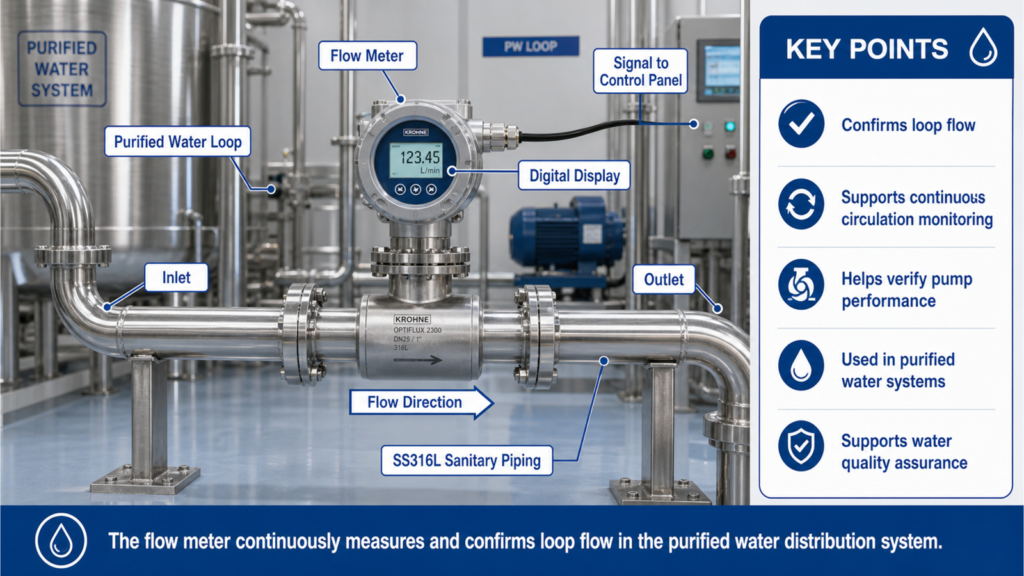
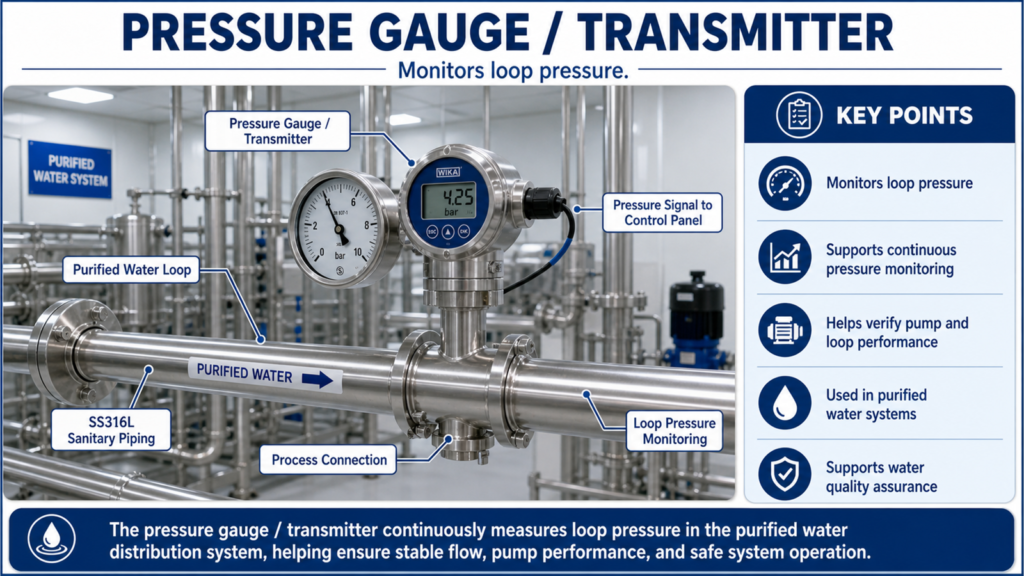
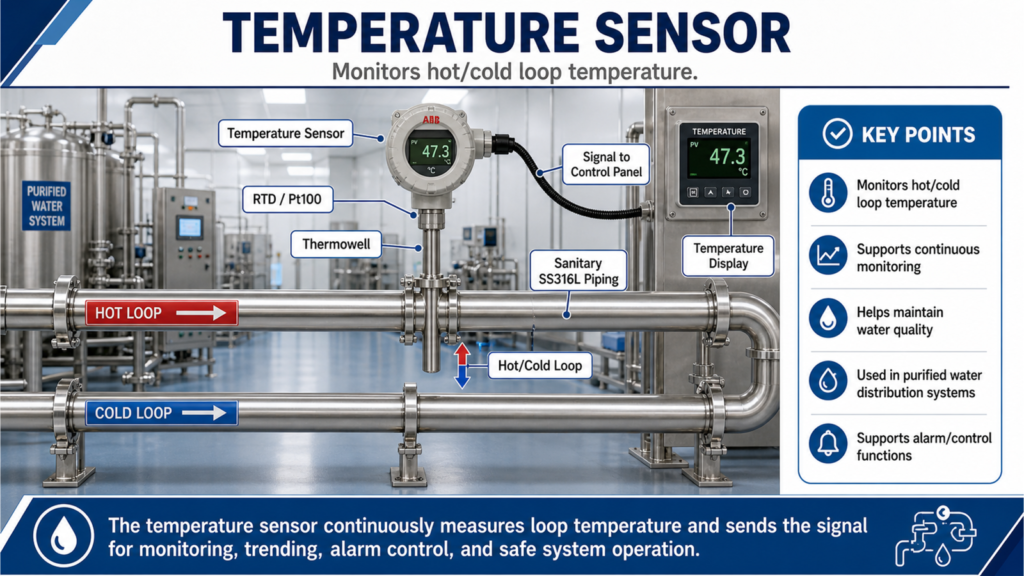
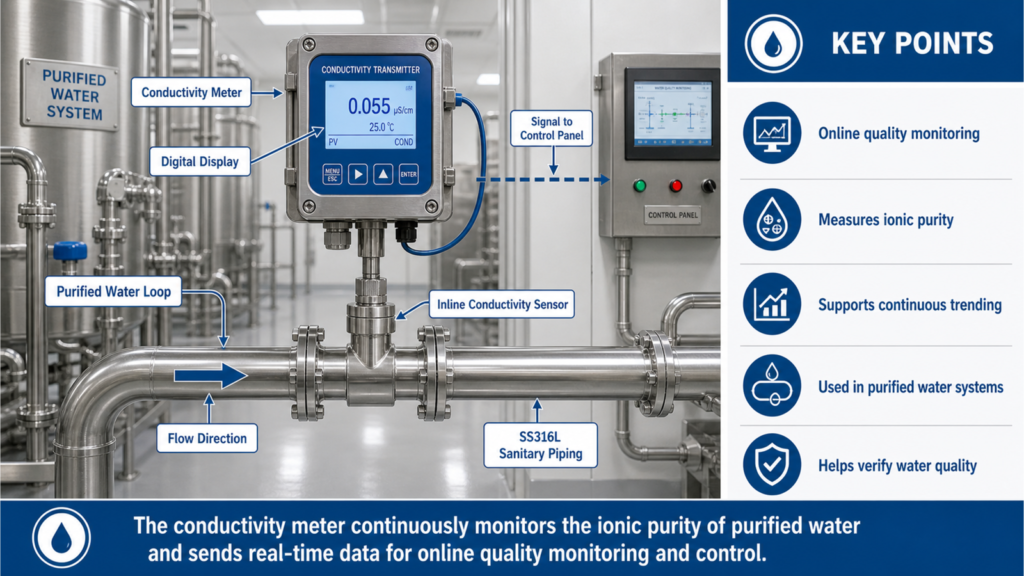
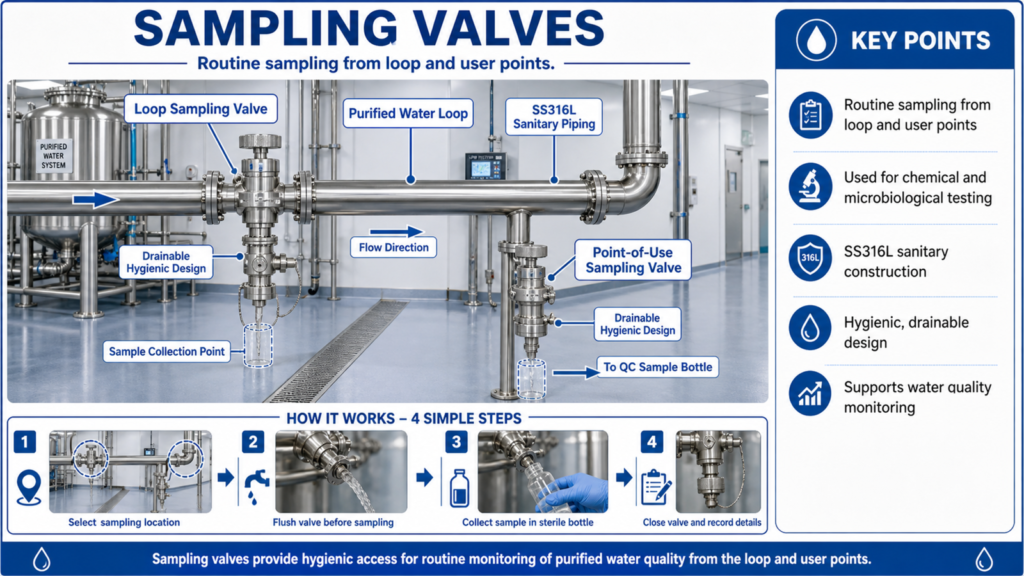
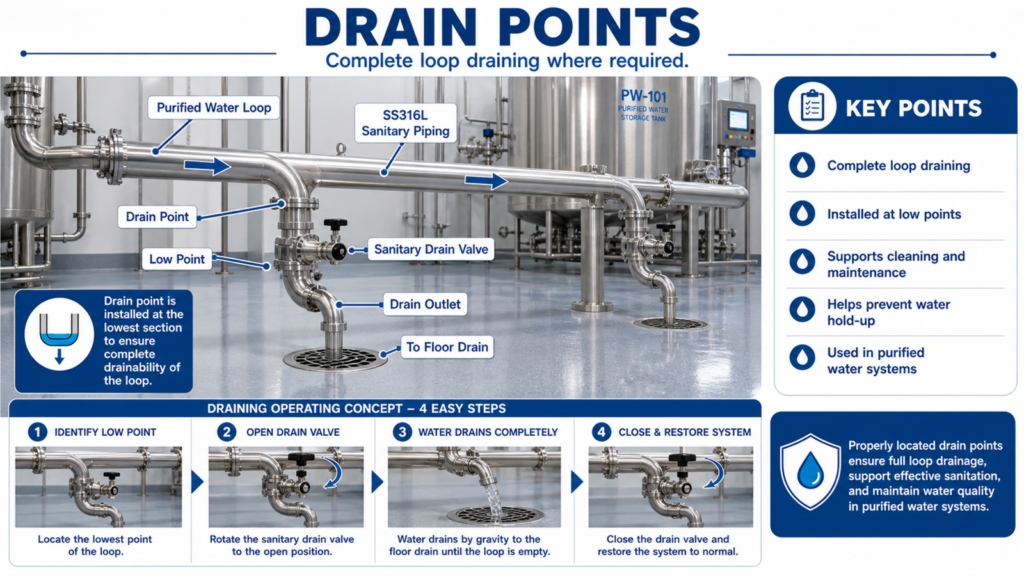
Finally, the Distribution System circulates purified water through sanitary pipelines to various points of use. Modern purified water systems also include control panels, monitoring instruments, conductivity sensors, pressure gauges, and automated controls for continuous operation and quality assurance.
A properly designed purified water system improves product quality, protects equipment, supports GMP compliance, and ensures safe, reliable, and consistent purified water production.