







1. Introduction to Dextromethorphan Hydrobromide, Phenylephrine Hydrochloride & Chlorpheniramine Maleate Syrup – Batch Packing Record (BPR):
Dextromethorphan Hydrobromide, Phenylephrine Hydrochloride, and Chlorpheniramine Maleate Syrup is a combination pharmaceutical formulation used for the symptomatic relief of cough, nasal congestion, runny nose, and sneezing associated with common colds and upper respiratory tract conditions. The formulation contains three active pharmaceutical ingredients with distinct therapeutic functions. Dextromethorphan Hydrobromide acts as a cough suppressant, Phenylephrine Hydrochloride functions as a nasal decongestant, and Chlorpheniramine Maleate provides antihistaminic activity. Each 5 mL contains Dextromethorphan Hydrobromide IP 10 mg, Phenylephrine Hydrochloride IP 5 mg, and Chlorpheniramine Maleate IP 2 mg. The Batch Packing Record (BPR) is an essential Good Manufacturing Practices (GMP) document that ensures systematic documentation, traceability, and control throughout pharmaceutical packaging operations. It includes packing material dispensing, line clearance, bottle filling, sealing, labeling, coding, inspection, reconciliation, and final packaging activities.The BPR establishes accountability through documented verification by Production and Quality Assurance personnel. Critical packaging parameters, including fill volume, container closure integrity, labeling accuracy, batch identification, and expiry date printing, are monitored to maintain product quality. Proper execution of the BPR helps prevent packaging errors, product mix-ups, and contamination while ensuring regulatory compliance, batch traceability, patient safety, and consistent pharmaceutical packaging quality.
Skip to PDF content2. Batch Packing Process Flow for Dextromethorphan Hydrobromide, Phenylephrine Hydrochloride & Chlorpheniramine Maleate Syrup:
The Batch Packing Process Flow Diagram illustrates the systematic packaging operations involved in Dextromethorphan Hydrobromide, Phenylephrine Hydrochloride, and Chlorpheniramine Maleate Syrup under Good Manufacturing Practices (GMP). The process begins with the receipt and verification of approved bulk syrup, followed by packing material dispensing and verification to ensure the availability of appropriate packaging components.
Line clearance is performed by authorized personnel to prevent product mix-ups, contamination, and packaging errors. Empty bottles are prepared and inspected before filling operations. During syrup filling, critical process parameters such as fill volume, filling accuracy, and equipment performance are monitored to maintain product consistency.
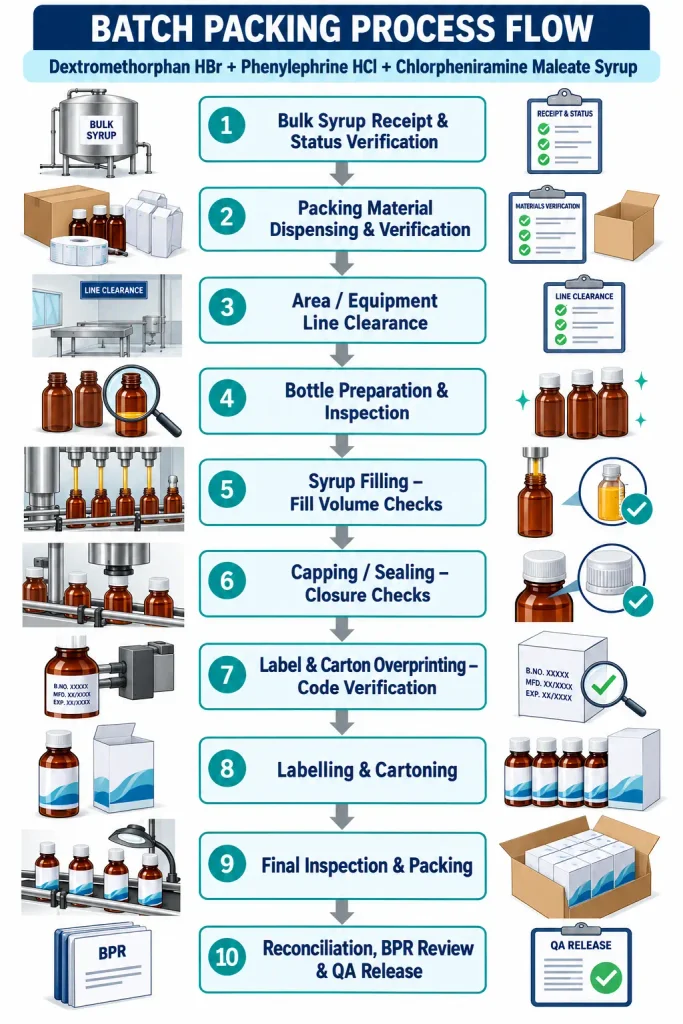
Following filling, bottles undergo capping and sealing to ensure container closure integrity and prevent leakage. Labels and cartons are overprinted with the required batch number, manufacturing date, and expiry date, followed by verification of printed information. The labeled bottles are packed into cartons and subsequently into shipping containers according to approved packaging specifications. Final inspection verifies packaging quality, labeling accuracy, and product identification. The process concludes with packing material reconciliation, Batch Packing Record (BPR) review, and Quality Assurance approval, ensuring complete traceability, regulatory compliance, and consistent product quality.
3. Critical Process Parameters (CPPs) and Critical Quality Attributes (CQAs) of Dextromethorphan Hydrobromide, Phenylephrine Hydrochloride & Chlorpheniramine Maleate Syrup:
Critical Process Parameters (CPPs) and Critical Quality Attributes (CQAs) play an important role in ensuring the consistent quality, safety, and regulatory compliance of Dextromethorphan Hydrobromide, Phenylephrine Hydrochloride, and Chlorpheniramine Maleate Syrup during pharmaceutical packaging operations. Critical Process Parameters are operational variables that require appropriate monitoring and control to maintain packaging quality. Important parameters include filling volume settings, filling machine speed, capping torque, sealing conditions, bottle inspection, labeling alignment, batch coding accuracy, and packaging line clearance.
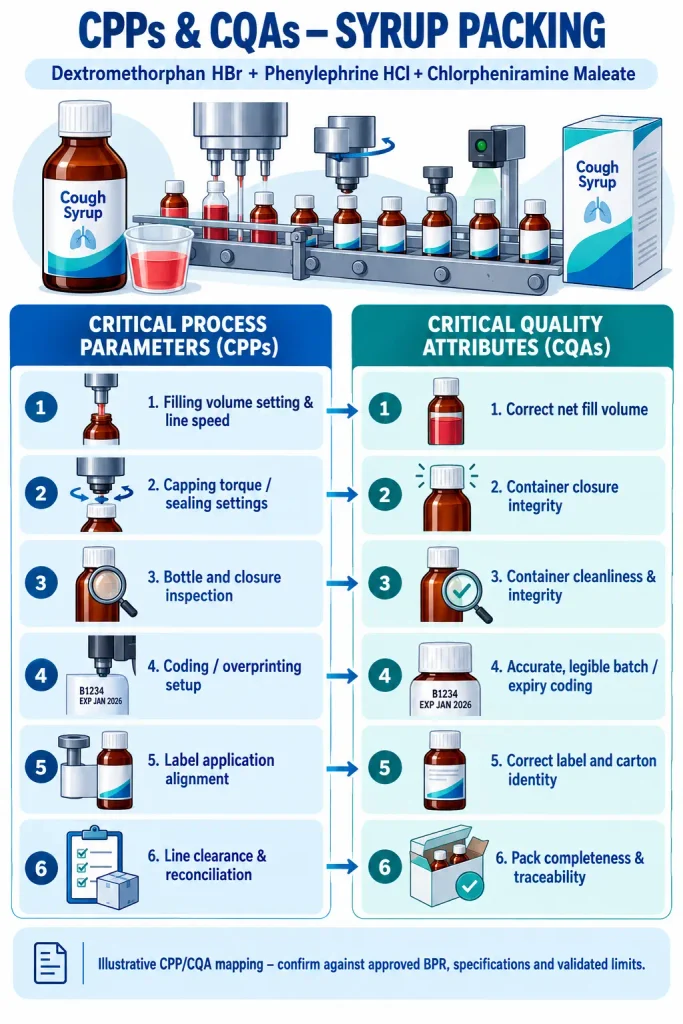
Critical Quality Attributes represent measurable characteristics that must meet predefined acceptance criteria to ensure the required quality of the finished product. These include accurate fill volume, container closure integrity, bottle cleanliness, correct labeling, legible batch details, packaging integrity, and product traceability. During filling operations, fill volume and equipment performance are monitored to prevent underfilling or overfilling. Capping and sealing controls help prevent leakage and maintain container closure integrity. Labeling and coding verification ensure accurate product identification, manufacturing dates, and expiry dates. Effective CPP monitoring and CQA verification, supported by documented in-process checks, deviation management, and Quality Assurance oversight, help minimize packaging defects and ensure compliance with Good Manufacturing Practices (GMP) and approved specifications.