






1. Introduction to Levosalbutamol Sulphate, Ambroxol Hydrochloride & Guaiphenesin Syrup – Batch Packing Record (BPR):
Levosalbutamol Sulphate, Ambroxol Hydrochloride & Guaiphenesin Syrup is a combination pharmaceutical formulation used in the management of respiratory conditions associated with bronchospasm, excessive mucus secretion, and productive cough. The formulation contains three active pharmaceutical ingredients that work through complementary mechanisms to improve respiratory function and facilitate mucus clearance. Levosalbutamol Sulphate acts as a bronchodilator, relaxing airway smooth muscles and improving airflow. Ambroxol Hydrochloride functions as a mucolytic agent, reducing mucus viscosity and facilitating expectoration. Guaiphenesin acts as an expectorant, helping loosen bronchial secretions and supporting effective mucus removal. Each 5 mL contains Levosalbutamol 1 mg, Ambroxol Hydrochloride 30 mg, and Guaiphenesin 50 mg in a flavoured syrup base. The Batch Packing Record (BPR) is an essential Good Manufacturing Practices (GMP) document that ensures systematic documentation, traceability, and control throughout pharmaceutical packaging operations. It includes verification of packaging materials, line clearance, bottle filling, sealing, labelling, coding, inspection, reconciliation, and final packing activities. Proper BPR documentation supports product identification, packaging integrity, prevention of mix-ups, batch accountability, and regulatory compliance. The completed BPR provides documented evidence that packaging operations were performed according to approved procedures and established quality standards, ensuring consistent product quality and patient safety.
Skip to PDF content2. Manufacturing and Packing Process Flow Diagram for Levosalbutamol Sulphate, Ambroxol Hydrochloride & Guaiphenesin Syrup:
The process flow diagram for Levosalbutamol Sulphate, Ambroxol Hydrochloride & Guaiphenesin Syrup illustrates the systematic sequence of pharmaceutical filling and packing operations performed according to Good Manufacturing Practices (GMP).
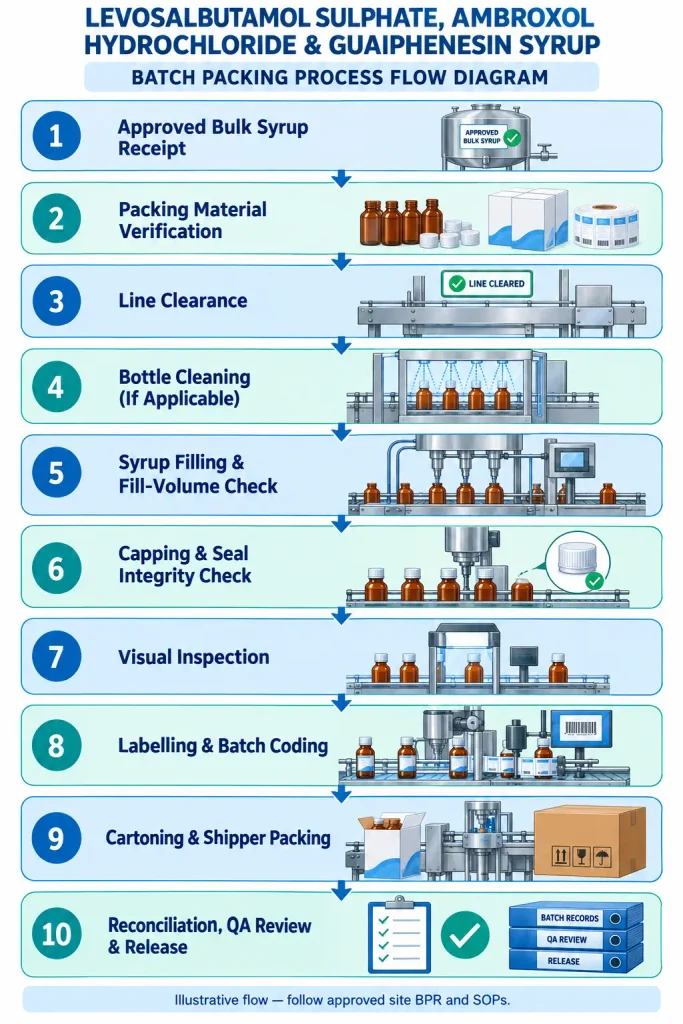
The process begins with the receipt and verification of approved bulk syrup, followed by packaging material dispensing and verification against the approved Batch Packing Record (BPR). Before initiating operations, line clearance is performed by Quality Assurance (QA) to prevent contamination, mix-ups, and packaging errors. Clean bottles are transferred to the filling line, where the syrup is filled under controlled conditions. Critical parameters, including filling volume, equipment settings, and container cleanliness, are monitored to maintain product quality. After filling, bottles undergo capping and sealing operations to ensure container closure integrity. Subsequently, visual inspection is conducted to identify leakage, improper sealing, and other packaging defects. The bottles are then labelled, batch-coded, and packed into secondary cartons and shipping containers. Throughout the process, in-process quality checks, documentation, and packaging material reconciliation are performed. Finally, completed batch records are reviewed by QA to verify compliance with approved specifications, established procedures, and regulatory requirements before batch release, ensuring consistent quality, traceability, and patient safety.
Description of Critical Process Parameters (CPPs) and Critical Quality Attributes (CQAs) of Levosalbutamol Sulphate, Ambroxol Hydrochloride & Guaiphenesin Syrup
Critical Process Parameters (CPPs) and Critical Quality Attributes (CQAs) play an essential role in ensuring the quality, safety, efficacy, and consistency of Levosalbutamol Sulphate, Ambroxol Hydrochloride & Guaiphenesin Syrup during pharmaceutical filling and packing operations. Critical Process Parameters (CPPs) are operating parameters whose variability can affect product quality and therefore require appropriate monitoring and control. Important potential CPPs include bulk syrup holding conditions, filling machine settings, filling volume, capping torque, sealing parameters, and equipment operating conditions.
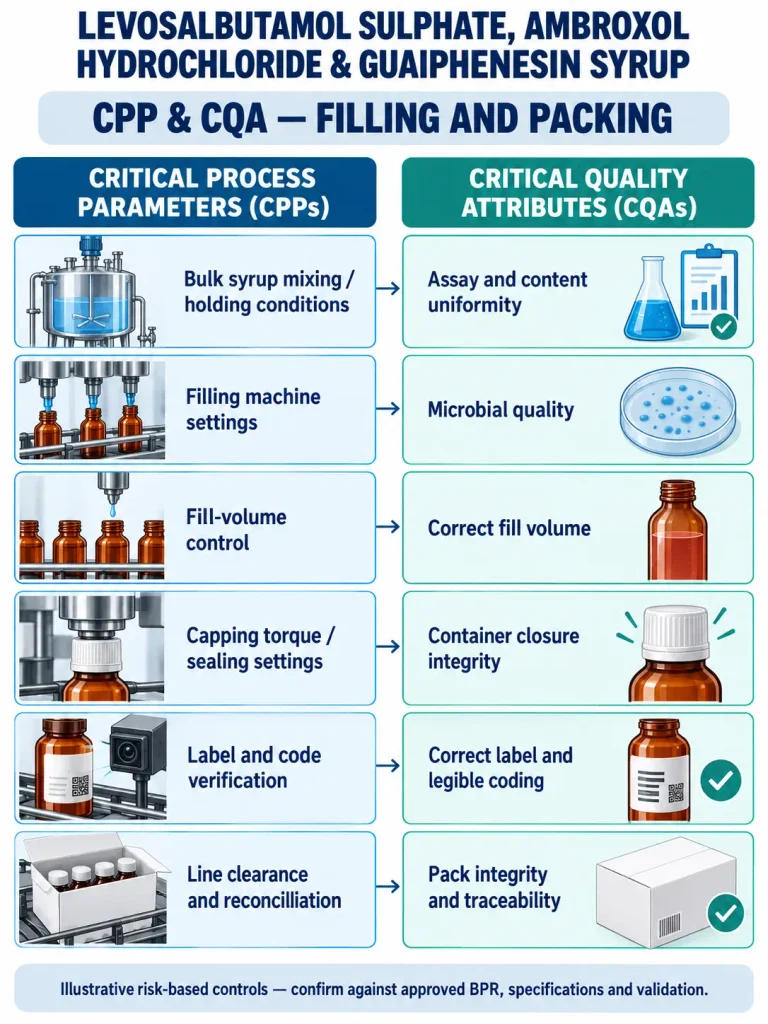
Proper control of these parameters helps prevent underfilling, overfilling, leakage, contamination, and packaging defects. Critical Quality Attributes (CQAs) are physical, chemical, biological, or microbiological properties that must remain within established limits to ensure the desired product quality. Important CQAs include assay, microbial quality, appearance, fill volume, container closure integrity, and product stability. Correct labelling, batch coding, and packaging integrity are also essential quality requirements. In-process quality checks, equipment calibration, line clearance, and packaging material reconciliation support effective process control. The identification and monitoring of CPPs and CQAs follow Good Manufacturing Practices (GMP), Quality Risk Management (QRM), and Quality by Design (QbD) principles. Effective control ensures batch consistency, regulatory compliance, product traceability, and patient safety throughout manufacturing and packaging operations.