







1. Introduction to Batch Packing Record (BPR) of Luliconazole Cream 1% w/w:
The Batch Packing Record (BPR) of Luliconazole Cream 1% w/w is a comprehensive Good Manufacturing Practice (GMP) document designed to ensure the systematic execution, monitoring, verification, and documentation of pharmaceutical packaging operations. Luliconazole Cream is a topical antifungal preparation containing Luliconazole IP 1.0% w/w, packed in 10 g tubes under the product name Luliron Cream. The BPR provides detailed instructions and documentation formats for each stage of the packaging process, including bulk material receipt, packing material dispensing, line clearance, overprinting, tube filling, sealing, carton packing, shipper packing, and finished product reconciliation. The document emphasizes the importance of line clearance, in-process quality checks, packaging material accountability, and traceability to minimize the risk of contamination, product mix-ups, labeling errors, and packaging defects. During tube filling, the BPR specifies a target filling weight of 10.3 g with an acceptable filling range of 10.0–10.9 g. In-process checks are performed at 60-minute intervals to verify filling accuracy and cap sealing integrity. Additional checks ensure the correctness of batch numbers, manufacturing dates, expiry dates, MRP, and shipper contents. The BPR also includes provisions for documenting rejected materials, defects, deviations, sample collection, and final packaging yield. Proper execution and review of this record by Production and Quality Assurance personnel support product quality, regulatory compliance, batch traceability, and consistent packaging operations. This BPR serves as an essential component of the pharmaceutical quality management system, ensuring that every batch of Luliconazole Cream 1% w/w is packaged according to approved procedures and established quality standards.
Skip to PDF content2. Flow Diagram for Batch Packing Record (BPR) of Luliconazole Cream 1% w/w:
The flow diagram of the Batch Packing Record (BPR) for Luliconazole Cream 1% w/w (Luliron Cream) illustrates the systematic sequence of pharmaceutical packaging operations in accordance with Good Manufacturing Practices (GMP). The process begins with the receipt and verification of bulk cream from the Manufacturing Department, followed by the dispensing and verification of approved packaging materials. Line clearance is performed to ensure that the packaging area and equipment are clean and free from previous product materials.
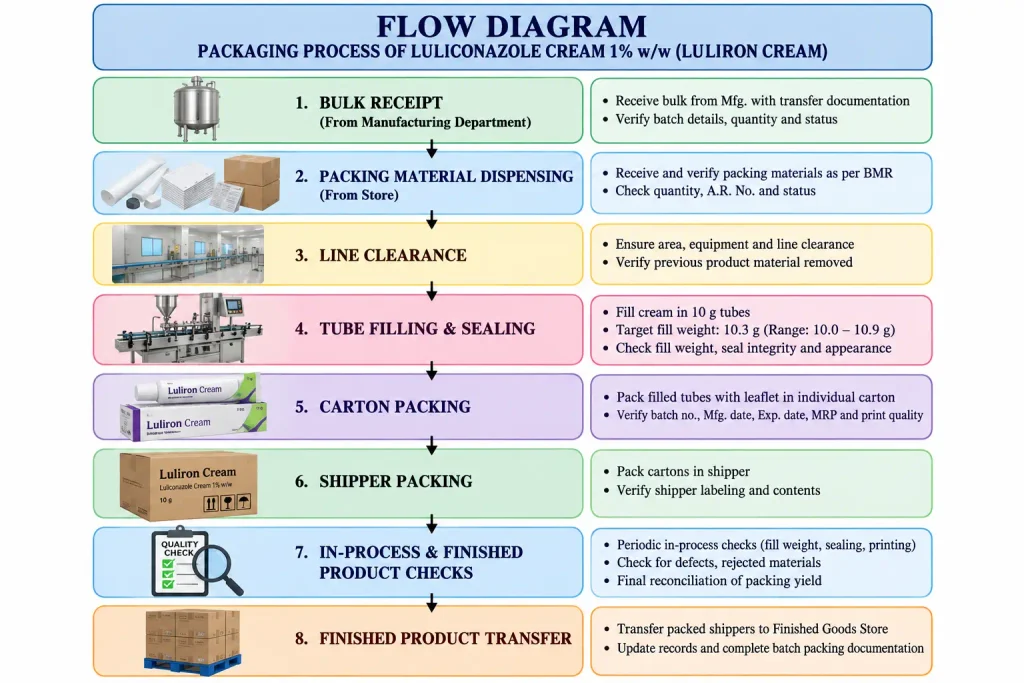
The cream is then filled into 10 g tubes, with a specified target filling weight of 10.3 g and an acceptable range of 10.0–10.9 g. In-process quality checks are performed every 60 minutes to verify filling weight and sealing integrity. Subsequently, filled tubes undergo carton packing, coding verification, and shipper packing. The final stages include packaging material reconciliation, documentation of defects and deviations, sampling, and completion of batch packing records.
3. Critical Process Parameters (CPP) and Critical Quality Attributes (CQA) for Luliconazole Cream 1% w/w – Batch Packing Record (BPR):
The Critical Process Parameters (CPP) and Critical Quality Attributes (CQA) of Luliconazole Cream 1% w/w (Luliron Cream) are essential for ensuring consistent packaging quality, product integrity, and compliance with Good Manufacturing Practices (GMP). The CPP and CQA diagram illustrates seven important packaging stages, including bulk receipt, packing material dispensing, line clearance, tube filling and sealing, carton packing, shipper packing, and finished product verification. During tube filling, the BPR specifies a target filling weight of 10.3 g with an acceptable range of 10.0–10.9 g. In-process checks are conducted every 60 minutes to verify filling weight and cap sealing integrity. Other important process controls include equipment cleanliness, packaging material identification, correct overprinting, batch coding, and packaging reconciliation.
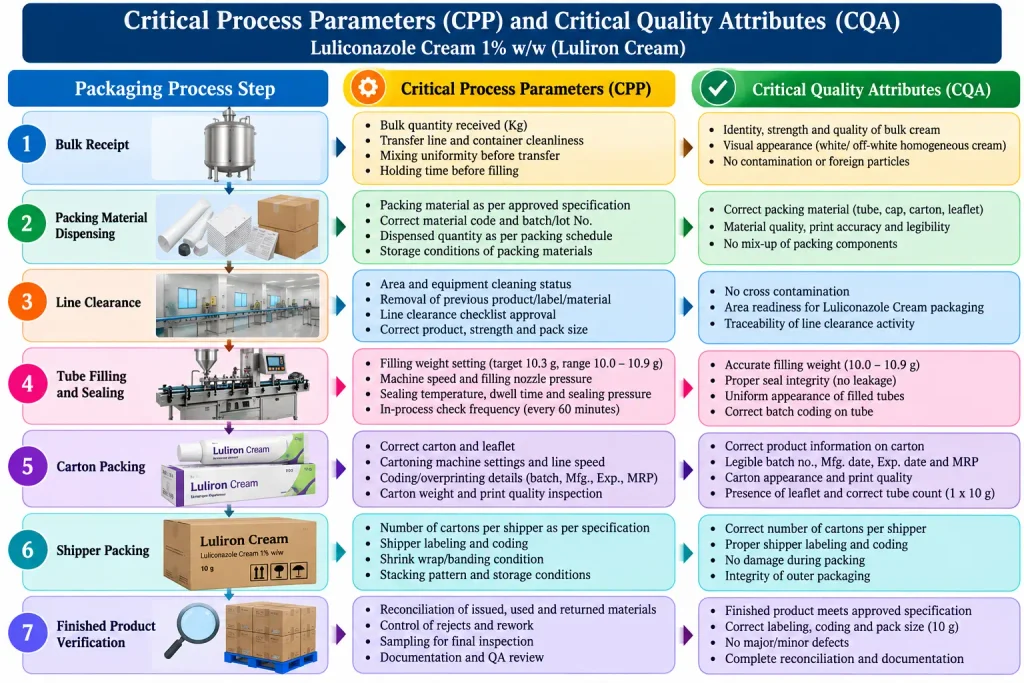
The key quality attributes include accurate fill weight, properly sealed tubes, correct labeling, legible manufacturing and expiry dates, packaging integrity, and freedom from contamination or product mix-ups. Effective monitoring of these parameters helps minimize packaging defects, maintain batch traceability, support product quality, and ensure regulatory compliance.
Note: The diagram provides illustrative CPP and CQA classifications. Final criticality should be established through an approved quality risk assessment and validated packaging process.