







1. Introduction – SOP for Offline Over Printing of Carton/Label:
The Standard Operating Procedure for Offline Over Printing of Carton/Label defines the controlled method for printing required batch details on cartons and labels used during pharmaceutical packaging operations. Its objective is to ensure that information such as product name, batch details, manufacturing and expiry information, and other approved particulars is correctly printed without mix-up or misidentification. The SOP applies to batch overprinting activities performed in the packing department and assigns responsibility to Production personnel, operators, supervisors, and Quality Assurance for execution and control. Before overprinting starts, the printing area and machine are cleaned, remnants from the previous product are removed, and QA line clearance is obtained. Cartons or labels are counted, the printing machine is set in the presence of QA, and the first and last overprinted specimens are approved and attached to the Batch Packing Record. Good printed materials are segregated from rejected materials, properly identified, reconciled, recorded, and transferred to packing. Rejected cartons or labels are securely controlled and destroyed under QA supervision, helping prevent mix-ups and ensuring complete traceability throughout the operation.
Skip to PDF content2. Flow Diagram – SOP for Offline Over Printing of Carton/Label:
The SOP for Offline Over-Printing of Carton/Label describes the systematic sequence to be followed for controlled overprinting of batch information on cartons and labels in the packing area. The activity begins with cleaning of the printing area and machine, removal of previous product materials, and obtaining line clearance from Quality Assurance. After clearance, the required cartons or labels are brought into the printing area, counted, and the operator is instructed regarding the approved batch details.
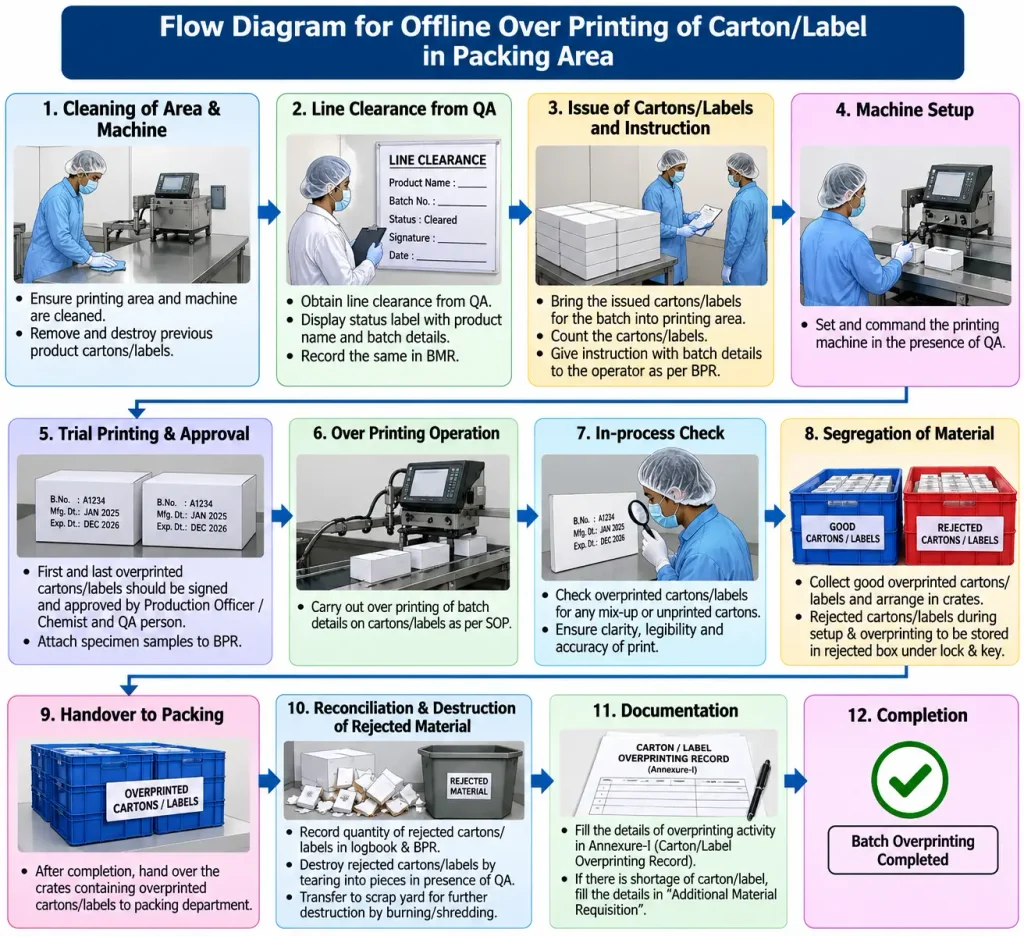
The printing machine is then set in the presence of QA. The first and last overprinted samples are checked and approved, with specimen samples attached to the Batch Packing Record. Printed materials are checked for clarity, correctness, and possible mix-up with unprinted cartons. Good and rejected materials are segregated, identified, and controlled separately. After completion, accepted overprinted cartons or labels are handed over to packing, while rejected materials are recorded, destroyed under QA supervision, and the entire activity is documented in the Carton/Label Overprinting Record.
3. Benefits of Following SOP – Offline Over Printing of Carton/Label:
Following the SOP for Offline Over Printing of Carton/Label provides effective control over the printing and handling of packaging materials in the packing area. The procedure helps ensure that the correct batch details are printed on cartons and labels and that printing is performed only after proper cleaning, removal of previous product materials, and QA line clearance. The SOP also supports prevention of mix-ups by requiring verification of overprinted cartons/labels, approval of the first and last printed samples, and segregation of good and rejected materials. Rejected cartons or labels are kept under controlled conditions and later destroyed under QA supervision, reducing the possibility of accidental reuse.
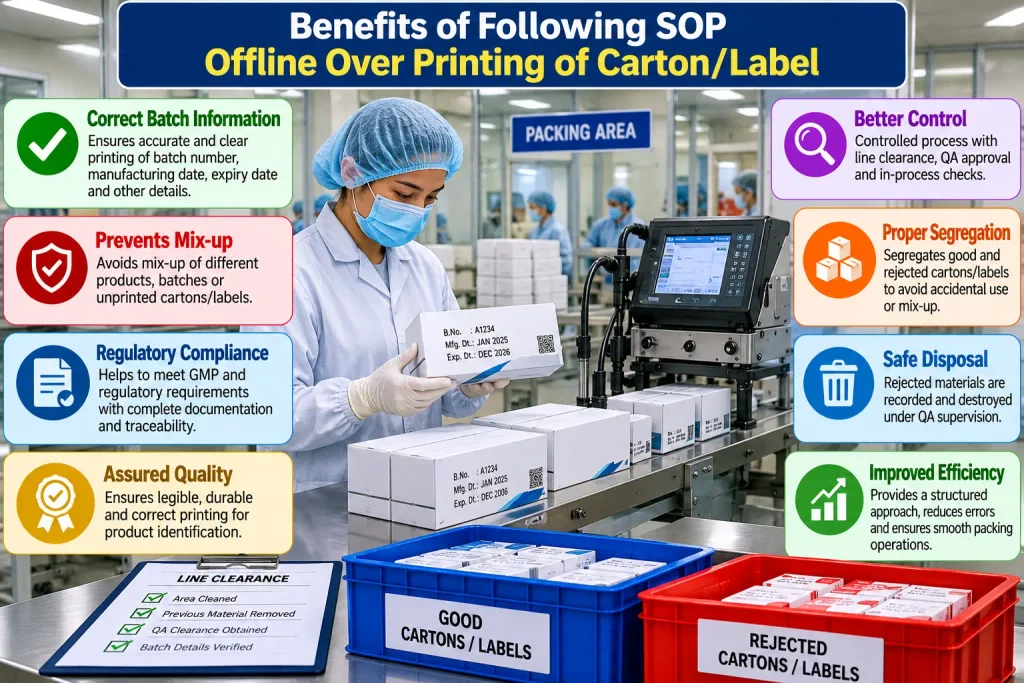
Proper documentation of the overprinting activity in the Batch Packing Record and Carton/Label Overprinting Record provides traceability and accountability. Overall, adherence to this SOP improves printing accuracy, material control, product identification, reconciliation, documentation, and compliance with established packaging procedures.
4. Brainstorming Analysis – SOP for Offline Over Printing of Carton/Label:
The Brainstorming Analysis for SOP Failure – Offline Over Printing of Carton/Label identifies potential causes that may lead to errors, mix-ups, rejection, or loss of traceability during carton and label overprinting activities in the packing area. The SOP requires cleaning of the printing area and machine, removal of previous product materials, QA line clearance, correct issue and counting of cartons/labels, machine setting in the presence of QA, approval of the first and last printed samples, segregation of rejected material, reconciliation, destruction, and documentation.
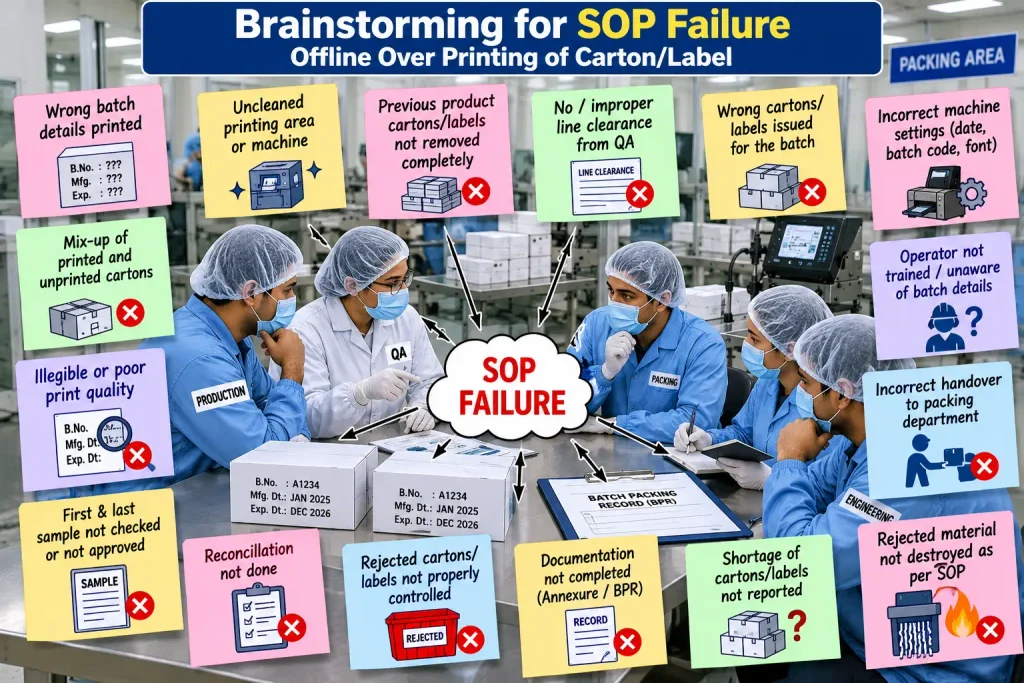
During brainstorming, possible failure causes include wrong batch details, improper line clearance, previous product cartons remaining in the area, incorrect machine settings, mix-up of printed and unprinted cartons, poor print quality, untrained operators, inadequate first-and-last sample verification, incomplete reconciliation, improper control of rejected materials, documentation gaps, and failure to report shortages. Identifying these causes helps the Production and QA teams evaluate risks early and establish suitable controls to prevent packaging errors, maintain material accountability, and ensure reliable execution of the SOP.
5. 5-Why Analysis – SOP Failure for Offline Over Printing of Carton/Label:
The 5-Why Analysis for SOP Failure – Offline Over Printing of Carton/Label is used to identify the underlying reason for errors such as incorrect batch details being printed on cartons or labels. In this analysis, the problem begins with wrong information appearing on the printed packaging material. Further questioning may show that incorrect batch details were entered into the printing machine, possibly because the operator referred to wrong or unverified batch information. This can be linked to inadequate verification of the batch details and ineffective line clearance before starting the overprinting activity.
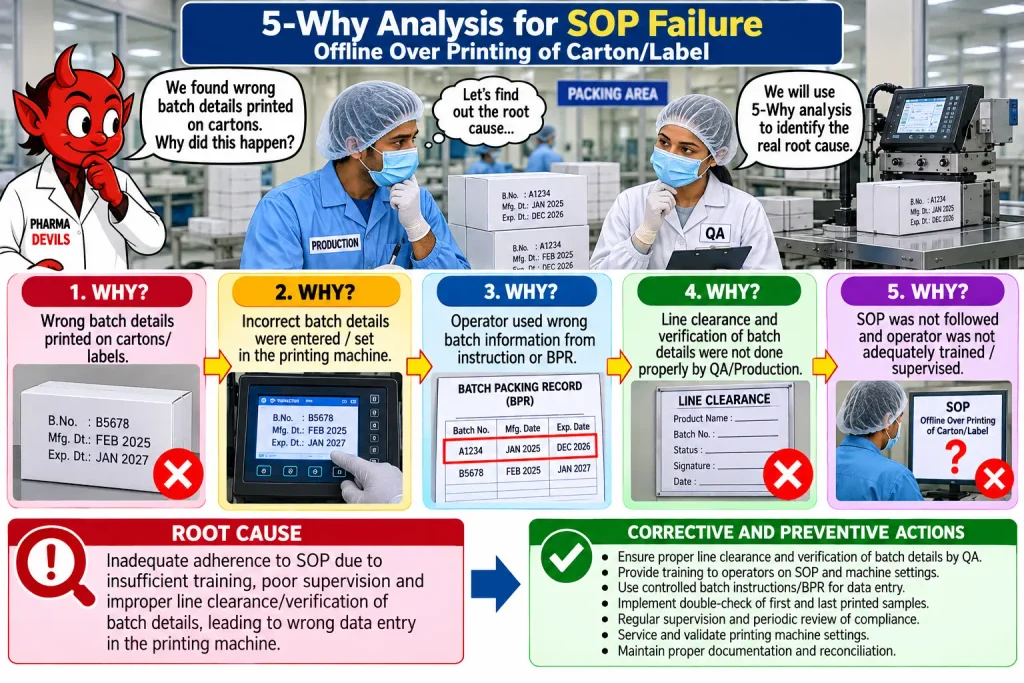
The SOP specifically requires cleaning of the printing area, removal of previous product materials, QA line clearance, correct batch instructions, machine setting in the presence of QA, and approval of the first and last overprinted samples. The analysis therefore points toward inadequate SOP adherence, insufficient operator understanding, weak supervision, or incomplete verification as potential root causes. Strengthening training, line clearance, batch-detail verification, first-and-last sample approval, documentation, and supervisory checks can help prevent recurrence and improve control of the overprinting process.
6. Fault Tree Analysis – SOP Failure for Offline Over Printing of Carton/Label:
The Fault Tree Analysis for SOP Failure – Offline Over Printing of Carton/Label evaluates the possible events that can lead to failure of the overprinting activity in the packing area. The top event may be considered as incorrect, defective, or improperly controlled overprinted cartons/labels being released for packing. Major contributing branches include wrong batch details printed, mix-up of printed and unprinted cartons/labels, poor print quality, and failure to follow the approved SOP. These failures can arise from incorrect data entry, wrong batch instructions, inadequate verification, improper segregation, missing identification labels, incorrect machine settings, poor equipment condition, insufficient line clearance, failure to approve first and last printed samples, incomplete documentation, or improper control of rejected materials.
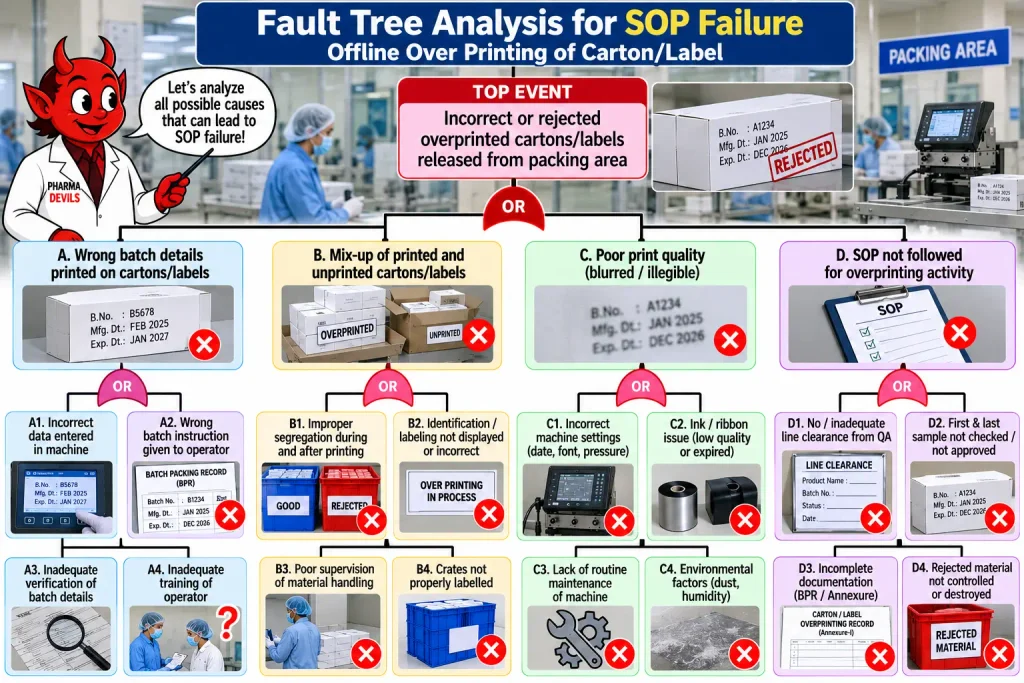
The SOP requires QA line clearance, correct machine setting, approval of first and last overprinted samples, segregation of good and rejected materials, reconciliation, controlled destruction, and recording of the activity. Fault Tree Analysis helps Production and QA systematically identify these failure pathways so that suitable controls, training, verification, supervision, and documentation practices can be strengthened to prevent recurrence.
7. Impact Assessment – SOP Failure for Offline Over Printing of Carton/Label:
The Impact Assessment for SOP Failure – Offline Over Printing of Carton/Label evaluates the potential consequences of errors occurring during the overprinting activity in the packing area. Failures such as incorrect batch details, mix-up of printed and unprinted cartons, poor print quality, improper segregation, incomplete reconciliation, or inadequate control of rejected materials can affect both packaging control and batch traceability. The SOP requires verification of overprinted cartons for mix-up, segregation of acceptable and rejected cartons/labels, controlled storage of rejected materials, handover of approved printed materials to packing, reconciliation of rejected quantities, and destruction under QA supervision.
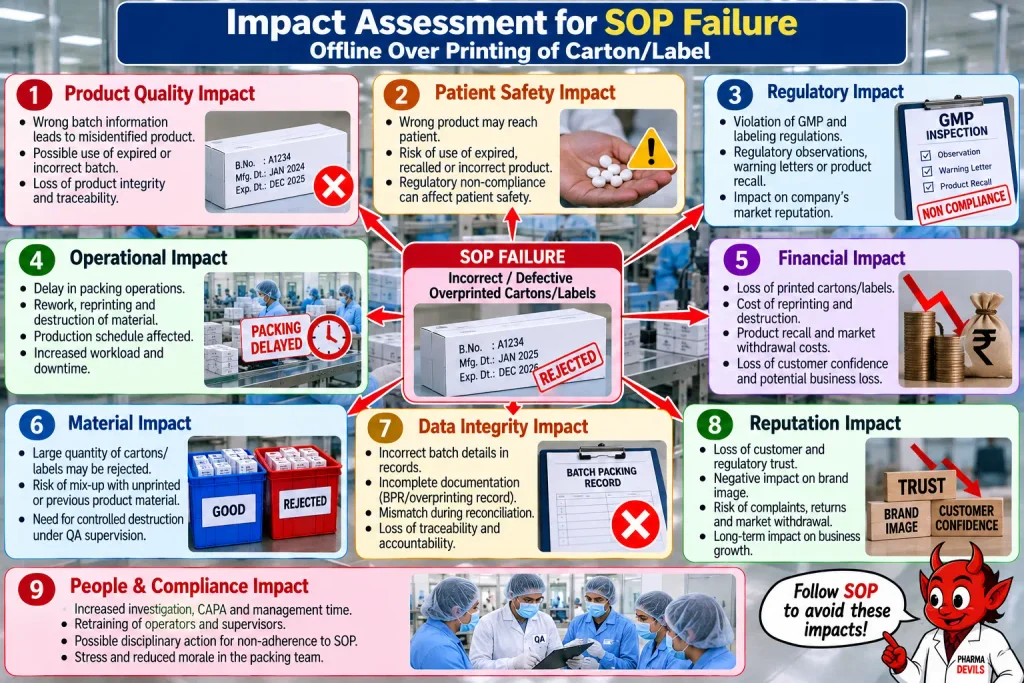
Failure to follow these controls can result in product identification errors, incorrect batch information, packaging delays, material rejection, reprinting, increased scrap, documentation discrepancies, loss of traceability, and possible release of unsuitable packaging material. It may also increase investigation and CAPA requirements and create compliance concerns. Proper implementation of the SOP helps maintain material accountability, correct product identification, controlled rejection, and reliable documentation throughout the overprinting operation.
8. CAPA – SOP Failure for Offline Over Printing of Carton/Label:
The Corrective and Preventive Action (CAPA) for SOP Failure – Offline Over Printing of Carton/Label is intended to eliminate the immediate cause of printing errors and prevent recurrence during future packing operations. When incorrect or defective overprinted cartons or labels are detected, the affected activity should be stopped, suspect materials segregated, and the incident investigated by reviewing the BPR, line-clearance status, machine settings, batch instructions, reconciliation records, and operator practices.
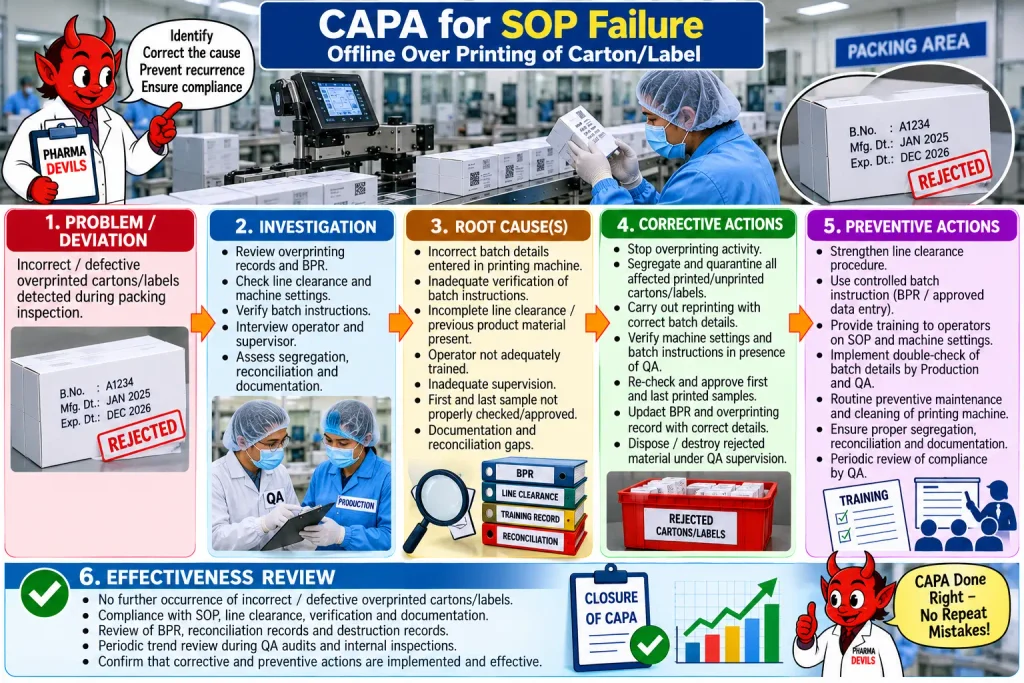
Corrective actions may include re-verification of batch details, correction of printing-machine settings, rechecking the first and last printed samples, updating records, and controlled rejection or destruction of affected materials under QA supervision. The SOP requires QA presence during machine setting, approval of the first and last overprinted samples, segregation of rejected cartons/labels, recording of rejected quantities, and destruction under QA oversight. Preventive actions should focus on improved SOP training, stronger line-clearance checks, independent verification of batch details, better segregation and labeling, periodic machine checks, and regular QA review of overprinting documentation. Effectiveness should be confirmed by monitoring subsequent batches for repeat errors, documentation discrepancies, mix-ups, or rejected-material control failures.
Questions & Answers – SOP for Offline Over Printing of Carton/Label:
- What is the objective of this SOP?
The objective is to define the procedure for overprinting batch details on cartons and labels used in pharmaceutical packing operations. - Where is this SOP applicable?
It is applicable to all batch overprinting operations carried out in the packing department. - Who is responsible for execution of the SOP?
Officer/Chemist–Production and the Operator are responsible for execution of the procedure. - What should be done before starting carton or label overprinting?
The printing area and machine should be cleaned, and cartons or labels from the previous product should be removed and destroyed. - Is QA line clearance required before overprinting?
Yes. Line clearance should be obtained from QA before starting the activity, and the status label and relevant details should be recorded in the BMR. - What information should be given to the overprinting operator?
The packing supervisor should provide the required batch details to be overprinted as per the BPR requirement. - Should cartons or labels be counted before printing?
Yes. The issued cartons or labels should be brought into the printing area and counted before starting overprinting. - Who should be present during printing machine setting?
The printing machine should be set and commanded in the presence of QA. - What should be done with the first and last overprinted samples?
The first and last overprinted cartons or labels should be signed and approved by Production and QA personnel, and specimen samples should be attached to the BPR. - Why are overprinted cartons checked after printing?
They are checked to detect any mix-up with unprinted cartons. - How should good and rejected cartons or labels be controlled?
Good overprinted materials should be collected in properly labeled crates, while rejected materials should be kept in a rejected box under lock and key to prevent mix-up. - What happens to acceptable overprinted cartons or labels after completion?
The crates containing acceptable overprinted cartons or labels are handed over to the packing department. - How are rejected cartons or labels handled after batch packing?
Their quantity is recorded in the logbook and BPR, and the rejected materials are destroyed by tearing them into pieces in the presence of QA before transfer to the scrap yard for further destruction. - Where is the overprinting activity documented?
The activity is recorded in Annexure-I: Carton/Label Overprinting Record. - What should be done if there is a shortage of cartons or labels?
The details should be documented through the Additional Material Requisition process specified in the SOP. - What important details are recorded in the Carton/Label Overprinting Record?
The record includes product name, batch number, manufacturing and expiry dates, cleaning checks, quantity issued, printing start and completion time, rejection quantity, quantity issued to packing, and verification details.
Reference Guidelines – Offline Over Printing of Carton/Label:
- SOP – Handling of Dispensed Material