







1. Introduction – Paracetamol & Diclofenac Sodium Tablets IP:
Paracetamol & Diclofenac Sodium Tablets IP are a fixed-dose combination of two widely used analgesic and anti-inflammatory agents intended for the management of pain and inflammation. Each uncoated tablet contains Paracetamol IP 325 mg and Diclofenac Sodium IP 50 mg, along with suitable excipients. The product is required to be stored below 30°C and protected from light and moisture to maintain its quality and stability. The Batch Packing Record provides a controlled and documented system for carrying out and recording all activities associated with the packing of the finished tablets. It covers the receipt and dispensing of packaging materials, overprinting verification, line clearance, packing-line setup, blister or strip packing, leak testing, in-process checks, carton and shipper verification, and finished-product transfer. The record also includes reconciliation of packaging materials, rejection analysis, destruction records, yield statements, and final verification by Production and Quality Assurance. Proper execution of the Batch Packing Record helps ensure product identity, traceability, prevention of mix-ups, accurate reconciliation, and compliance with established Good Manufacturing Practices. It also provides documented evidence that the packing operation has been performed according to approved procedures and quality requirements.
Skip to PDF content2. Flow Diagram of Batch Packing Process:
The flow diagram illustrates the systematic batch packing process for Paracetamol & Diclofenac Sodium Tablets IP, beginning with the receipt of approved finished tablets from the manufacturing section. The packing operation starts with dispensing and verification of approved packaging materials according to the packing schedule. Before commencement, proper line clearance is performed to ensure that the area, equipment, and materials are free from remnants of previous products or batches.
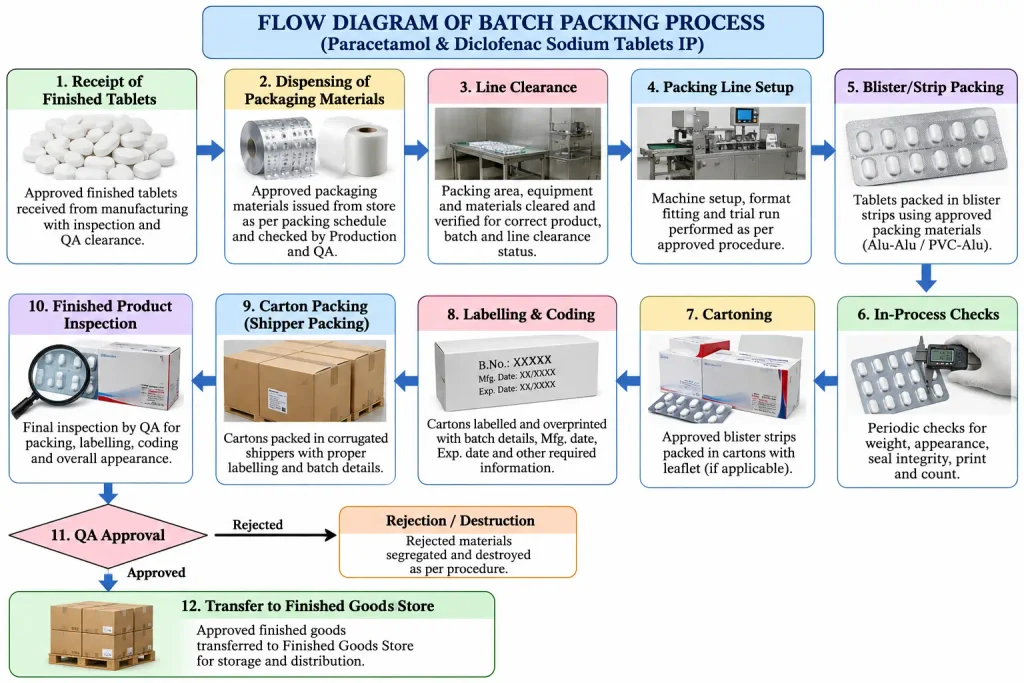
The packing line is then set up with the required machine settings and approved packaging components. Tablets are packed into suitable blister or strip packs, followed by routine in-process checks such as seal integrity, appearance, coding, count, and leak testing. Approved blister or strip packs are subsequently packed into cartons, and required batch details including batch number, manufacturing date, expiry date, and other information are verified. The cartons are then packed into corrugated shippers with appropriate identification. Final packed products are inspected for correctness of packing, labelling, coding, and overall appearance. Quality Assurance reviews the packing activity and associated records. Approved finished products are transferred to the Finished Goods Store, while rejected materials are segregated and destroyed according to the approved procedure.
3. Critical Process Parameters (CPP) and Critical Quality Attributes (CQA):
The CPP and CQA diagram presents the important process controls and quality requirements associated with the packing of Paracetamol & Diclofenac Sodium Tablets IP. Critical Process Parameters are the operating conditions and process controls that must be maintained within defined limits to ensure consistent packing performance. These include approved packaging material selection, correct dispensing quantity, proper line clearance, machine setup, sealing temperature, pressure, dwell time, machine speed, coding verification, carton packing, and shipper packing controls.
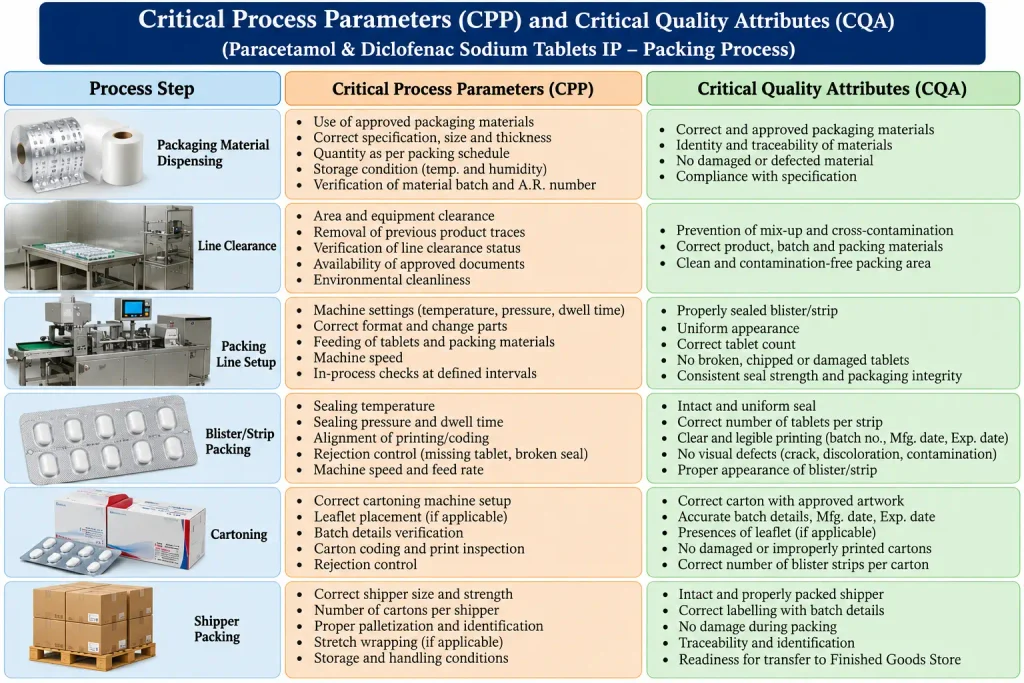
Critical Quality Attributes represent the measurable characteristics of the packed product that confirm its required quality, identity, integrity, and presentation. These include correct packaging materials, prevention of mix-ups, proper blister or strip sealing, correct tablet count, absence of broken or damaged tablets, clear and legible printing, accurate batch number, manufacturing date and expiry date, correct carton artwork, and proper shipper identification. Effective monitoring of CPPs helps maintain control over the packing operation, while evaluation of CQAs confirms that the finished packed product meets established specifications. Together, CPPs and CQAs support product traceability, packaging integrity, GMP compliance, and consistent delivery of acceptable finished products.