







1. Introduction
Paracetamol & Dicyclomine Hydrochloride Tablets are a combination pharmaceutical dosage form containing Paracetamol IP 325 mg and Dicyclomine Hydrochloride IP 20 mg in each uncoated tablet. Paracetamol is widely used for its analgesic and antipyretic properties, while Dicyclomine Hydrochloride is an antispasmodic agent commonly used to relieve smooth-muscle spasms. The combination is intended to provide symptomatic relief in conditions where pain is associated with abdominal or gastrointestinal spasms. The Batch Packing Record is an important controlled GMP document used to record, monitor, and verify all activities associated with the packing of the finished tablets. It provides documented evidence of packaging material dispensing, overprinting, line clearance, machine setup, in-process checks, leak testing, carton and shipper verification, reconciliation, rejection analysis, destruction of rejected materials, yield calculation, and final release activities. Proper completion of the Batch Packing Record ensures batch traceability, accountability of printed and unprinted packaging materials, prevention of product mix-ups, and compliance with approved packing instructions. The product is required to be stored below 30°C and protected from light and moisture. Effective documentation and verification throughout the packing process help maintain product identity, quality, safety, and integrity until final distribution.
Skip to PDF content2. Flow Diagram:
The packing process of Paracetamol & Dicyclomine Hydrochloride Tablets is designed to ensure accurate identification, proper protection, traceability, and controlled handling of the finished product throughout the packaging operation. The process begins with the receipt of approved finished tablets and the dispensing of approved packaging materials according to the Batch Packing Record.
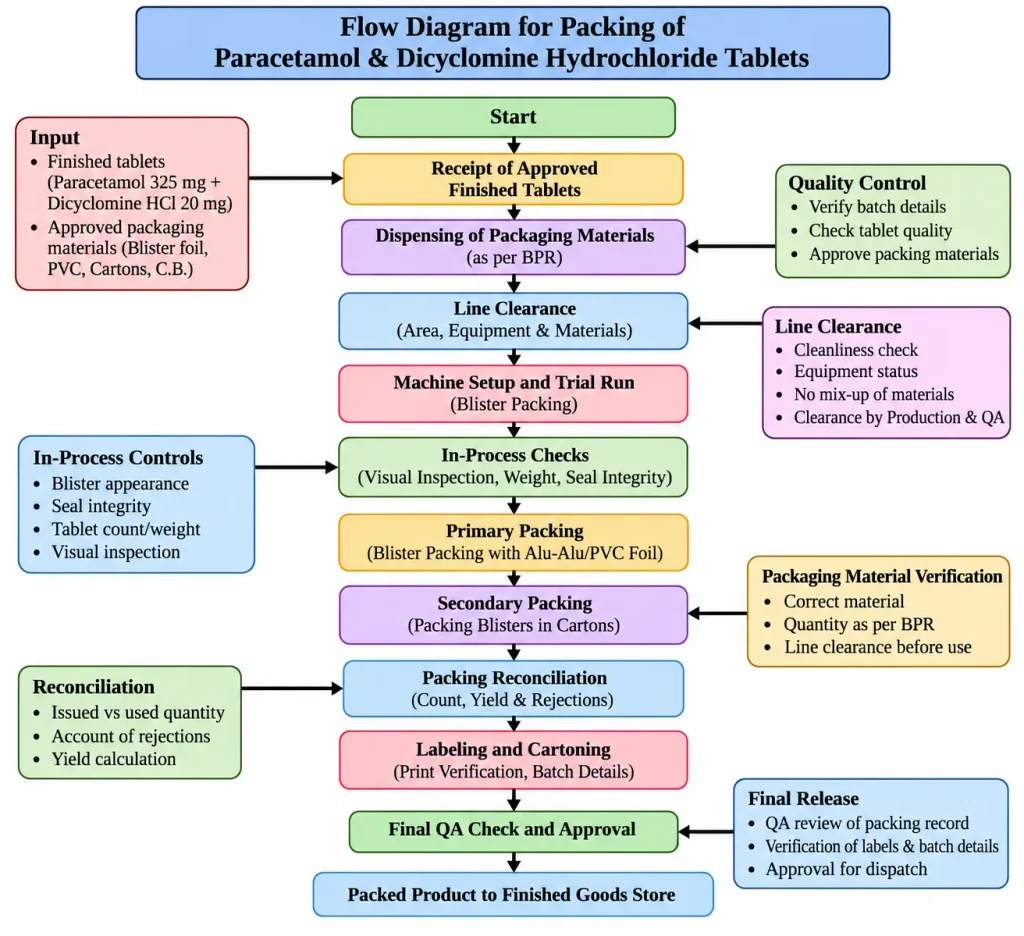
Before packing starts, line clearance is performed to confirm cleanliness of the area, equipment status, removal of materials from the previous batch, and prevention of product or packaging mix-ups. After satisfactory clearance, the packing machine is set up and initial operating parameters are verified. The tablets are then packed in primary packaging materials such as blister foil and PVC. In-process checks include verification of blister appearance, seal integrity, tablet count, packing quality, and other specified parameters. The packed blisters are subsequently placed into cartons and tertiary shippers as applicable. During and after packing, printed packaging materials and finished packed quantities are reconciled. Rejections, damaged materials, and unused packaging components are properly accounted for. Finally, Quality Assurance reviews the completed packing documentation, verifies labeling and batch details, and approves the packed product for transfer to the finished goods store.
3. CPP and CQA:
The Critical Process Parameters (CPP) and Critical Quality Attributes (CQA) for packing of Paracetamol & Dicyclomine Hydrochloride Tablets are essential for maintaining product quality, identity, integrity, and traceability throughout the packaging process. CPPs are the operating conditions and process variables that must be controlled within established limits, while CQAs are the measurable characteristics that confirm the packed product meets predefined quality requirements.
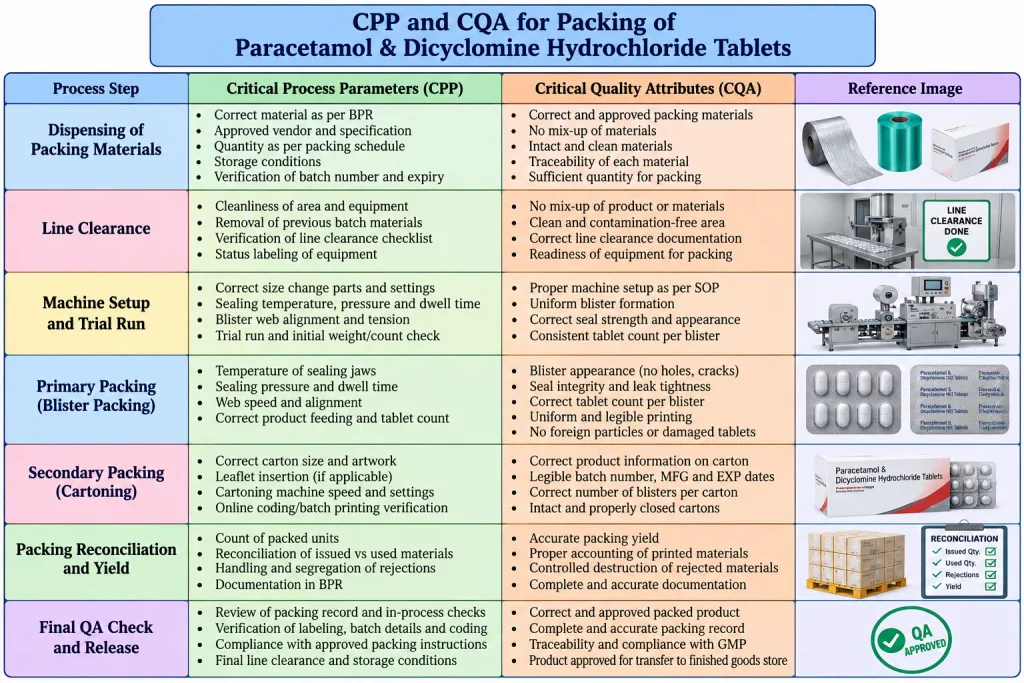
During packaging material dispensing, critical controls include correct material identification, approved quantities, batch verification, and proper storage. Line clearance ensures removal of previous product materials, cleanliness of the area and equipment, and prevention of mix-ups. Machine setup parameters such as sealing temperature, pressure, dwell time, web alignment, and machine speed directly influence blister quality. For primary packing, CQAs include proper blister appearance, leak tightness, seal integrity, correct tablet count, and legible printing. Secondary packing controls focus on correct cartons, batch details, manufacturing and expiry dates, and proper pack quantity. Packing reconciliation ensures accurate accounting of issued, used, returned, and rejected materials along with yield calculation. Finally, Quality Assurance reviews the completed packing record, verifies labeling and coding details, and approves the packed batch for transfer to the finished goods store.