







1. Introduction – Batch Packing Record for Paracetamol Tablets IP 650 mg:
The Batch Packing Record (BPR) for Paracetamol Tablets IP 650 mg provides documented instructions and controls for the packing of GLENPAR®-650 Tablets. Each uncoated tablet contains Paracetamol IP 650 mg, and the product is intended to be stored protected from light and moisture at a temperature not exceeding 30°C. The specified pack configuration is 10 × 5 × 10 blister combi pack. The BPR is designed to ensure that all packing activities are carried out in a controlled, traceable, and reproducible manner. It covers important operations such as packaging-material dispensing, overprinting verification, line clearance, machine setup, blister/strip packing, in-process checks, leak testing, carton and shipper verification, packing-material reconciliation, rejection analysis, destruction of rejected materials, and final yield calculation. For example, the record specifies sealing roller and forming roller temperature checks during line setup and requires leak testing initially, during foil change, and every two hours. Proper completion of this BPR provides documented evidence that the packing process has been performed according to approved procedures while maintaining product identity, packaging integrity, traceability, reconciliation, and quality assurance throughout the operation.
Skip to PDF content2. Flow Diagram – Batch Packing Record for Paracetamol Tablets IP 650 mg:
The flow diagram for the Batch Packing Record of Paracetamol Tablets IP 650 mg (GLENPAR®-650 Tablets) represents the sequential activities followed during pharmaceutical packing operations. The process begins with the receipt of approved and inspected tablets from the manufacturing section, followed by issuance and verification of approved packaging materials. Before starting the activity, proper line clearance is performed to ensure that the area and equipment are free from materials of the previous product or batch. The BPR requires documented checks for cleaning and machine readiness before packing begins. The packing machines are then set up and critical parameters such as sealing temperature, forming temperature, machine speed, environmental conditions, and packing quantities are recorded. Overprinting details are verified for foil, cartons, and shippers before use.
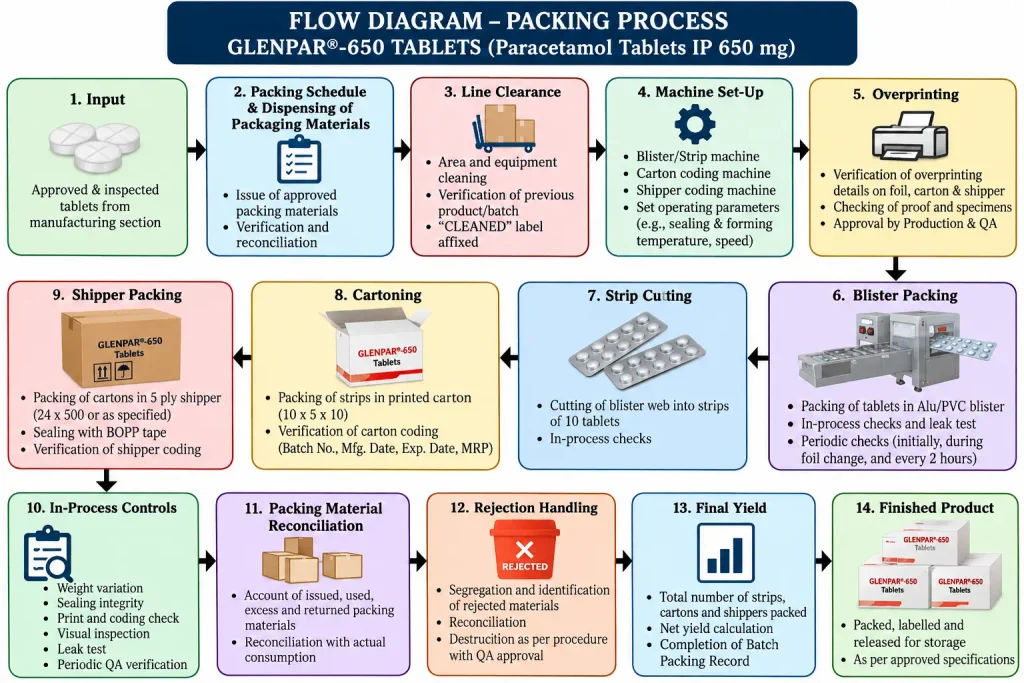
Tablets are subsequently packed into blister or strip packs, followed by cartoning and shipper packing. In-process controls include leak testing, coding verification, fill quantity checks, and periodic inspection. Finally, packaging materials are reconciled, rejected materials are recorded and destroyed, yield is calculated, and the packed finished product is verified and released according to the approved batch packing record.
3. CPP and CQA – Batch Packing Record for Paracetamol Tablets IP 650 mg:
The Critical Process Parameters (CPP) and Critical Quality Attributes (CQA) for the Batch Packing Record of Paracetamol Tablets IP 650 mg (GLENPAR®-650 Tablets) are important controls used to ensure consistent packing performance and acceptable finished-product quality. The BPR specifies key machine setup parameters including a sealing roller temperature of 170–210°C and a forming roller temperature of 140–170°C, together with machine speed, leak testing, environmental conditions, carton fill quantity, shipper fill quantity, and verification of machine and line setup.
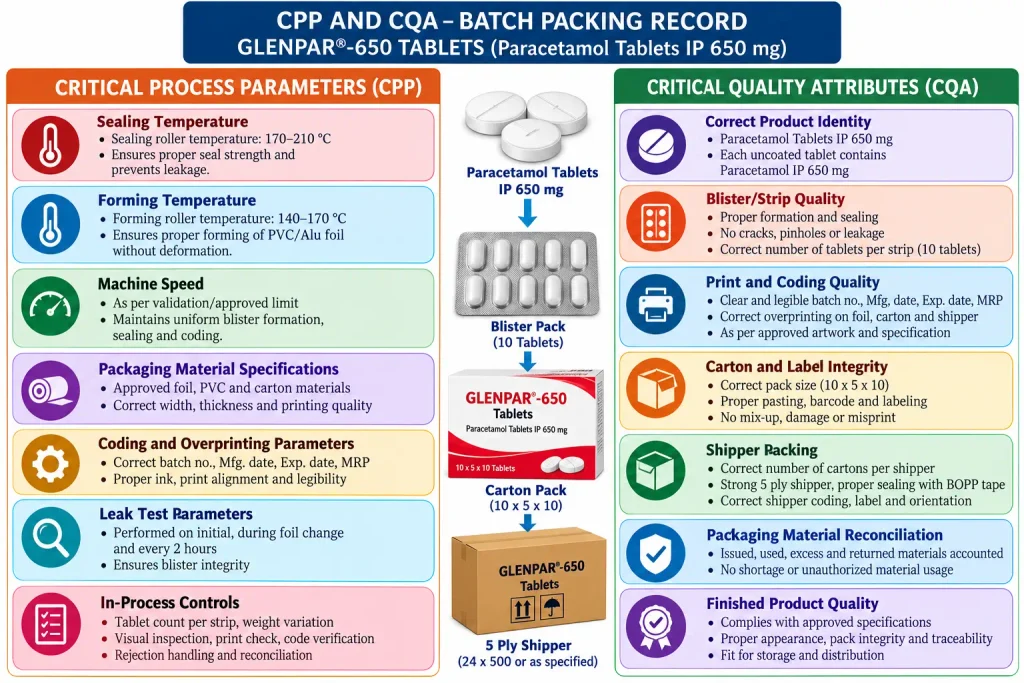
Important CPPs therefore include sealing and forming temperatures, machine operating conditions, correct packaging-material use, overprinting controls, line clearance, leak-test frequency, and periodic in-process checks. The record requires leak testing initially, during foil change, and every two hours, while packing-line controls include carton and shipper fill verification. The associated CQAs include correct product identity, proper blister or strip integrity, accurate and legible batch coding, correct carton and shipper packing, absence of mix-ups or damaged packs, and complete packaging-material reconciliation. The BPR also includes rejection analysis for defects such as missing overprinting, smudging, torn or cut blisters, poor sealing quality, empty pockets, damaged cartons, shortages, excess packs, and mixed-up packing components. Effective control of these CPPs helps ensure that the packed product remains correctly identified, securely sealed, accurately labelled, traceable, and suitable for final release.