







1. INTRODUCTION TO BATCH PACKING RECORD (BPR) OF RONIRUB HAND SANITIZER:
The Batch Packing Record (BPR) of Ronirub Hand Sanitizer is an essential Good Manufacturing Practice (GMP) document designed to ensure proper documentation, monitoring, verification, and traceability of all activities performed during the packaging process. Ronirub Hand Sanitizer contains Isopropyl Alcohol IP 70% v/v in a suitable perfume base with excipients as required. The BPR provides a structured system for recording packaging operations, including bulk material receipt, packing material dispensing, line clearance, bottle cleaning, filling, plugging, capping, labeling, overprinting, inspection, and final packing. Each activity is documented and verified by authorized Production and Quality Assurance personnel to maintain product quality and prevent errors, contamination, and packaging mix-ups. Critical in-process quality checks include fill volume verification, capping and plug integrity, labeling accuracy, batch number, manufacturing date, expiry date, and packaging material reconciliation. The record specifies periodic monitoring of filling, capping, and labeling operations at 30-minute intervals. Additionally, the BPR includes rejection analysis, finished product inspection, operational checks, material reconciliation, destruction records, and final batch verification. The documented packing yield acceptance criterion is not less than 98%. Proper implementation of the Ronirub Hand Sanitizer BPR supports GMP compliance, batch-to-batch consistency, product identification, accountability, and complete documentation throughout the packaging process. It also provides essential evidence for quality review, regulatory inspections, batch release, and continuous improvement of pharmaceutical packaging operations.
Skip to PDF content2. Flow Diagram for Ronirub Hand Sanitizer – Batch Packing Record (BPR):
The flow diagram of Ronirub Hand Sanitizer Batch Packing Record (BPR) illustrates the systematic sequence of packaging operations in accordance with Good Manufacturing Practices (GMP). The process begins with the transfer of approved bulk sanitizer containing Isopropyl Alcohol IP 70% v/v to the filling and packing section, followed by packing material dispensing, verification, and line clearance.
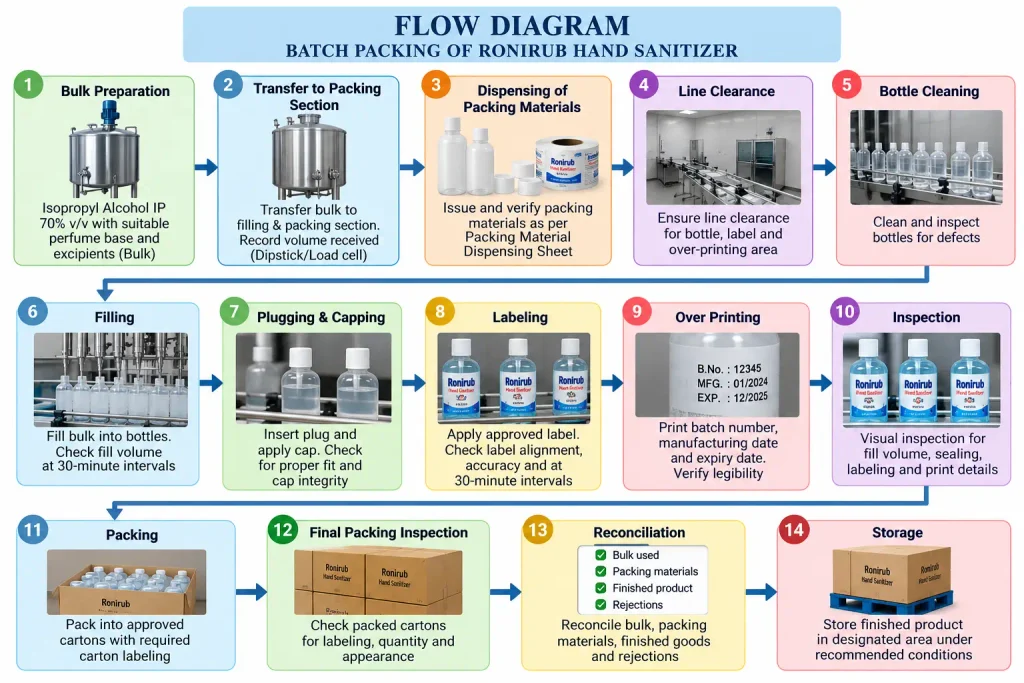
Subsequent operations include bottle cleaning, filling, plugging, capping, labeling, and overprinting of batch details. Critical in-process checks, including fill volume, capping quality, and labeling accuracy, are performed at 30-minute intervals. The process continues with visual inspection, rejection analysis, carton packing, and finished product verification. Finally, packaging materials and finished units are reconciled, with a specified packing yield limit of not less than 98%. The flow diagram supports process traceability, packaging accuracy, quality assurance, and GMP documentation compliance.
3. Critical Process Parameters (CPP) and Critical Quality Attributes (CQA) of Ronirub Hand Sanitizer – Batch Packing Record (BPR):
The Critical Process Parameters (CPP) and Critical Quality Attributes (CQA) of Ronirub Hand Sanitizer are essential for ensuring consistent product quality, packaging integrity, and compliance with Good Manufacturing Practices (GMP). The key packaging process parameters include bottle cleaning, filling volume, filling speed, plugging, capping, labeling, overprinting, visual inspection, carton packing, and material reconciliation. The Batch Packing Record specifies fill volume, capping, and labeling checks at 30-minute intervals to ensure consistent packaging performance. Critical Quality Attributes include correct fill volume, acceptable product appearance, secure closure, accurate labeling, legible batch details, freedom from visible defects, and satisfactory packaging integrity.
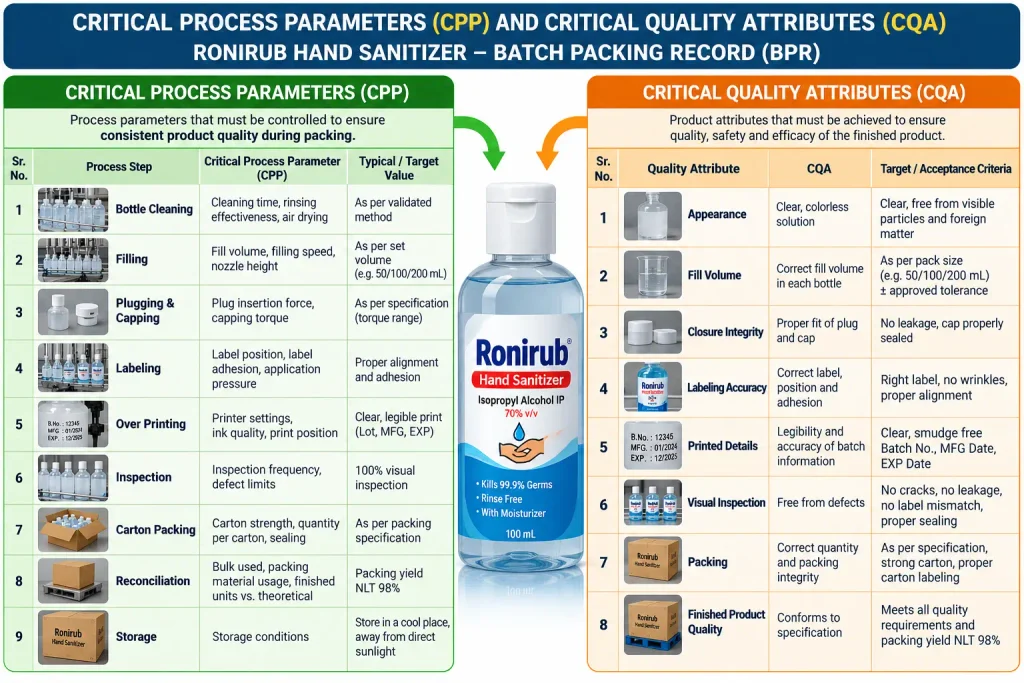
The BPR also specifies a minimum packing yield of 98%, supporting effective material accountability and reconciliation. Proper monitoring and documentation of these parameters help prevent packaging defects, labeling errors, leakage, and product mix-ups while maintaining traceability, regulatory compliance, and finished product quality.
Note: The infographic includes illustrative process targets. Actual CPP classifications and CQA acceptance limits must be established through approved specifications, process validation, and quality risk assessment.