






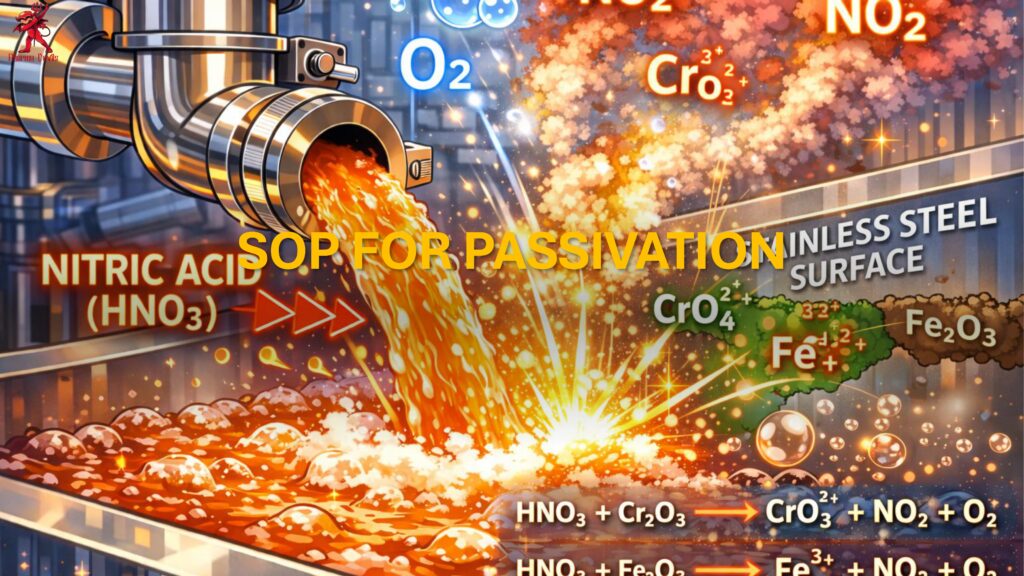
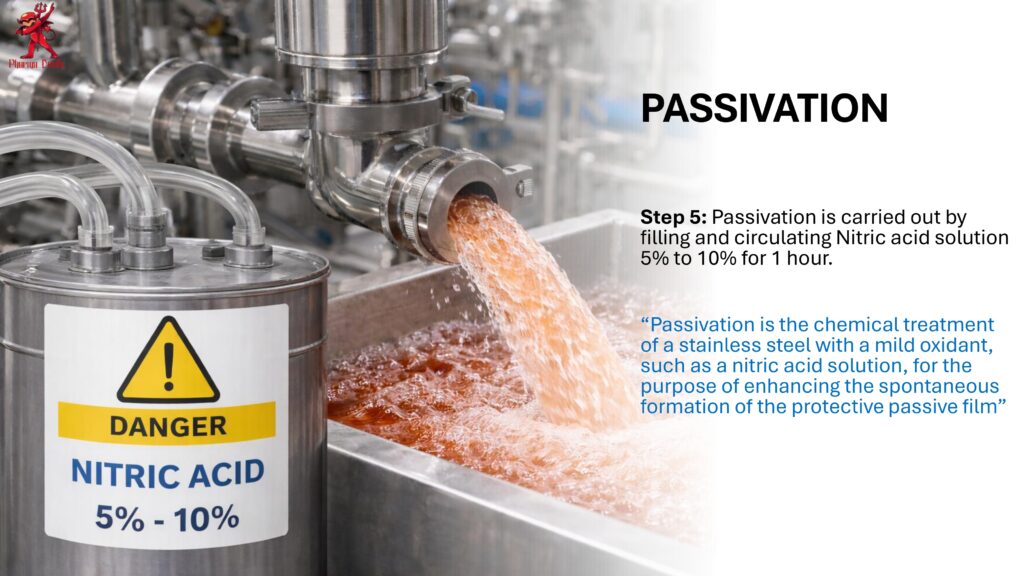
An SOP for passivation in pharma defines the standard procedure for cleaning and treating stainless steel equipment, pipelines, vessels, tanks, and contact parts to restore or enhance the passive oxide layer on the metal surface. Passivation is an important activity in pharmaceutical manufacturing because it helps prevent rusting, corrosion, metallic contamination, and product quality issues.
The purpose of passivation is to remove free iron, welding residues, scale, stains, and other surface contaminants from stainless steel surfaces. A properly passivated surface forms a protective chromium oxide layer, which improves corrosion resistance and supports hygienic processing conditions.
This SOP applies to stainless steel equipment used in production, quality control, water systems, clean utilities, storage tanks, transfer lines, and processing areas. Passivation may be performed after equipment installation, fabrication, welding, repair, maintenance, corrosion observation, or as per preventive maintenance schedule.
Before starting passivation, ensure that the equipment is cleaned properly and free from product residue, grease, oil, dust, and visible contamination. The area should be secured, and authorized personnel must wear required PPE such as gloves, goggles, apron, mask, and safety shoes. Approved chemicals such as nitric acid or citric acid solution should be prepared as per validated concentration and procedure.
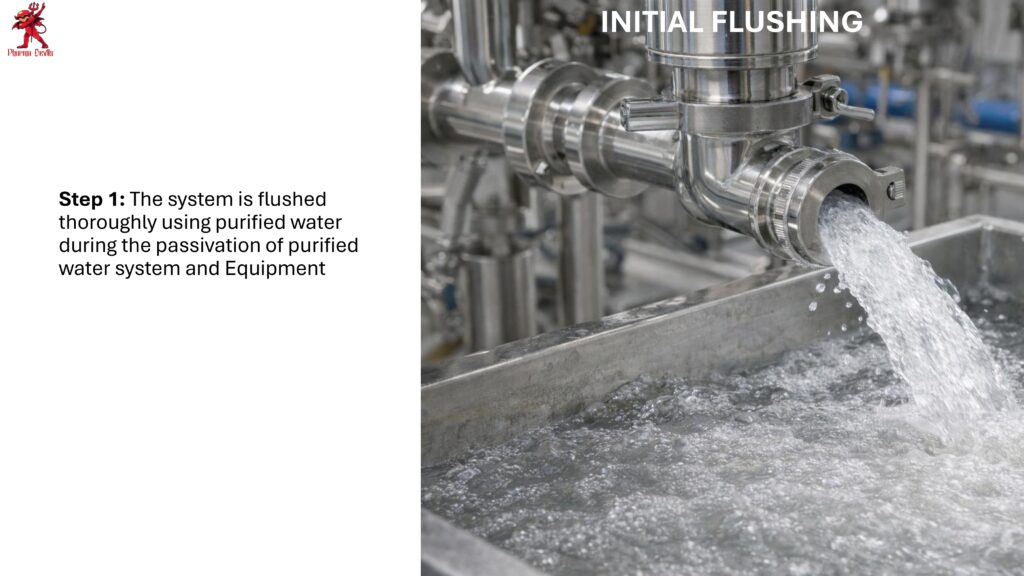
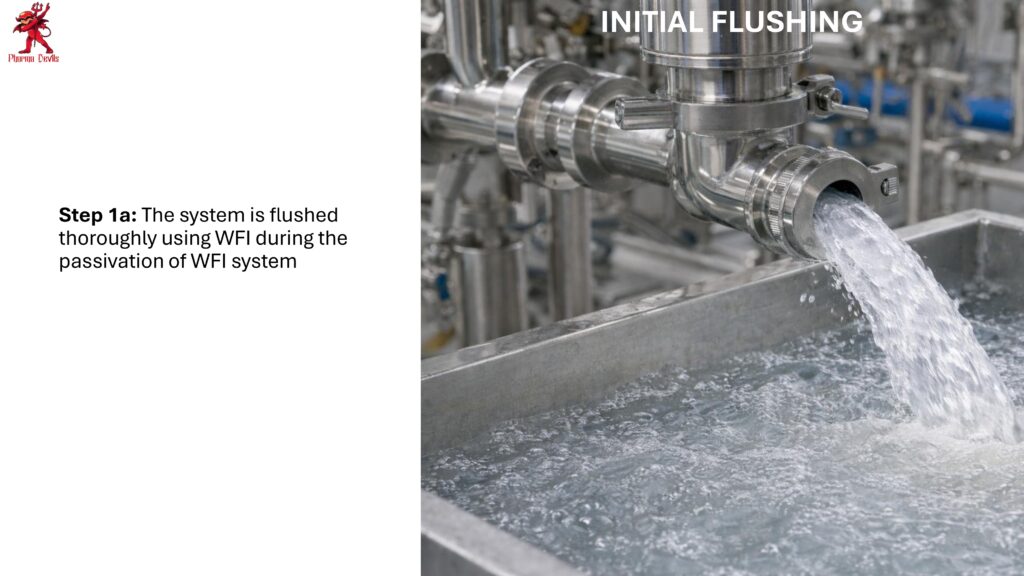
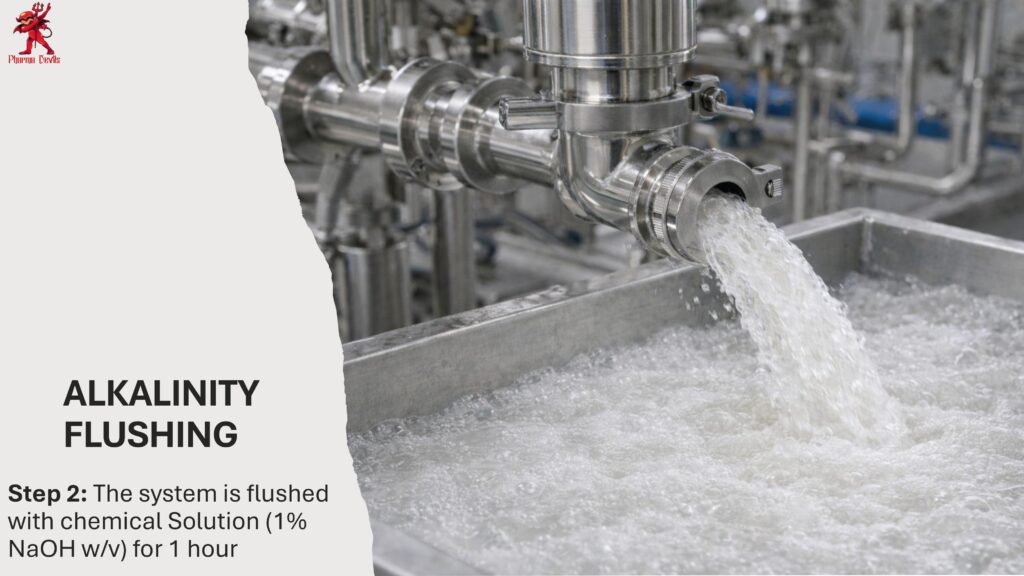
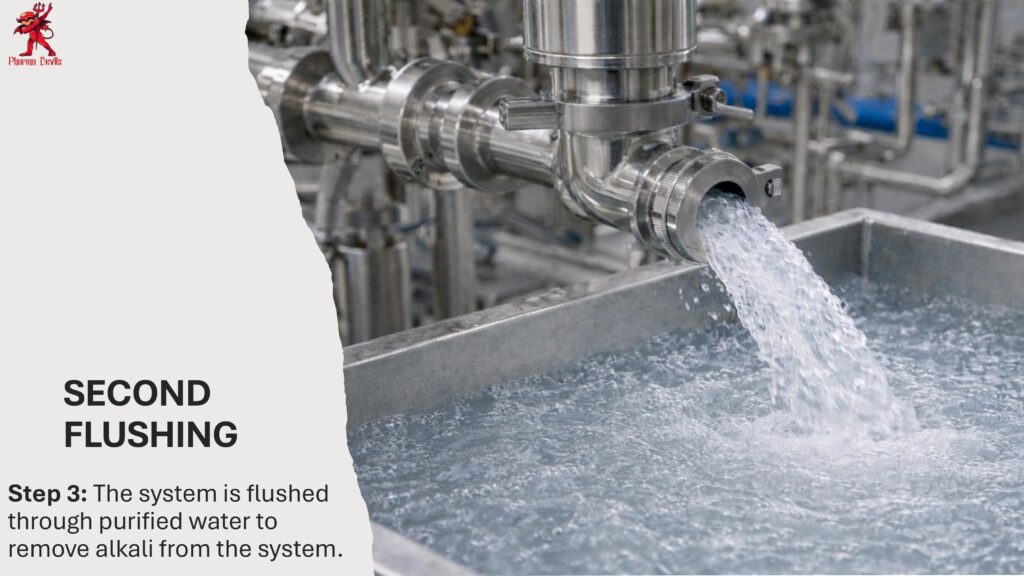
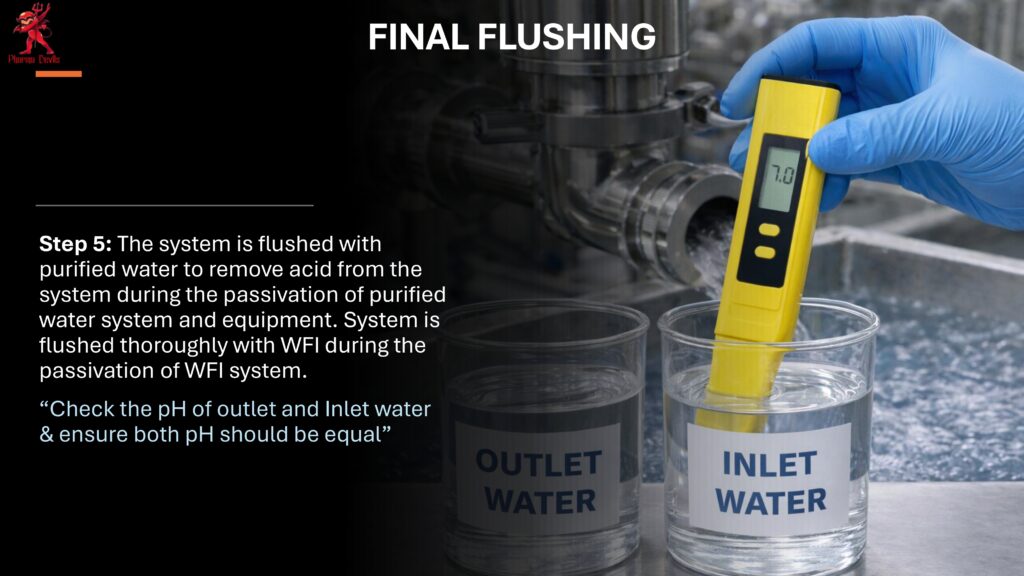
The passivation process generally includes pre-cleaning, water rinsing, chemical circulation or soaking, defined contact time, draining, final rinsing with purified water or water for injection, and drying. During chemical treatment, concentration, temperature, contact time, and flow rate must be monitored and recorded.
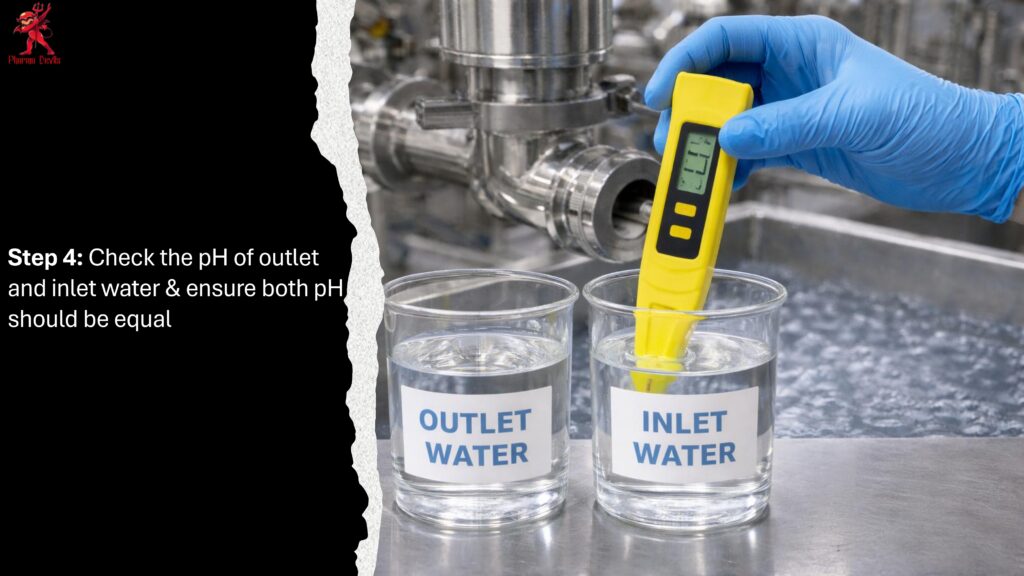
After passivation, the surface should be checked for cleanliness, stains, discoloration, corrosion marks, and residue. Final rinse water may be tested for pH, conductivity, and chemical residue as applicable. Any abnormal observation must be reported to engineering and quality assurance for investigation.
Documentation is a critical part of the SOP for passivation in pharma. Records should include equipment name, equipment ID, chemical used, concentration, batch number, start and end time, rinse results, inspection findings, and approval signatures.
A well-defined passivation SOP ensures equipment integrity, prevents contamination, supports GMP compliance, and helps maintain safe pharmaceutical manufacturing conditions.