Checklist for Cleaning Validation
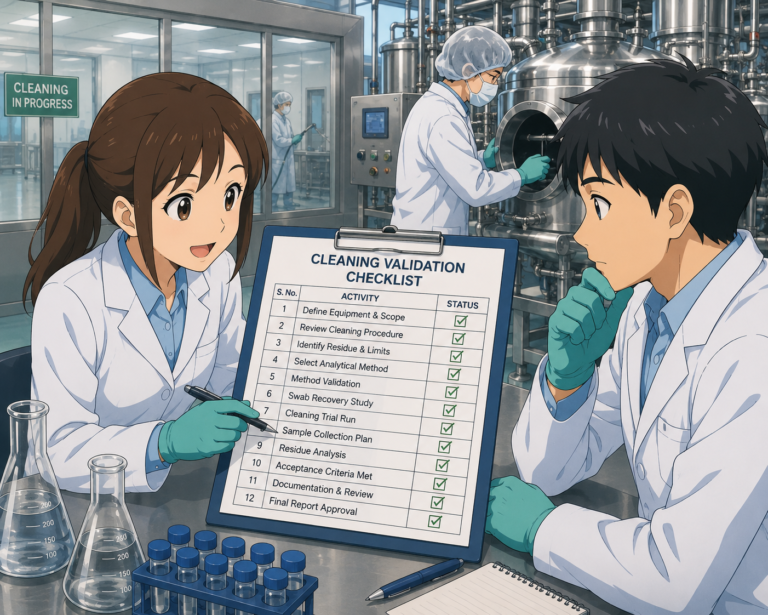
Checklist for Cleaning Validation 1. Documentation & Planning 2. Equipment Selection 3. Sampling & Testing 4. Execution of Cleaning Validation Runs 5. Acceptance Criteria 6. Review & Report 7. Revalidation Triggers



Checklist for Cleaning Validation 1. Documentation & Planning 2. Equipment Selection 3. Sampling & Testing 4. Execution of Cleaning Validation Runs 5. Acceptance Criteria 6. Review & Report 7. Revalidation Triggers

Brief Description: This document provides the justification and rationale for routine and non-routine interventions performed during media fill in an aseptic filling area. It covers solution, suspension, bulk sterilization and processes related to Brinzolamide products. The interventions are designed to…
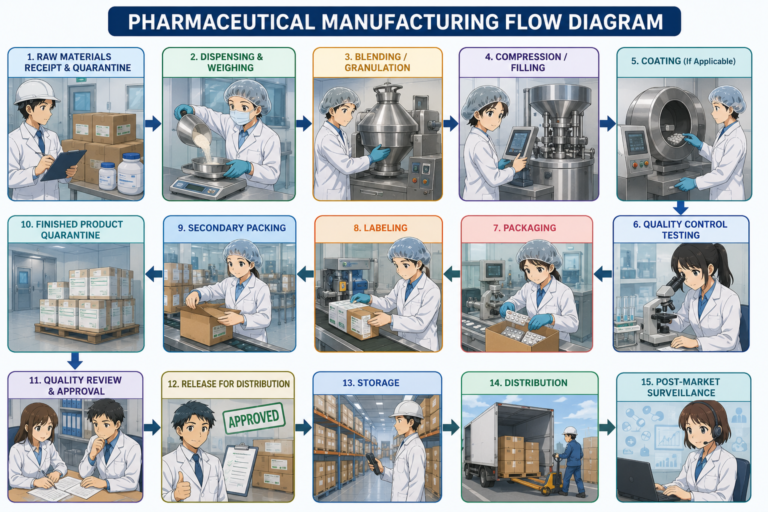
Flow Charts in Pharma – Overview & Key Examples Flow charts in the pharmaceutical industry are visual tools used to represent step-by-step processes, ensuring clarity, compliance, training, and audit readiness. They help standardize workflows across departments like Quality Assurance, Production,…
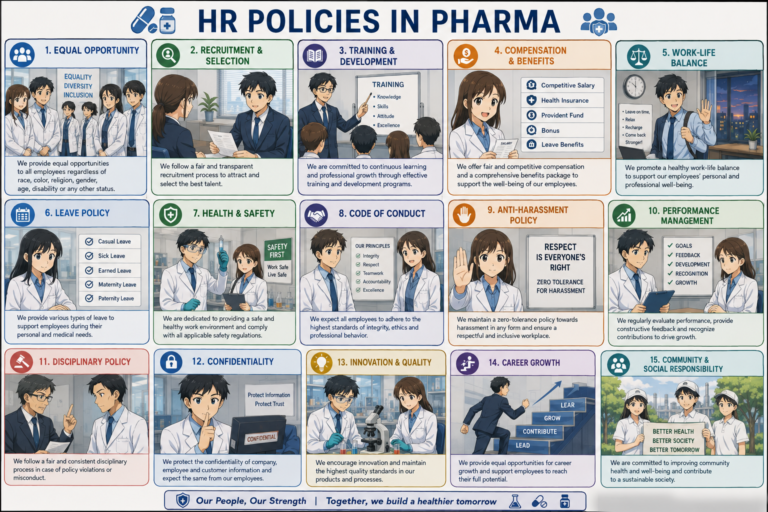
HR Policies in Pharma are tailored to ensure regulatory compliance, employee safety, and operational efficiency in a highly controlled and quality-driven environment. Here’s a comprehensive overview: ✅ Key HR Policies in the Pharmaceutical Industry 1. Recruitment & Selection Policy 2.…

Design of Experiments (DoE) is a structured, statistical method used in the pharmaceutical industry to determine the relationship between multiple input variables (factors) and the resulting outputs (responses). It is a cornerstone of Quality by Design (QbD) and is widely…
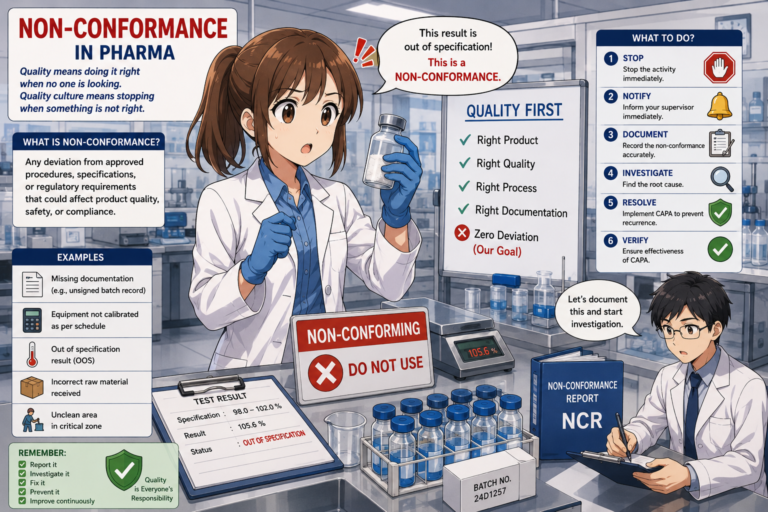
Non-Conformance in Pharma – Overview Non-conformance in the pharmaceutical industry refers to any deviation from approved specifications, procedures, or regulatory requirements that may impact product quality, safety, efficacy, or compliance. ❗ What Is a Non-Conformance? A non-conformance (NC) is any…

In the pharmaceutical industry, layouts play a critical role in ensuring compliance with GMP, product quality, operational efficiency, and contamination control. Different areas of a pharmaceutical facility require different types of layouts depending on the type of manufacturing (sterile vs.…
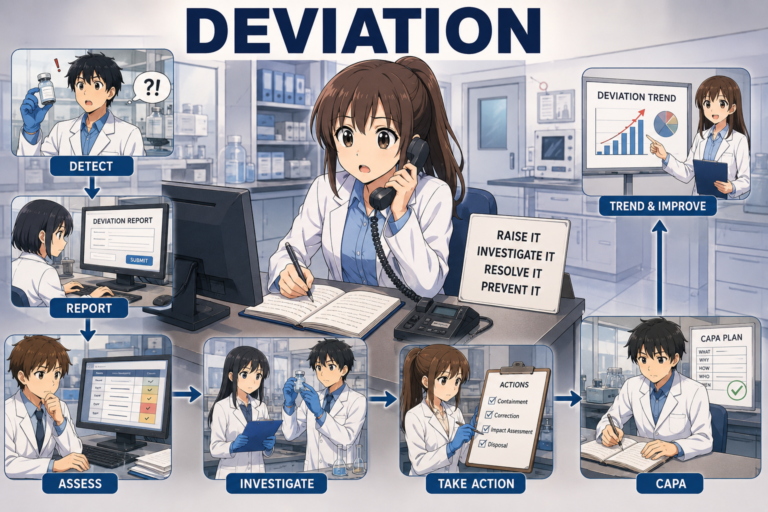
In the pharmaceutical industry, “deviation in pharma” refers to any departure from approved processes, procedures, specifications, or expected outcomes. These deviations can occur during manufacturing, testing, packaging, or storage of pharmaceutical products. Managing deviations is critical to ensure product quality,…
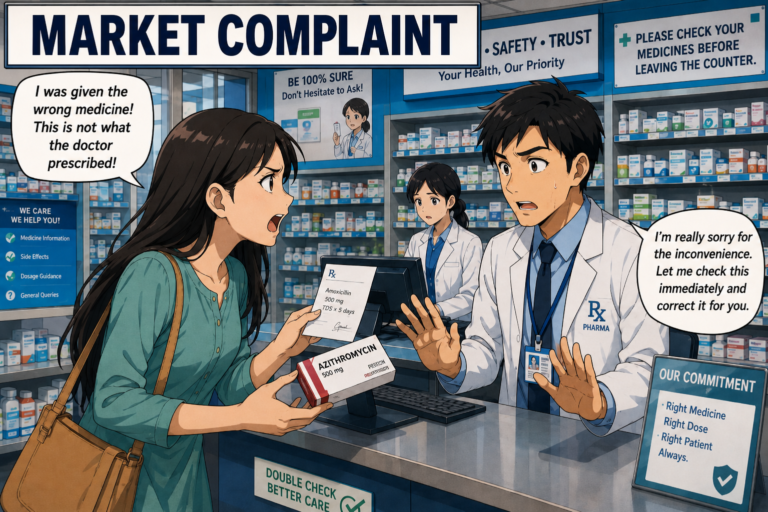
Types of Market Complaints Complaint Handling Process in Pharma Regulatory Expectations Complaint Trending and Analysis Best Practices Q1: What is a market complaint?A: A market complaint is any written, verbal, or electronic communication from a customer, patient, or healthcare provider…
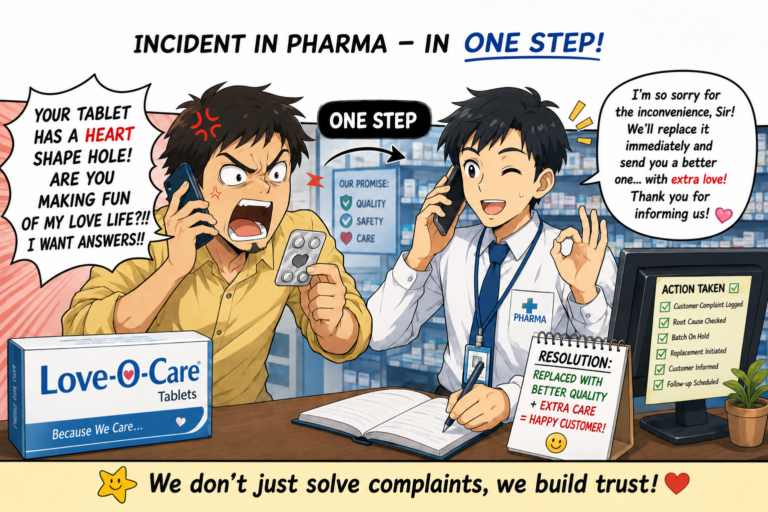
“Incidents in Pharma” can refer to a wide range of unplanned events or deviations that occur during pharmaceutical manufacturing, testing, storage, or distribution. These incidents can affect product quality, patient safety, regulatory compliance, and operational efficiency. Common Types of Incidents…
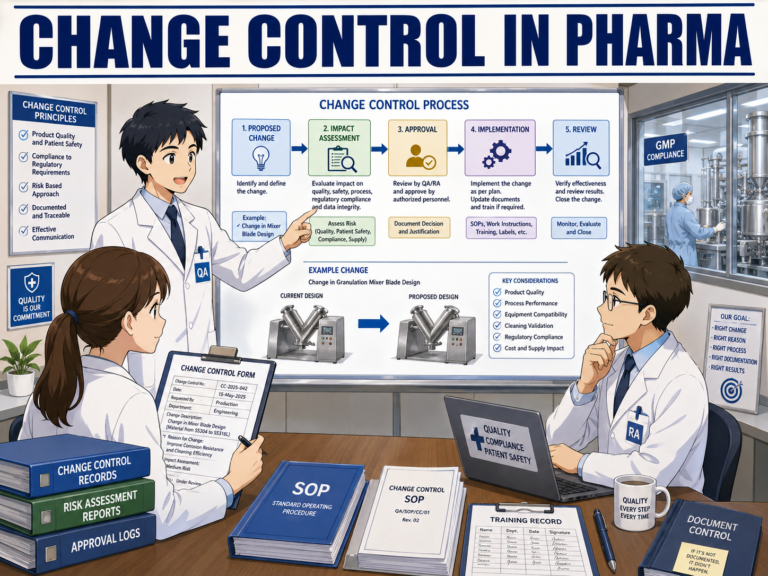
Change Control in pharma is a structured, documented process used to manage any planned change that may impact product quality, patient safety, regulatory compliance or validated status of facilities, utilities, equipment, documents and computerized systems. A robust change control system…
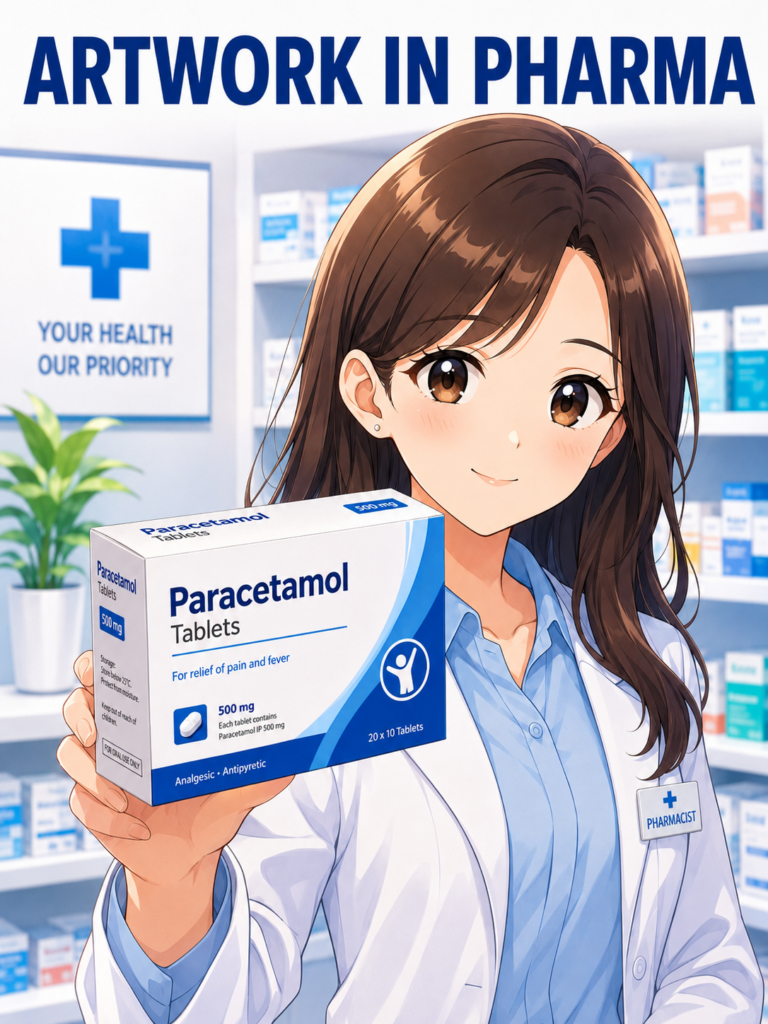
In pharma, artworks are the controlled master designs for all printed packaging components—cartons, labels, foils, leaflets, shippers, inserts, booklets, and sometimes on-pack overprint layouts. They translate the approved product information (name, strength, composition, warnings, storage, manufacturer details, batch/expiry fields, barcodes/2D…