







1. Introduction – Diphenhydramine Hydrochloride, Ammonium Chloride & Sodium Citrate Syrup (BPR):
The Batch Packing Record (BPR) for Diphenhydramine Hydrochloride, Ammonium Chloride & Sodium Citrate Syrup is an essential pharmaceutical documentation system designed to ensure consistent packaging quality, product identification, traceability, and compliance with Good Manufacturing Practices (GMP). This oral syrup formulation contains Diphenhydramine Hydrochloride IP (14.08 mg), Ammonium Chloride IP (138 mg), and Sodium Citrate IP (57.03 mg) per 5 ml in a mentholated syrup base. Diphenhydramine Hydrochloride acts as an antihistamine, Ammonium Chloride functions as an expectorant, and Sodium Citrate supports mucus clearance. The combination is used for symptomatic relief of cough associated with respiratory discomfort. The BPR provides documented instructions and records for various packaging operations, including packing material dispensing, bottle washing, filling, sealing, labeling, inspection, and final packing. The documented packaging configuration includes 100 ml amber PET bottles with polypropylene caps, printed labels, measuring caps, and corrugated shippers. Critical in-process quality checks include fill volume verification, sealing integrity, leakage testing, labeling accuracy, cap perforation inspection, and rejection analysis. The record also incorporates line clearance, packaging material reconciliation, yield calculation, and final quality assurance verification. Proper implementation ensures product safety, packaging integrity, batch traceability, and regulatory compliance throughout pharmaceutical packaging operations.
Skip to PDF content2. Flow Diagram – Batch Packing Process of Diphenhydramine HCl, Ammonium Chloride & Sodium Citrate Syrup:
The flow diagram illustrates the systematic Batch Packing Process of Diphenhydramine Hydrochloride, Ammonium Chloride and Sodium Citrate Syrup, highlighting essential packaging operations and in-process quality controls in accordance with Good Manufacturing Practices (GMP). The process begins with the receipt of approved bulk syrup, dispensing and verification of packaging materials, and line clearance of equipment and packaging areas. Subsequently, 100 ml amber PET bottles undergo washing and are transferred for syrup filling under controlled operating conditions.
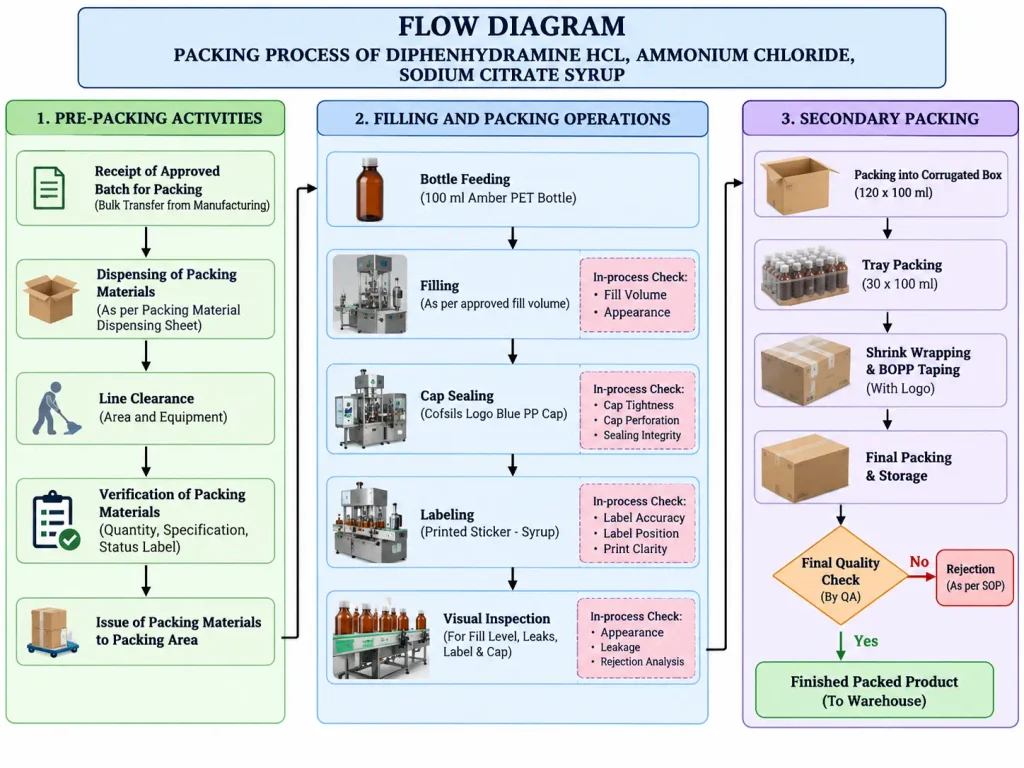
After filling, bottles proceed through cap sealing, leakage testing, labeling, and visual inspection. Critical in-process checks include fill volume accuracy, sealing integrity, cap perforation, label correctness, and identification of defective bottles. Approved bottles are arranged in trays, shrink-wrapped, and packed into corrugated boxes using appropriate packaging materials. Finally, Quality Assurance verifies packaging documentation, product identification, material reconciliation, and compliance with approved specifications before batch release. This structured workflow ensures packaging consistency, product integrity, traceability, and effective quality control throughout pharmaceutical packing operations.
2. Critical Process Parameters (CPP) and Critical Quality Attributes (CQA) for Diphenhydramine HCl, Ammonium Chloride & Sodium Citrate Syrup (BPR):
The Critical Process Parameters (CPP) and Critical Quality Attributes (CQA) of Diphenhydramine Hydrochloride, Ammonium Chloride and Sodium Citrate Syrup are essential for ensuring product quality, packaging integrity, patient safety, and compliance with Good Manufacturing Practices (GMP). During the batch packing process, key process parameters include bottle cleanliness, filling machine settings, fill volume control, cap sealing conditions, labeling accuracy, visual inspection, and secondary packaging operations. These parameters must be monitored and maintained within approved operating limits to prevent packaging defects and product contamination.
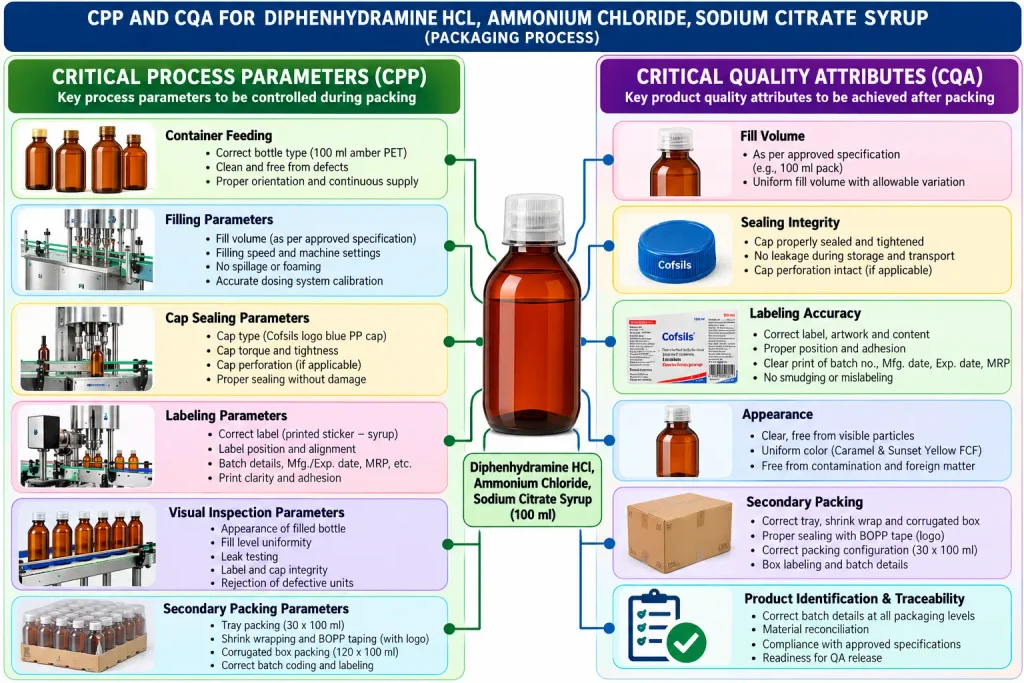
Important quality attributes include accurate fill volume, container closure integrity, absence of leakage, acceptable appearance, correct labeling, and proper product identification. Regular in-process checks help identify deviations such as underfilling, overfilling, defective caps, improper sealing, foreign particles, and incorrect batch coding. The packing process also includes verification of packaging materials, rejection analysis, material reconciliation, and final Quality Assurance review. Effective monitoring of CPPs and verification of CQAs ensure consistent packaging performance, product traceability, regulatory compliance, and reliable delivery of finished pharmaceutical products.
Note: The parameters illustrated are potential CPPs and CQAs; their criticality and acceptance limits must be established through documented risk assessment, validation, and approved product specifications.