







1. Introduction – Paracetamol, Phenylephrine HCl & Chlorpheniramine Maleate Tablets:
The Batch Packing Record (BPR) for Paracetamol, Phenylephrine Hydrochloride and Chlorpheniramine Maleate Tablets is an essential Good Manufacturing Practices (GMP) document designed to ensure systematic documentation, monitoring, verification, and control of pharmaceutical packaging operations. The BPR provides a structured approach to maintaining product identity, packaging quality, batch traceability, and regulatory compliance throughout the packing process.This combination formulation contains three active pharmaceutical ingredients per uncoated tablet:
- Paracetamol IP – 500 mg: An analgesic and antipyretic used to relieve pain and reduce fever.
- Phenylephrine Hydrochloride IP – 10 mg: A nasal decongestant.
- Chlorpheniramine Maleate IP – 4 mg: An antihistamine used to relieve symptoms such as sneezing, runny nose, and watery eyes.
The BPR establishes a documented system covering the receipt of inspected tablets, issuance and dispensing of packaging materials, verification of printed packaging components, line clearance, machine setup, primary and secondary packaging, in-process quality checks, reconciliation, and final product transfer. Special attention is given to overprinting verification, blister and strip sealing integrity, leak testing, carton filling, shipper verification, and packaging material reconciliation to minimize the risks of product mix-ups, incorrect labeling, missing tablets, and packaging defects. The record also incorporates rejection analysis, destruction records, yield calculations, and verification by authorized Production and Quality Assurance personnel. These activities support accountability, traceability, and proper investigation of packaging discrepancies. The product requires storage below 30°C with protection from light and moisture, as specified in the BPR. Effective implementation of this Batch Packing Record helps ensure that packaging activities are performed consistently, accurately documented, and reviewed before finished product release. Overall, the BPR serves as a critical component of the pharmaceutical quality management system by supporting data integrity, batch accountability, packaging consistency, and GMP compliance.
Skip to PDF content2. Batch Packing Record (BPR) – Flow Diagram for Paracetamol, Phenylephrine HCl & Chlorpheniramine Maleate Tablets:
The Batch Packing Record (BPR) flow diagram for Paracetamol, Phenylephrine Hydrochloride and Chlorpheniramine Maleate Tablets illustrates the systematic sequence of pharmaceutical packaging activities performed in accordance with Good Manufacturing Practices (GMP). The process begins with the receipt and verification of inspected tablets from the manufacturing department, followed by dispensing approved packaging materials and verifying printed packaging components. Production and Quality Assurance personnel perform line clearance to prevent contamination, product mix-ups, and packaging errors.
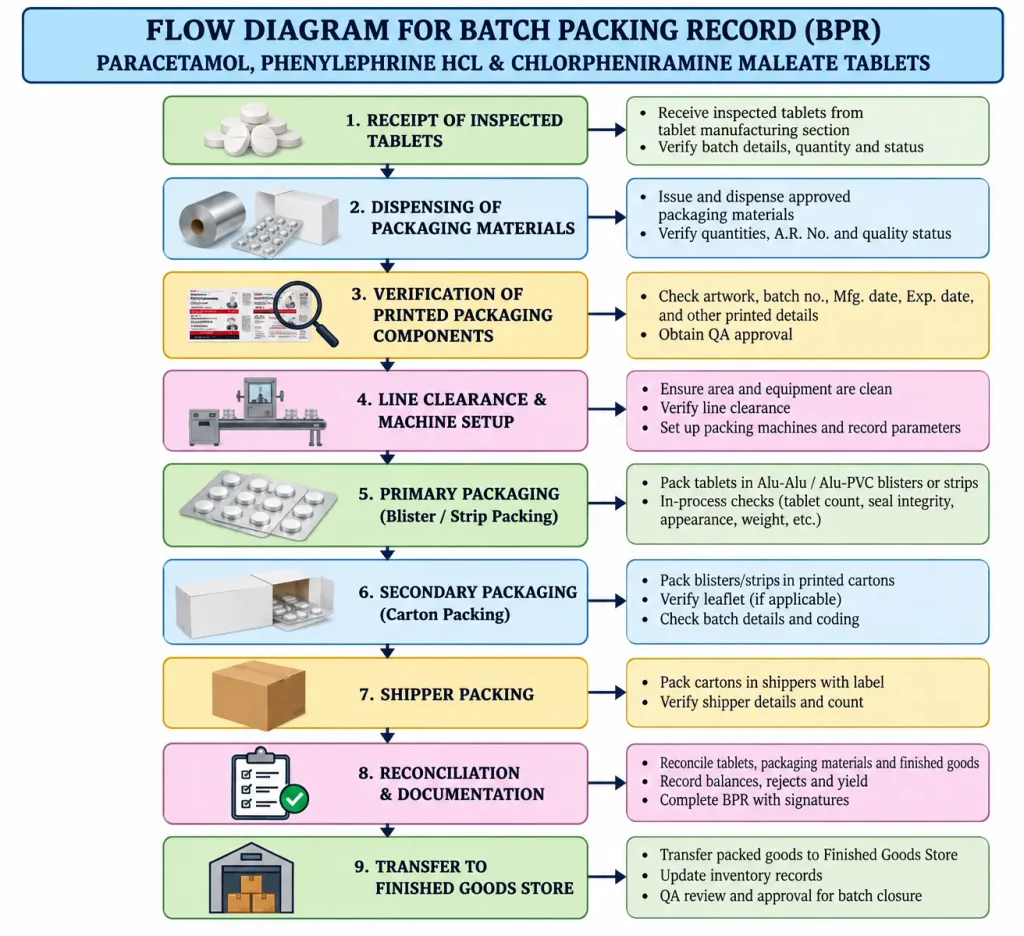
After machine setup, tablets undergo primary packaging in blisters or strips, with in-process checks covering sealing temperature, leak testing, packaging integrity, and product identification. Secondary packaging involves placing blisters or strips into printed cartons, followed by shipper packing and verification of printed details and quantities. The process concludes with reconciliation of packaging materials, rejection analysis, yield calculation, BPR documentation, and transfer of finished goods to the designated store. Quality Assurance reviews the completed documentation to support batch disposition and release decisions.
3. Critical Process Parameters (CPP) and Critical Quality Attributes (CQA) of Paracetamol, Phenylephrine HCl & Chlorpheniramine Maleate Tablets:
The Batch Packing Record (BPR) for Paracetamol, Phenylephrine Hydrochloride and Chlorpheniramine Maleate Tablets emphasizes the monitoring and control of Critical Process Parameters (CPP) and Critical Quality Attributes (CQA) to ensure consistent product quality, packaging integrity, and compliance with Good Manufacturing Practices (GMP). Each uncoated tablet contains Paracetamol IP 500 mg, Phenylephrine Hydrochloride IP 10 mg, and Chlorpheniramine Maleate IP 4 mg. The infographic illustrates important manufacturing process parameters, including dispensing accuracy, blending time, mixing speed, compression force, tablet weight control, and dedusting efficiency. These manufacturing parameters influence tablet uniformity, physical strength, and overall quality. For batch packing operations, important process parameters include forming temperature, sealing temperature, machine speed, sealing pressure, and packaging material alignment. These parameters must be monitored against approved operating limits to maintain blister or strip integrity and prevent packaging defects.
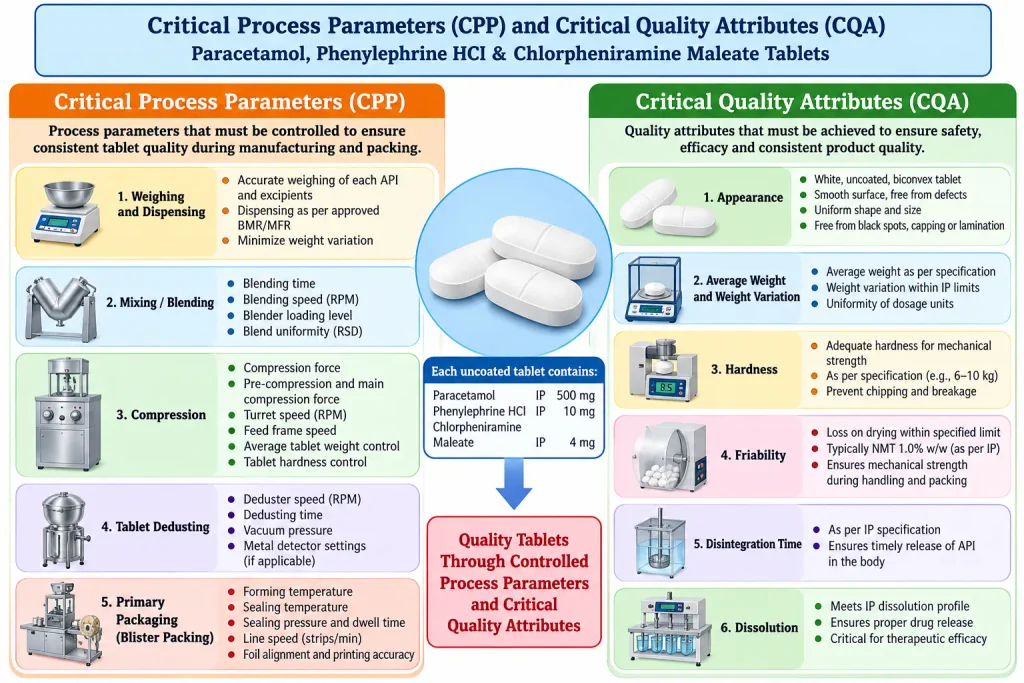
Critical Quality Attributes include tablet appearance, weight variation, hardness, friability, disintegration, and dissolution. Packaging-related quality attributes include seal integrity, absence of leakage, correct product identification, accurate overprinting, and completeness of packed units. The BPR specifically documents line clearance, machine setup, leak testing, in-process packaging checks, rejection analysis, material reconciliation, and final yield verification. Effective monitoring of CPPs and verification of CQAs help minimize packaging failures, product mix-ups, labeling errors, and quality deviations.
Note: Manufacturing CPPs and tablet CQAs illustrated in the diagram are general technical examples. The uploaded BPR primarily documents packaging operations. Actual criticality classifications, acceptance limits, and monitoring frequencies must be established through approved specifications, process validation, and documented quality risk assessment.