





1. Introduction – Schematic Diagram of AHU:
The schematic diagram illustrates the working arrangement of an Air Handling Unit (AHU) used to maintain controlled environmental conditions in pharmaceutical areas. It shows the flow of fresh and return air through the fresh-air damper, return damper, pre-filters, fine filters, motor blower section, cooling coil, and supply damper. The conditioned air is distributed to the room through HEPA filters rated at 0.3 µm, while return air is collected through return risers and recirculated to the AHU. The diagram also provides provision for recording the designed CFM and includes QA, Engineering, and QA Head approval.
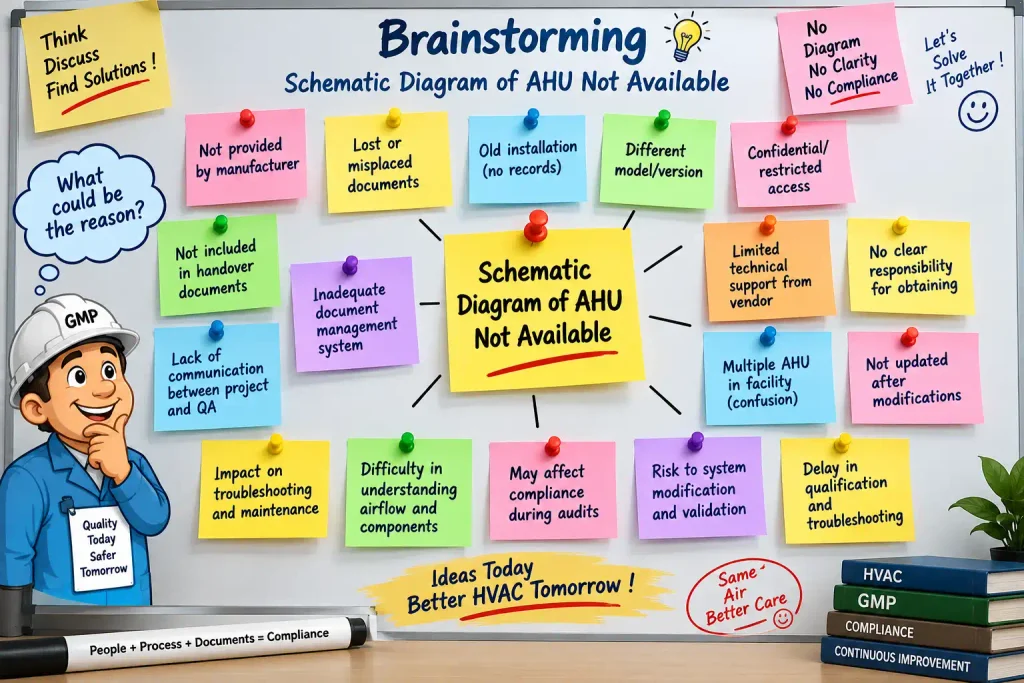
Skip to PDF content2. Brainstorming – Schematic Diagram of AHU not available:
The brainstorming analysis identifies possible reasons why the schematic diagram of the Air Handling Unit (AHU) is unavailable. Key causes include missing manufacturer documents, poor document control, incomplete project handover, outdated drawings, restricted access, and weak communication between engineering, maintenance, and QA teams. The absence of the schematic may create difficulties in understanding airflow, equipment configuration, troubleshooting, maintenance, modification, qualification, and regulatory compliance. Brainstorming helps teams collectively identify potential causes and practical solutions. Recommended actions include contacting the manufacturer, reviewing handover records, checking previous drawings, assigning responsibility, preparing an updated schematic, and maintaining controlled documentation.
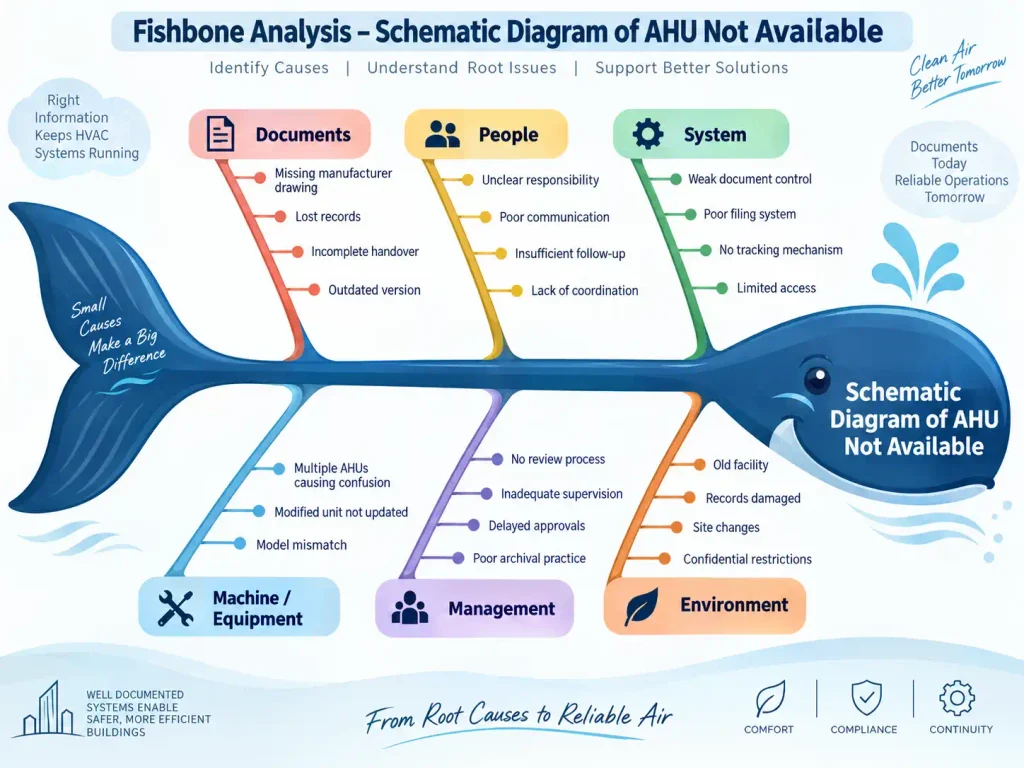
3. Fishbone Analysis – Schematic Diagram of AHU not available:
The fishbone analysis identifies potential causes for the non-availability of the AHU schematic diagram. Major categories include Documents, People, System, Machine/Equipment, Management, and Environment. Possible causes are missing manufacturer drawings, lost or outdated records, incomplete project handover, unclear responsibilities, poor communication, weak document control, inadequate supervision, model mismatch, facility modifications, and restricted access to technical information. This analysis helps the team systematically evaluate contributing factors and identify the most probable root causes. Corrective actions should focus on recovering original drawings, updating modified layouts, strengthening document control, assigning responsibilities, and maintaining approved AHU schematics for future reference.
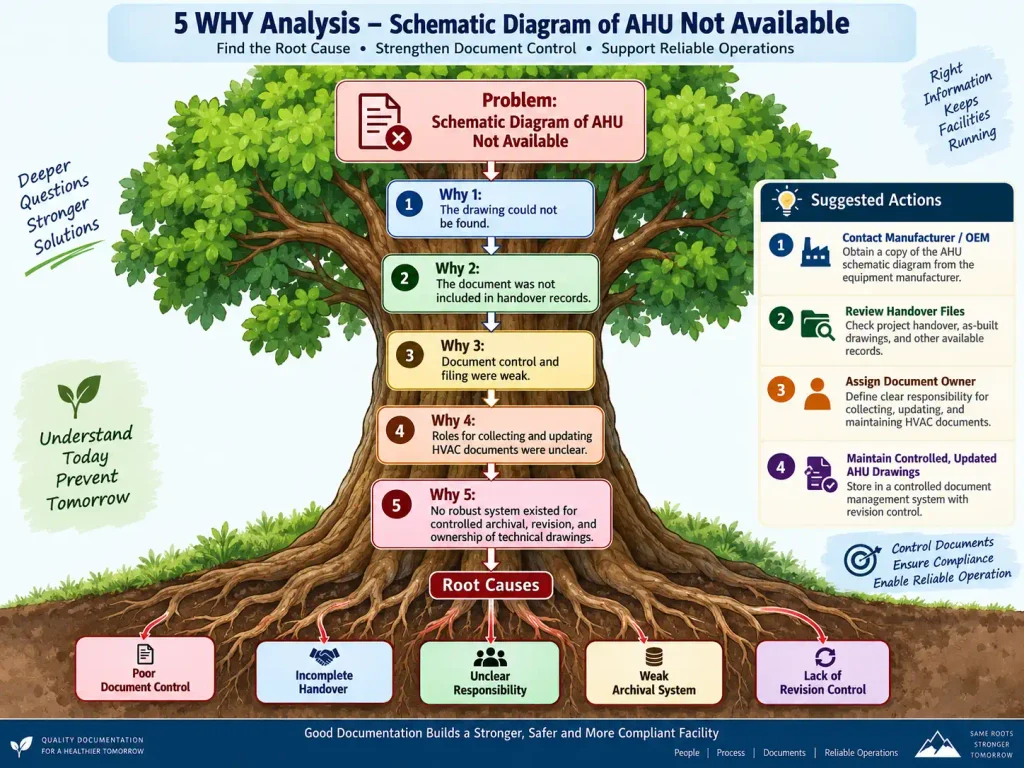
4. 5-Why Analysis – Schematic Diagram of AHU not available:
The 5-Why analysis systematically identifies the root causes behind the non-availability of the AHU schematic diagram. The investigation begins with the missing drawing and traces the issue through incomplete handover documentation, weak document control, unclear responsibility, and inadequate archival and revision systems. The analysis indicates that the problem is not limited to a missing document but is linked to deficiencies in document ownership, storage, updating, and retrieval practices. Corrective actions should include obtaining the approved schematic from the manufacturer, reviewing handover records, assigning document responsibility, maintaining revision-controlled drawings, and strengthening the document management system to prevent recurrence.
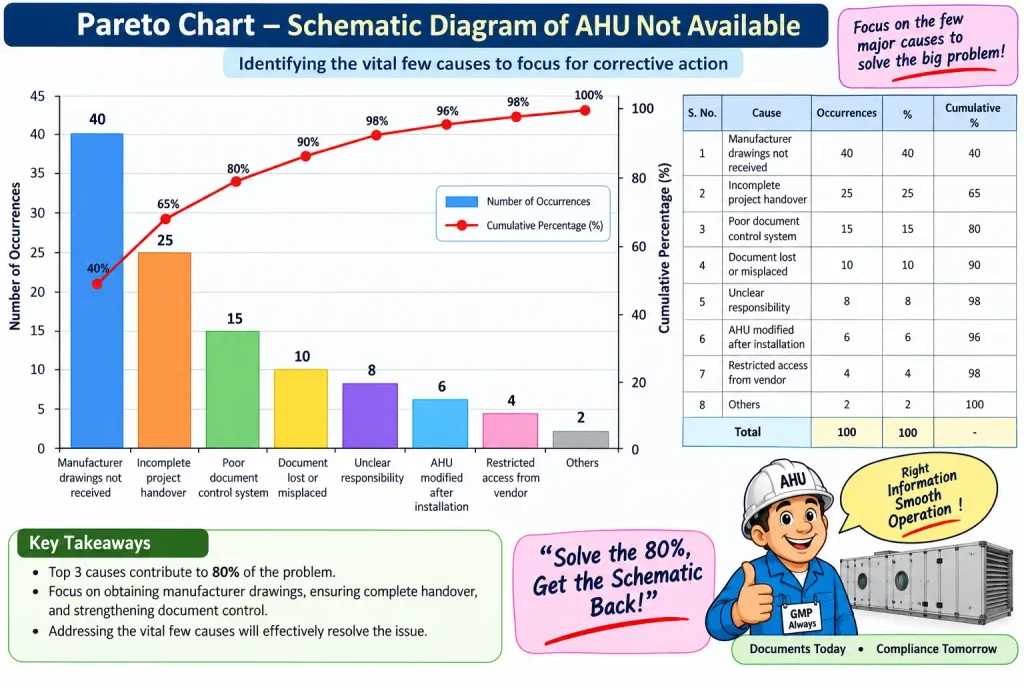
5. Pareto Chart – Schematic Diagram of AHU not available:
The Pareto chart identifies and prioritizes the major causes responsible for the non-availability of the AHU schematic diagram. The highest contributors include manufacturer drawings not received, incomplete project handover, and poor document control practices. These few causes account for the majority of the problem and therefore require immediate attention. Other contributing factors include misplaced documents, unclear responsibility, AHU modifications, and restricted vendor access. The analysis helps focus corrective actions on the most significant causes first. Strengthening handover procedures, obtaining approved drawings, assigning document ownership, and improving controlled archival systems can effectively prevent recurrence and ensure schematic availability.