




1. Introduction:
Training of personnel is an essential part of the pharmaceutical quality system because employees must clearly understand their responsibilities, procedures, and cGMP requirements before performing assigned work. This SOP establishes a systematic approach for training personnel involved in manufacturing, testing, packing, holding, distribution, and other pharmaceutical operations. It ensures that employees receive suitable training according to their job roles, responsibilities, and operational activities before starting work. The procedure covers selection and qualification of trainers, preparation of training plans, identification of training needs, maintenance of competency, and documentation of training activities. cGMP training is mandatory for employees, while job-specific training is provided according to the nature of work and assigned responsibilities. Training may include induction, cGMP/technical training, job-specific training, on-the-job training, refresher training, and need-based or re-training. This structured system helps improve employee knowledge, skills, compliance, and consistent execution of pharmaceutical operations.
Skip to PDF content2. Flow Diagram:
The flow diagram explains the systematic process used for training of personnel in a pharmaceutical organization. The process begins with identifying training needs based on an employee’s job role, responsibilities, SOP requirements, and cGMP expectations. A training plan is then prepared, including suitable topics, schedules, and qualified trainers. Training modules or materials are developed and reviewed before the actual training is conducted.
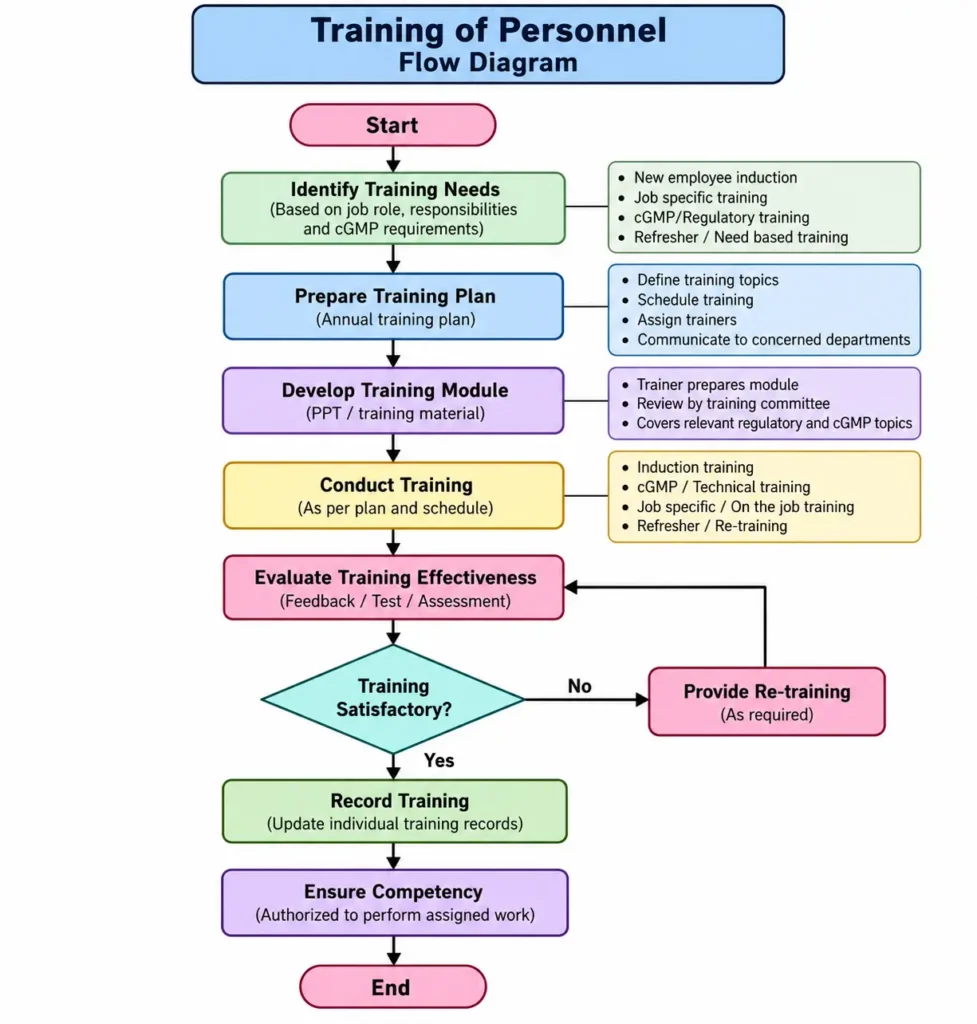
Training may include induction training, cGMP or technical training, job-specific training, on-the-job training, refresher training, and need-based re-training. After completion, the effectiveness of training is evaluated through feedback, tests, questionnaires, or other assessment methods. If the employee does not achieve satisfactory understanding, re-training is provided and effectiveness is checked again. If training is satisfactory, the training records are updated and employee competency is confirmed before the person is authorized to perform assigned work. The SOP specifies re-training where evaluation results are below the required level.
3. Brainstorming for SOP Failure:
The brainstorming diagram identifies possible reasons why the SOP for Training of Personnel may fail or may not be followed effectively. The causes are grouped under six major categories: Man, Method, Machine, Material, Measurement, and Environment.
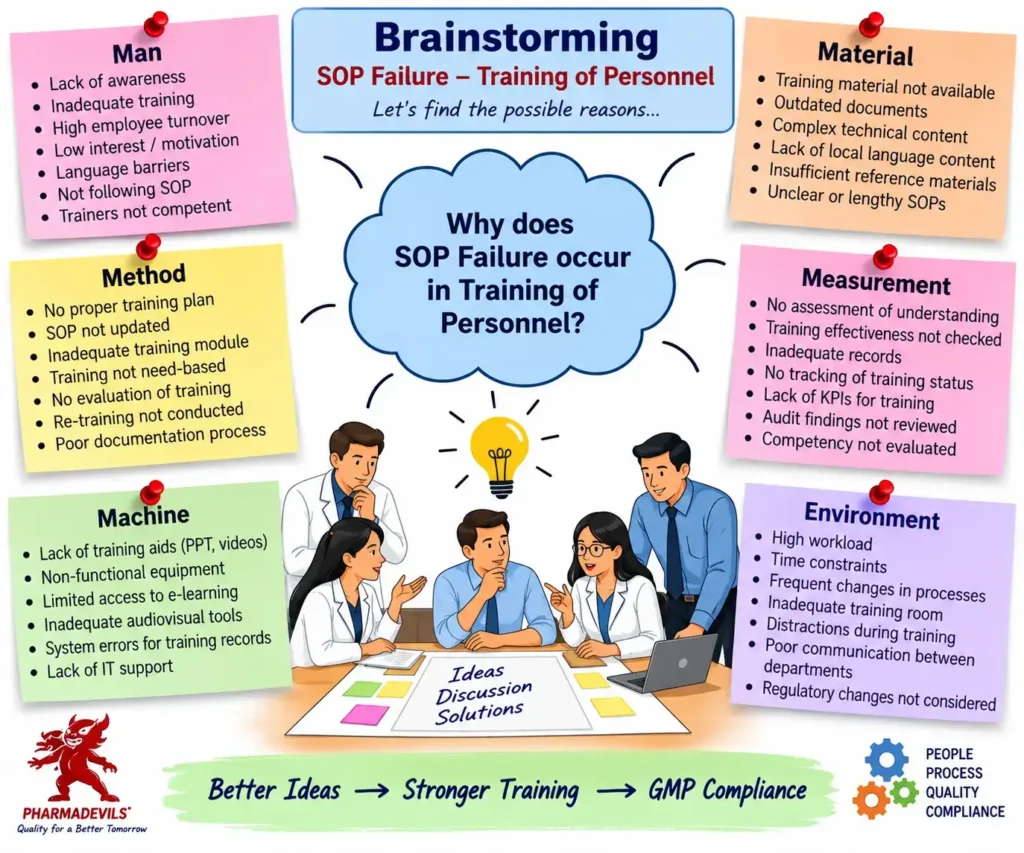
People-related causes may include inadequate training, lack of awareness, language barriers, low motivation, or unqualified trainers. Method-related issues may involve poor training planning, outdated SOPs, incomplete training modules, or failure to conduct re-training. Material problems can include unavailable or unclear training documents. Machine-related issues may involve lack of presentation tools, e-learning systems, or IT support. Measurement concerns include poor evaluation of training effectiveness, incomplete records, and failure to verify competency. Environmental factors such as high workload, time pressure, distractions, and poor communication can also affect training.This brainstorming exercise helps the investigation team identify potential root causes and select suitable corrective and preventive actions to improve training effectiveness and GMP compliance.
4. 5-Why Analysis for SOP Failure:
The 5-Why analysis explains the possible root cause behind failure to follow an SOP in the manufacturing area. The problem begins when operators do not follow the approved SOP during routine operations. The first possible reason is lack of proper awareness about SOP requirements. This may occur because adequate training was not provided to the concerned personnel.
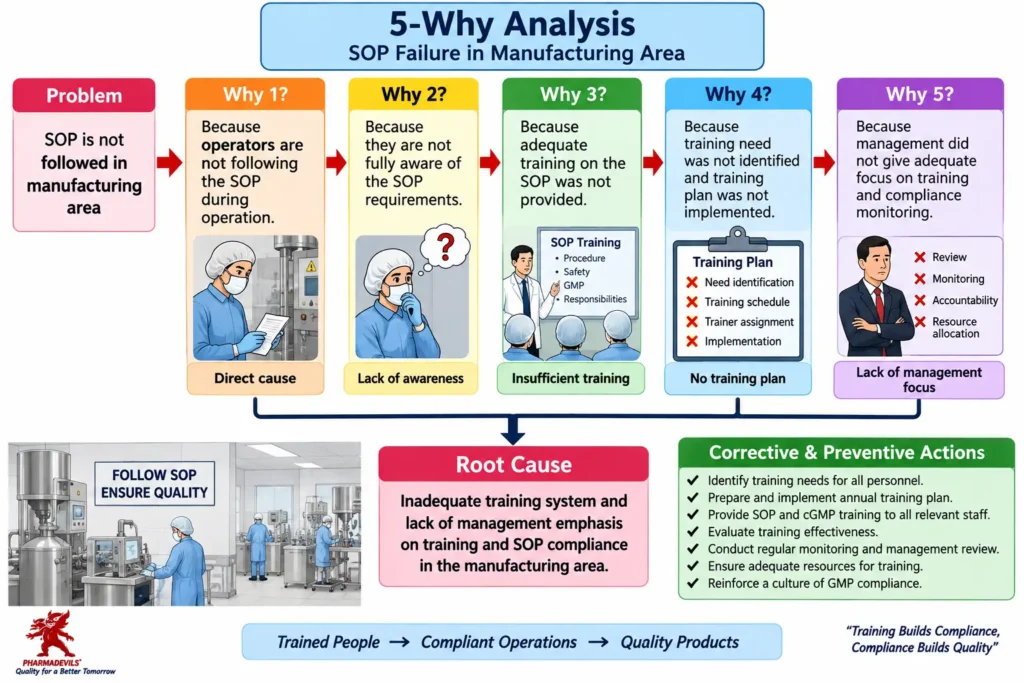
The analysis further indicates that training may have been insufficient because training needs were not properly identified and an effective training plan was not implemented. At the final level, the issue may be linked to inadequate management focus on training, compliance monitoring, accountability, and resource allocation. The probable root cause is therefore an ineffective training system combined with weak monitoring of SOP compliance. Corrective actions should include identification of training needs, implementation of annual SOP and cGMP training plans, effectiveness evaluation, periodic compliance monitoring, management review, and ensuring adequate resources for continuous personnel development.
5. Fishbone Analysis for SOP Failure:
The Fishbone Analysis identifies the possible causes of SOP failure in the manufacturing area by grouping them into six major categories: Man, Method, Machine, Material, Measurement, and Environment.
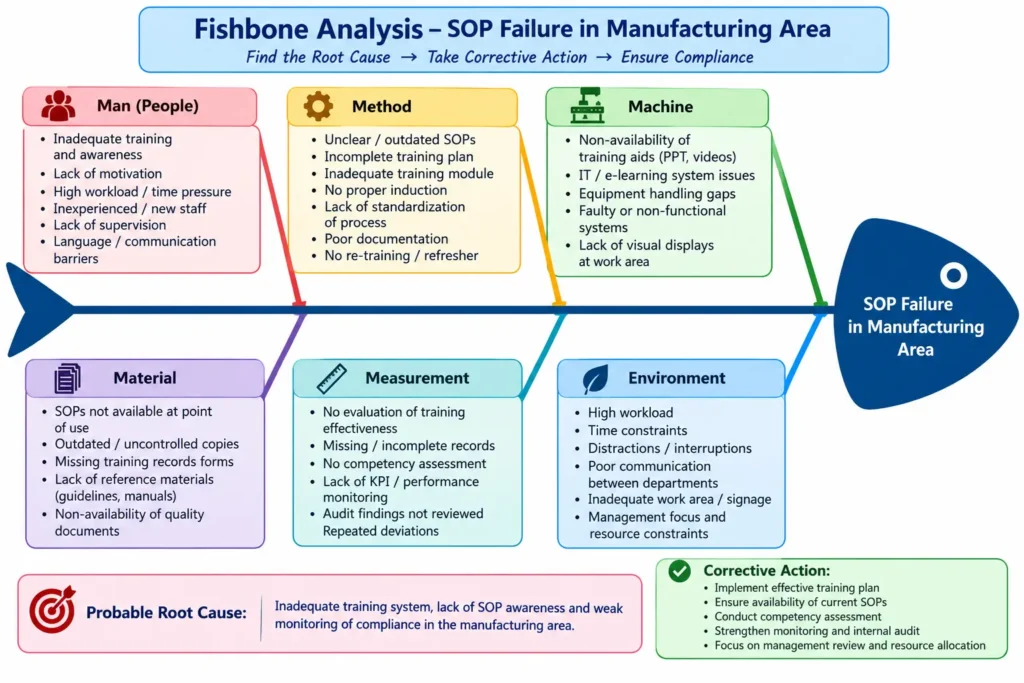
People-related causes may include inadequate training, poor SOP awareness, high workload, communication barriers, low motivation, or insufficient supervision. Method-related issues may include unclear or outdated SOPs, weak training plans, poor standardization, and lack of re-training. Machine-related causes can involve unavailable training aids, equipment issues, or IT/e-learning system problems. Material causes may include outdated SOP copies, missing training materials, or uncontrolled documents. Measurement-related failures include poor training effectiveness evaluation, incomplete records, and lack of competency monitoring. Environmental causes may involve production pressure, distractions, poor communication, and inadequate workplace conditions. The analysis helps identify the probable root cause as an ineffective training system combined with weak monitoring of SOP compliance, enabling suitable corrective and preventive actions to be planned.
6. Fault Tree Analysis for SOP Failure:
The Fault Tree Analysis (FTA) explains how different failures can combine and lead to SOP failure in the manufacturing area. The top event is defined as failure to follow the approved SOP or deviation from the required procedure. The analysis then breaks the problem into major contributing areas such as personnel-related failure, procedure or method failure, resource-related failure, and management or system-related failure.
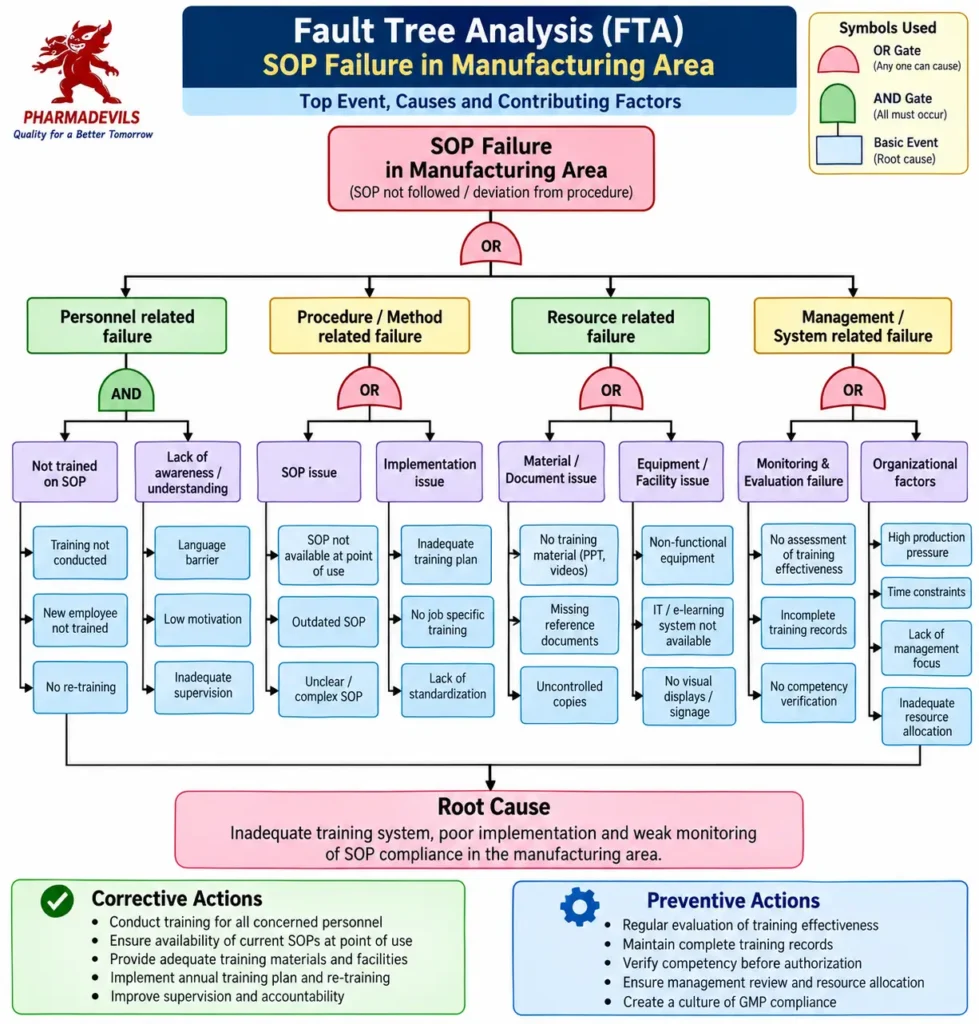
Personnel factors may include lack of SOP training, poor understanding, language barriers, inadequate supervision, or absence of re-training. Procedure-related causes may involve outdated, unclear, or unavailable SOPs and weak implementation practices. Resource-related causes can include missing training materials, inadequate equipment, poor IT support, or lack of visual aids. Management and system factors may include weak training-effectiveness monitoring, incomplete records, lack of competency verification, high workload, and insufficient resource allocation. The probable root cause is an inadequate training system, weak SOP implementation, and poor compliance monitoring, requiring corrective and preventive actions to strengthen training, supervision, documentation, competency assessment, and management oversight.
Questions & Answers:
1. What is the objective of the SOP for Training of Personnel?
The objective is to establish a defined procedure for training personnel working in pharmaceutical operations.
2. Who is covered under this SOP?
It applies to personnel engaged in manufacturing, testing, packing, holding, distribution, cGMP training, and other activities identified for effective and controlled operations.
3. When should an employee be trained?
Every employee should be trained in his or her area of operation before starting the assigned work.
4. Who is responsible for coordinating cGMP training?
The QA training coordinator or designee is responsible for providing the cGMP training module and coordinating training with cross-functional departments.
5. How are internal trainers selected?
The Head QA, in consultation with the respective Department Head, identifies trainers based on qualification, skills, experience, knowledge, communication ability, and operational expertise.
6. What is the purpose of the annual training planner?
The annual training planner is prepared at the beginning of each year to schedule training programs required for improvement of technical skills and compliance.
7. What are the major types of internal training?
Internal training includes induction training, cGMP/technical training, job-specific training, on-the-job training, refresher training, and re-training or need-based training.
8. What is induction training?
Induction training provides an overview of the organization, the employee’s department, and relevant cross-functional departments.
9. Is cGMP training mandatory for new employees?
Yes. cGMP training is mandatory for new joiners before they are placed in their area of operation.
10. When is refresher training required?
Refresher training is carried out once a year and whenever there is a procedural change or revision before implementation.
11. When is re-training required?
Re-training is required when evaluation marks are less than 80% or when training needs arise from incidents, deviations, OOS, complaints, OOT, audits, performance reviews, or behavioral issues.
12. How are training needs identified?
Each functional head identifies training needs based on personnel job roles and
Reference Guidelines:
- Drugs Rules, 1945 – Revised Schedule M, G.S.R. 922(E), 28 December 2023, Part I, Section 11.4 – Training. It requires a written training programme, job-appropriate training for new personnel, continuous training, periodic assessment of training effectiveness, approved training programmes, and maintenance of training records.
CDSCO Revised Schedule M – Official Gazette - PIC/S Guide to GMP – PE 009, Part I, Chapter 2: Personnel, Sections 2.10–2.14. It covers initial and continuing GMP training, assessment of practical effectiveness, approved training programmes, training records, special training for contamination-risk areas, and control of visitors/untrained personnel. (PIC/S)
- EU GMP – EudraLex Volume 4, Part I, Chapter 2: Personnel. This chapter establishes GMP expectations for personnel qualification, responsibility, training, hygiene, and continuing training. (Public Health)
European Commission – EudraLex Volume 4 - US FDA – 21 CFR Part 211, §211.25: Personnel Qualifications. Personnel involved in manufacture, processing, packing, or holding must have appropriate education, training, and experience. Training must cover the employee’s specific operations and applicable current GMP requirements. (GovInfo)
- WHO GMP for Pharmaceutical Products – Main Principles, WHO TRS 986, Annex 2, together with the current WHO pharmaceutical GMP compendium. WHO GMP covers suitability and training of personnel as an essential part of pharmaceutical manufacturing quality systems. (World Health Organization)