







Brief Description
The SOP for Allocating A.R. Number of Raw Material defines a standardized system for assigning a unique Analytical Report (A.R.) Number to every raw material consignment received for Quality Control activities. Its objective is to ensure proper identification, traceability, documentation, and control of raw materials throughout testing and release activities. The SOP applies to the Quality Control Department, where the Executive-QC is responsible for execution and the Manager-QC and Head QA/QC are responsible for effective implementation.The A.R. number is structured using defined characters and digits representing the company identification, raw material designation, year, month, and sequential receipt number. For example, the final three digits such as “001” represent the serial number of the received raw material consignment. This numbering system helps maintain accurate sample identification and prevents mix-ups during analysis and documentation.The SOP also specifies training requirements, document distribution, abbreviations, and revision-history controls to support consistent implementation and GMP documentation practices.
Skip to PDF content1. Flow Daigram:
The Flow Diagram for Allocating A.R. Number of Raw Material presents the SOP process in a simple, colorful, and easy-to-understand Devils Hero style. The process starts with receipt of the raw material consignment, followed by review of material details by the Quality Control department. QC then allocates a unique Analytical Report (A.R.) Number to ensure proper identification and traceability. The numbering format includes the company code, raw material code, year of consignment, month of consignment, and sequential receipt number, such as C R 09 09 001.
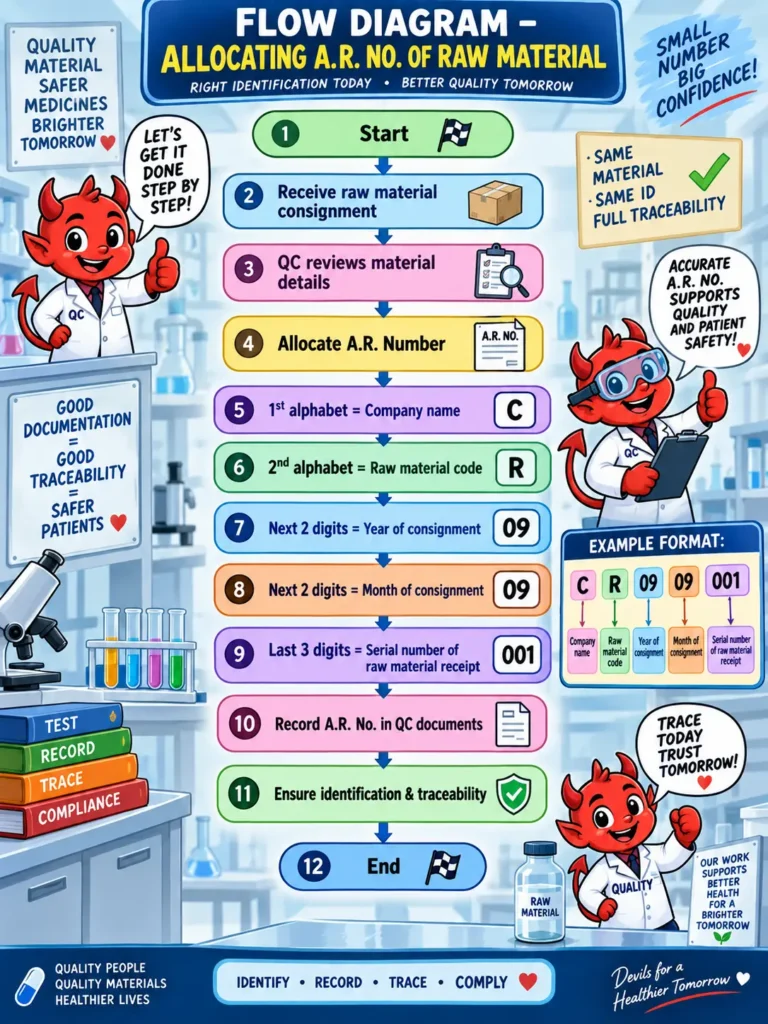
The allocated A.R. number is recorded in relevant QC documents so that each raw material can be accurately tracked throughout testing and documentation activities. The superhero-style devil characters reinforce key GMP messages such as identify, record, trace, and comply, making the diagram suitable for employee training, visual SOP awareness, and Quality Control learning.
2. Brainstorming for SOP Failure:
The Brainstorming for SOP Failure focuses on identifying possible reasons why the SOP for allocating A.R. Number of Raw Material may not be followed correctly. The discussion covers key failure points such as incomplete review of raw material details, use of an incorrect A.R. number format, duplicate or missing sequence numbers, wrong year or month coding, failure to record the assigned number in QC documents, and poor communication to concerned personnel. These issues can lead to sample mix-ups, incorrect testing records, weak traceability, and difficulties during audits or investigations. The SOP requires a structured A.R. number system based on company identification, raw material designation, year, month, and serial receipt number.
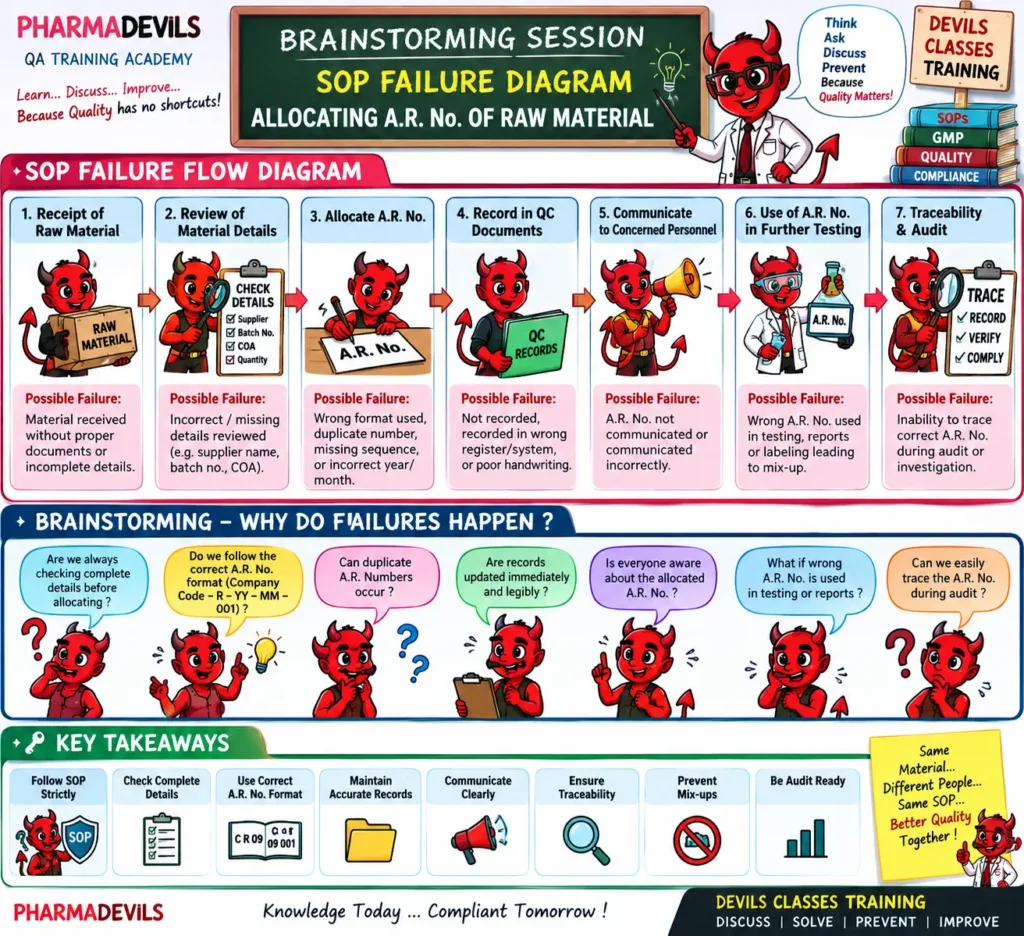
The brainstorming exercise helps QC personnel discuss these risks in a training environment and identify preventive actions such as checking complete material details, following the approved numbering format, maintaining accurate records, communicating clearly, and ensuring end-to-end traceability.
3. 5-Why Analysis for SOP Failure:
The 5-Why Analysis for SOP Failure examines the underlying reasons for incorrect allocation or recording of the A.R. Number for Raw Material. The analysis begins with the observed problem: the A.R. number was assigned incorrectly or was not properly recorded. It then traces the failure through successive causes, including inadequate checking of material details and numbering format, failure to follow the SOP step by step, insufficient training or awareness, and weak supervision or compliance monitoring.
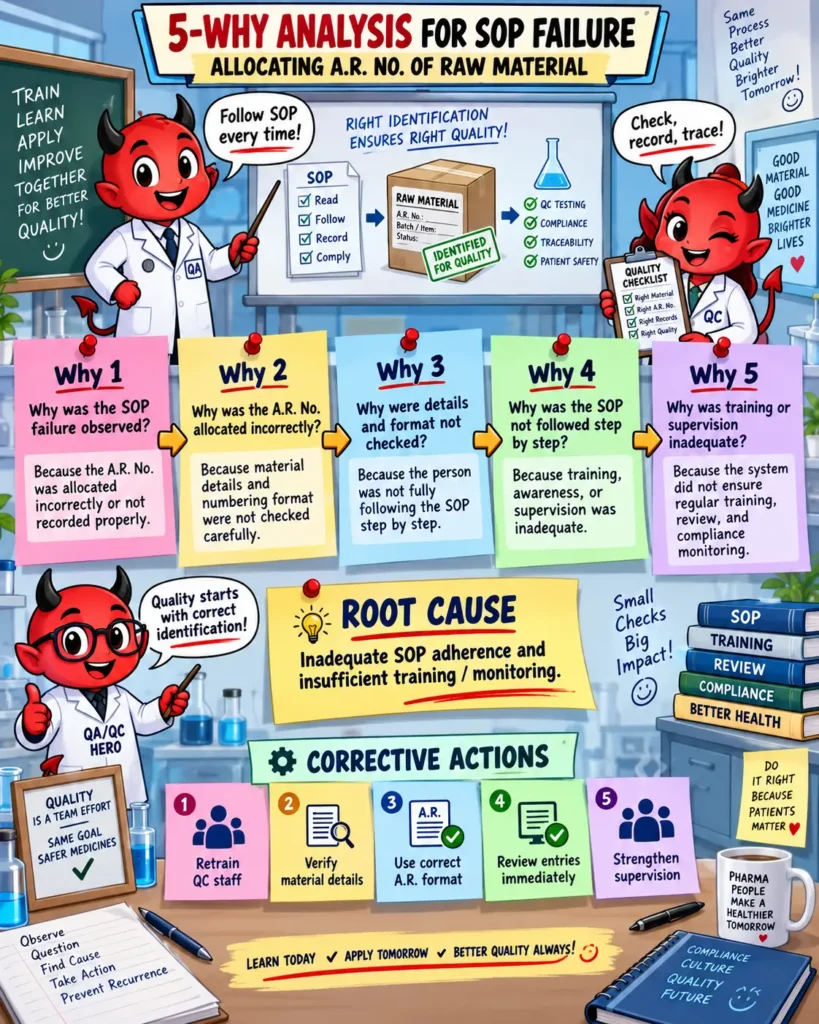
The SOP requires the A.R. number to follow a defined structure consisting of the company identification, raw material designation, year, month, and serial number of receipt.The likely root cause is inadequate SOP adherence supported by insufficient training, review, and monitoring. Corrective actions include retraining QC personnel, verifying material details before allocation, using the approved A.R. number format, reviewing entries promptly, and strengthening supervision to prevent recurrence and maintain traceability.
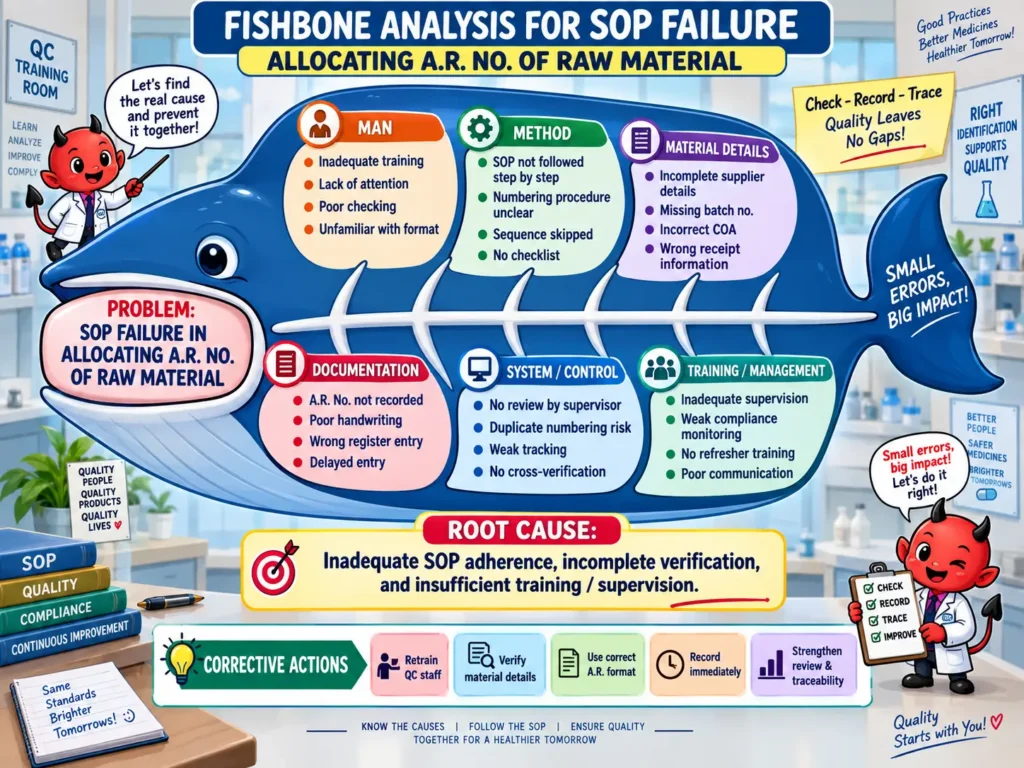
4. Fishbone Analysis for SOP Failure:
The Fishbone Analysis for SOP Failure identifies the major causes that may lead to incorrect allocation or poor control of the A.R. Number for Raw Material. The whale-shaped diagram groups possible causes under six areas: Man, Method, Material Details, Documentation, System/Control, and Training/Management.
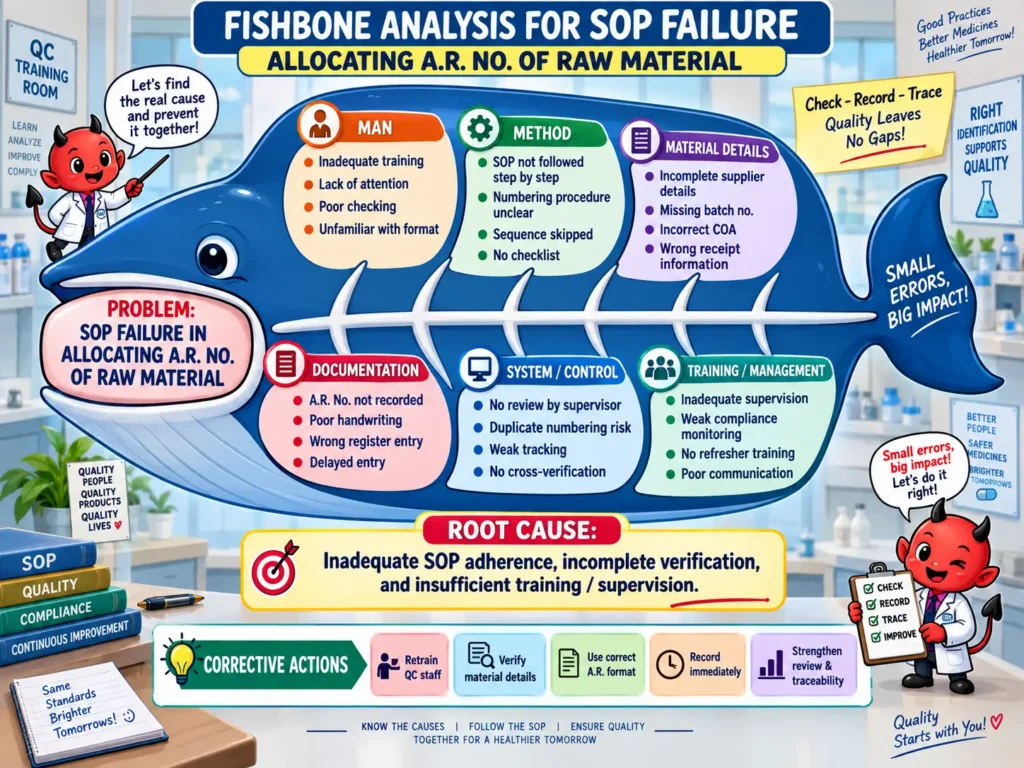
Potential failures include inadequate training, lack of attention, incomplete supplier or batch information, incorrect COA details, failure to follow the SOP step by step, skipped numbering sequences, incorrect register entries, duplicate numbering, weak tracking, insufficient supervision, and poor communication. The SOP requires the A.R. number to follow a defined structure based on company identification, raw material designation, year, month, and serial receipt number.The analysis highlights inadequate SOP adherence, incomplete verification, and insufficient training or supervision as important root causes. Corrective actions include retraining QC staff, verifying raw material details, using the correct A.R. number format, recording entries immediately, and strengthening review and traceability.
5. Fault Tree Analysis for SOP Failure:
The Fault Tree Analysis (FTA) for SOP Failure evaluates how incorrect or missing allocation of the A.R. Number for Raw Material can occur through several connected failures. The top event is SOP failure in A.R. number allocation, which may result from incorrect numbering, failure to record the number in QC documents, or failure to follow the SOP.
The diagram breaks these failures into short causes such as wrong format, incorrect year/month, duplicate or skipped number, missed entry, wrong register, poor handwriting, inadequate training, lack of supervision, and low awareness. Since the SOP defines a specific A.R. numbering structure using company identification, raw material designation, year, month, and serial receipt number, any deviation from these steps can affect identification and traceability.The analysis identifies the main underlying causes as weak SOP adherence, insufficient training, inadequate review, poor system controls, ineffective communication, and weak compliance monitoring. The FTA helps QC teams focus corrective actions on preventing recurrence and maintaining reliable raw-material traceability.
Questions & Answers – SOP for Allocating A.R. No. of Raw Material
- Q: What is the objective of this SOP?
A: To lay down the procedure for allocating the A.R. Number of raw material. - Q: Which department does this SOP apply to?
A: It is applicable to the Quality Control Department for allocating A.R. numbers to raw materials. - Q: Who is responsible for execution of this SOP?
A: The Executive-QC is responsible for executing the SOP. - Q: Who is responsible for effective implementation of the SOP?
A: The Manager-QC and Head QC/QA are responsible for effective implementation. - Q: What does A.R. No. stand for?
A: Analytical Report Number. - Q: What does the first alphabet in the A.R. number indicate?
A: It indicates the company name. - Q: What does the second alphabet indicate?
A: It indicates Raw Material. - Q: What do the first two numerical digits indicate?
A: They indicate the year of the consignment. For example, “09” represents the year in the SOP example. - Q: What do the next two digits indicate?
A: They indicate the month of the consignment. - Q: What do the final three digits such as “001” indicate?
A: They indicate the serial number of receipt of the raw material. - Q: Who provides training for this SOP?
A: The Manager – Quality Control is the trainer, and Quality Control personnel are the trainees. - Q: What is the training duration specified in the SOP?
A: Half an hour. - Q: Who holds the controlled copy of the SOP?
A: The Head of Department – Quality Control. - Q: Who holds the master copy of the SOP?
A: The Head of Department – Quality Assurance. - Q: What is the reference for this SOP?
A: In House. - Q: Are any enclosures specified in the SOP?
A: No. The SOP states “Nil” for enclosures. - Q: What does QC stand for?
A: Quality Control. - Q: Why is the A.R. numbering structure important according to the SOP?
A: The SOP specifies a structured numbering format containing company identification, raw-material identification, year, month, and receipt serial number, enabling each raw-material receipt to have a defined A.R. number.