







1. Introduction to Cetirizine Hydrochloride Tablets IP 10 mg – Batch Packing Record (BPR):
The Batch Packing Record (BPR) for Cetirizine Hydrochloride Tablets IP 10 mg is an essential pharmaceutical documentation system designed to ensure that all packaging operations are performed systematically, accurately, and in compliance with Good Manufacturing Practices (GMP). It provides a comprehensive record of packaging activities, quality control checks, material reconciliation, and final product release. Cetirizine Hydrochloride is a second-generation antihistamine commonly used to relieve allergic conditions, including allergic rhinitis and urticaria. Each film-coated tablet contains Cetirizine Hydrochloride IP 10 mg, along with suitable excipients. The product is classified as a Schedule H prescription drug in India and requires appropriate labeling and storage below 30°C, protected from moisture. The BPR includes important documentation related to packaging material dispensing, line clearance, machine setup, overprinting verification, blister or strip packing, carton filling, and shipper packing. It also incorporates in-process quality checks, including sealing temperature monitoring, leak testing, packaging integrity verification, and printed information inspection. Additionally, the record covers packaging material reconciliation, rejection analysis, destruction of rejected materials, yield calculations, and verification by Production and Quality Assurance personnel. Proper implementation of the Cetirizine Hydrochloride Tablets IP Batch Packing Record ensures product traceability, prevents packaging mix-ups, supports regulatory compliance, and maintains consistent pharmaceutical packaging quality throughout the manufacturing lifecycle.
Skip to PDF content2. Flow Diagram – Batch Packing Process of Cetirizine Hydrochloride Tablets IP 10 mg (BPR):
The Flow Diagram of Cetirizine Hydrochloride Tablets IP 10 mg Batch Packing Record (BPR) illustrates the systematic sequence of pharmaceutical packaging operations performed in accordance with Good Manufacturing Practices (GMP). The diagram highlights essential processing stages, quality control measures, documentation requirements, and verification activities necessary to maintain product quality, safety, and traceability. The packaging process begins with the receipt of inspected tablets from the manufacturing department, followed by dispensing and verification of approved packaging materials. Before commencing packaging operations, line clearance is performed to ensure that the packaging area, equipment, and machinery are free from previous product materials.
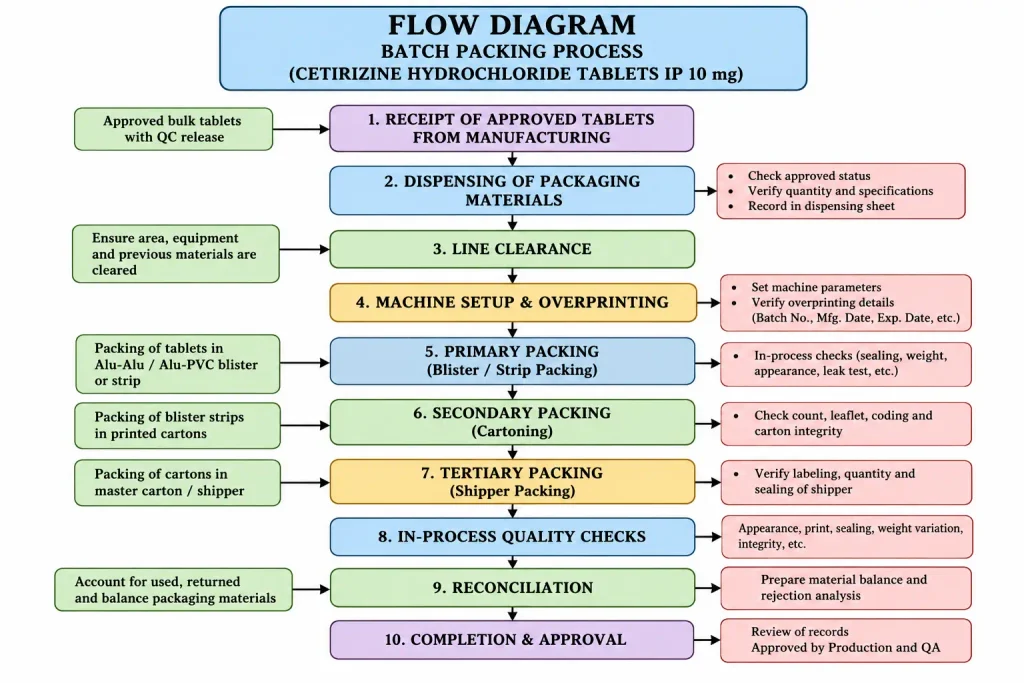
Machine setup and overprinting verification are conducted before initiating primary packaging through blister or strip packing machines. Critical operating parameters, including sealing temperature, forming temperature, machine speed, and packaging integrity, are monitored during operations. Following primary packaging, tablets undergo secondary packaging into printed cartons and tertiary packaging into shippers. In-process quality checks include leak testing, verification of printed information, carton and shipper filling quantities, and packaging defect inspections. The final stages involve packaging material reconciliation, rejection analysis, yield verification, documentation review, and approval by Production and Quality Assurance personnel.
Description of Critical Process Parameters (CPP) and Critical Quality Attributes (CQA) – Cetirizine Hydrochloride Tablets IP 10 mg (BPR)
The Critical Process Parameters (CPP) and Critical Quality Attributes (CQA) of Cetirizine Hydrochloride Tablets IP 10 mg are essential for maintaining pharmaceutical packaging quality, product integrity, and compliance with Good Manufacturing Practices (GMP). Critical Process Parameters (CPP) represent packaging process variables that require monitoring and control to ensure consistent packaging performance. Important parameters include sealing temperature, forming temperature, machine speed, tablet feeding and alignment, overprinting accuracy, packaging material quality, carton filling, and shipper packing operations. Proper control of these parameters helps prevent packaging defects, product damage, leakage, and labeling errors. Critical Quality Attributes (CQA) represent measurable product and packaging characteristics that must meet predefined acceptance criteria. These include tablet integrity, blister or strip sealing quality, leak-test compliance, correct product identification, legibility of batch details, carton integrity, accurate pack quantity, and shipper packaging quality. In-process quality control activities include leak testing, inspection of printed information, verification of carton and shipper quantities, packaging rejection analysis, and reconciliation of packaging materials.
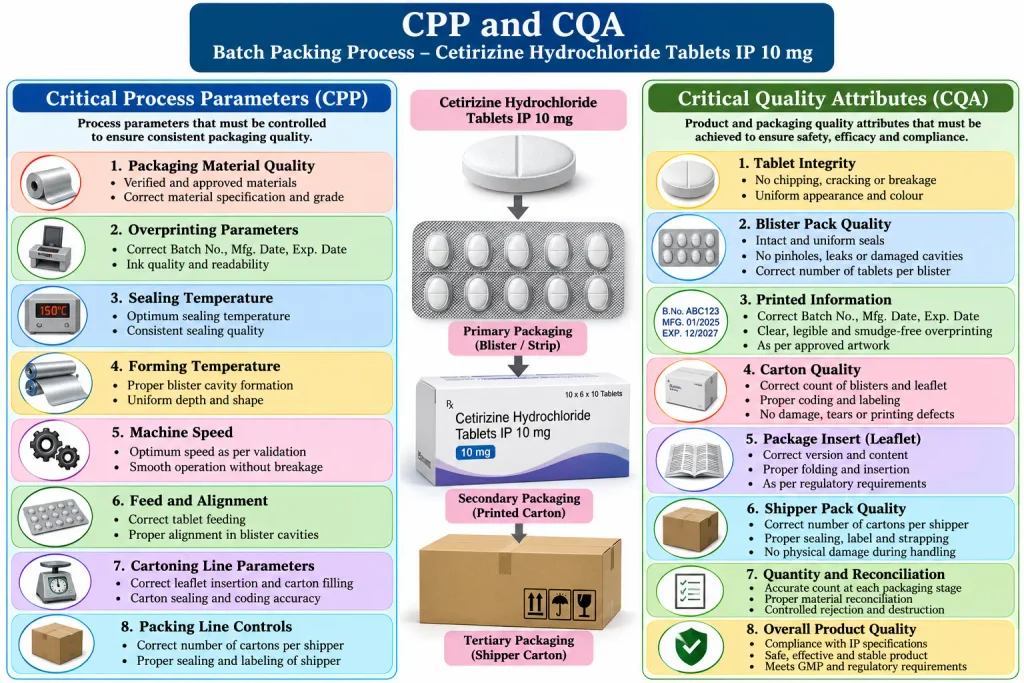
The relationship between CPP and CQA ensures that controlled packaging operations consistently produce pharmaceutical products meeting established quality standards. Effective monitoring, documentation, and verification by Production and Quality Assurance personnel help minimize packaging errors, prevent product mix-ups, maintain traceability, and support regulatory compliance.
Note: The illustrated CPPs and CQAs are indicative. Their criticality, operating limits, and acceptance criteria must be established through documented risk assessment, qualification, validation, and approved product specifications.