







Brief Description
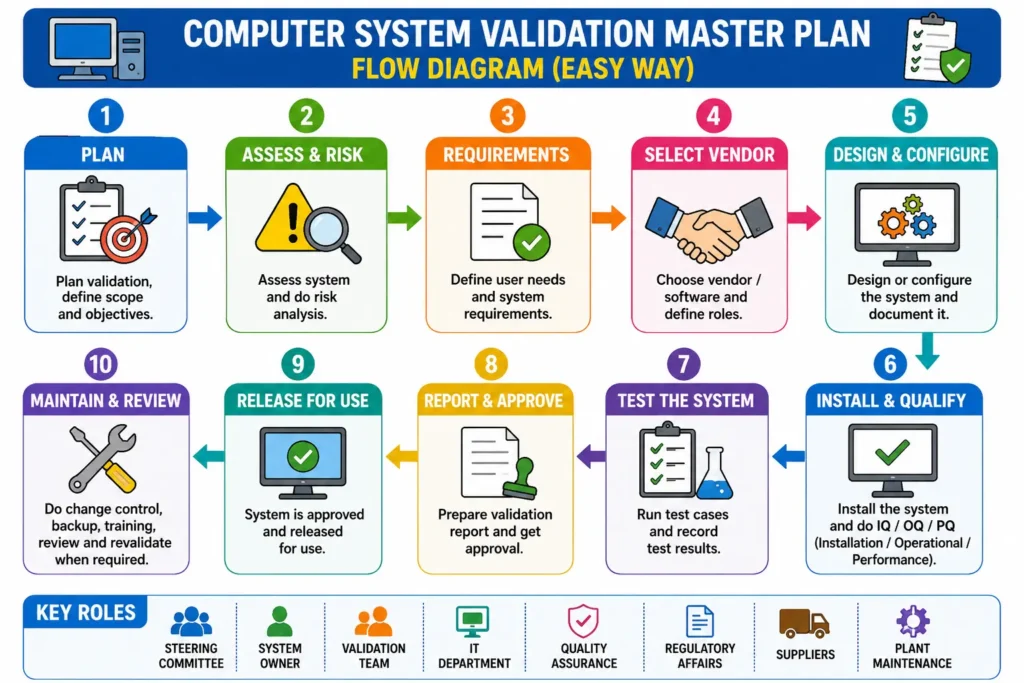
The Computer System Validation Master Plan explains how computerized systems used in regulated and business-critical activities should be properly planned, tested, controlled, and maintained. Its main purpose is to ensure that computer systems work correctly, produce reliable data, and remain suitable for their intended use. The plan covers new and existing systems, standalone and networked systems, commercial software, configurable systems, spreadsheets, and other computerized applications. It defines responsibilities for the system owner, IT, Quality Assurance, users, regulatory personnel, suppliers, and validation teams. Validation starts with planning, defining requirements, risk assessment, vendor evaluation, installation, testing, and documentation. Risk-based validation is used so that more attention is given to systems with higher impact on product quality or business continuity. The plan also covers change control, backup, security, maintenance, periodic review, training, problem handling, revalidation, and system retirement. Proper documentation and approval help keep systems compliant throughout their complete life cycle and traceable.
Impact Assessment
Implementation of the Computer System Validation Master Plan will have a positive impact on computerized systems used in regulated activities. It provides a clear method to plan, assess risk, define requirements, select vendors, install, test, approve, and maintain systems throughout their life cycle. This helps ensure that systems work correctly, data remains reliable, and records are properly controlled. The plan also defines responsibilities for the system owner, IT, Quality Assurance, users, suppliers, and other supporting departments, which improves accountability and coordination. Risk assessment helps focus more attention on systems that can affect product quality or business continuity. Proper change control, backup, security, training, periodic review, and system retirement help maintain the validated state of the system. Overall, this master plan reduces the chance of system failure, data errors, unauthorized changes, and compliance gaps, while supporting consistent operation, better documentation, traceability, and readiness for internal and regulatory audits during routine operations.
Questions & Answers
Q1. What is Computer System Validation (CSV)?
Answer: CSV is a documented process used to confirm that a computerized system works correctly, gives reliable results, and is suitable for its intended use.
Q2. When should computer system validation be performed?
Answer: Validation should be performed when a new computerized system is introduced or when an existing system needs to be brought into compliance.
Q3. Who is mainly responsible for the validation project?
Answer: The System Owner is mainly responsible for planning, executing, documenting, and controlling the validation project.
Q4. Why is risk assessment required in CSV?
Answer: Risk assessment helps identify high-risk systems and functions so that proper testing and controls can be applied before problems occur.
Q5. What are the common risk levels for computerized systems?
Answer: Systems are generally classified as High, Medium, or Low risk depending on their impact on product quality, compliance, and business continuity.
Q6. What should a Validation Project Plan contain?
Answer: It should include scope, system description, responsibilities, validation approach, risk assessment, validation activities, change control, training, deliverables, and schedule.
Q7. What is the role of Quality Assurance in CSV?
Answer: QA reviews and approves validation procedures and documents, provides quality and regulatory support, gives training, and audits computerized systems.
Q8. Why is change control important for computerized systems?
Answer: Change control ensures that changes to hardware, software, configuration, or other system components are properly authorized, evaluated, implemented, and documented.
Q9. When is revalidation required?
Answer: Revalidation may be required after changes in software, hardware, accessories, configuration, or installation of a new software version. The extent of revalidation should be based on risk.
Q10. Why are periodic reviews performed?
Answer: Periodic reviews confirm that the computerized system is still operating according to its approved documentation and remains in a validated state.
Q11. What is a Validation Summary Report?
Answer: It is the final document that summarizes the validation activities, testing results, deviations, corrective actions, and the final status of the system before release.
Q12. What should be done when a computerized system is retired?
Answer: System retirement should be properly planned. Important data should be safely transferred to the new system, required documents should be retained, and the old system should be formally taken out of service.