







1. Introduction – Cyproheptadine Hydrochloride, Tricholine Citrate & Sorbitol Syrup:
The Batch Packing Record (BPR) of Cyproheptadine Hydrochloride, Tricholine Citrate & Sorbitol Syrup is an essential pharmaceutical document designed to ensure systematic documentation, traceability, and compliance throughout the packaging process. This oral liquid formulation contains Cyproheptadine Hydrochloride IP 2 mg, Tricholine Citrate 275 mg, and Sorbitol (70%) IP 3.575 g per 5 mL in a flavoured syrup base. The BPR provides comprehensive instructions and recording formats for packing material dispensing, line clearance, bottle washing, filling, sealing, labelling, carton packing, and finished product reconciliation. The specified packaging configuration includes 200 mL amber-coloured PET bottles, polypropylene caps, printed labels, cartons, and corrugated shippers. Critical in-process quality checks include fill volume verification, sealing integrity, leakage testing, cap perforation inspection, label accuracy, and rejection analysis. These controls help maintain packaging consistency, product identification, and container integrity. The document also establishes responsibilities for Production and Quality Assurance personnel, ensuring proper verification, documentation, and accountability at every stage. Final reconciliation, yield calculation, material destruction, and batch release records support compliance with Good Manufacturing Practices (GMP). A properly maintained BPR ensures packaging quality, minimizes errors, prevents mix-ups, and facilitates regulatory inspections and batch traceability throughout the product lifecycle.
Skip to PDF content1. Flow Diagram – Cyproheptadine Hydrochloride, Tricholine Citrate & Sorbitol Syrup:
The flow diagram illustrates the systematic batch packing process of Cyproheptadine Hydrochloride, Tricholine Citrate & Sorbitol Syrup, highlighting the essential operations and quality control measures required to maintain product integrity, safety, and compliance with Good Manufacturing Practices (GMP). The process begins with the receipt of approved bulk syrup from the manufacturing department, followed by dispensing and verification of packaging materials, including 200 mL amber PET bottles, polypropylene caps, printed labels, cartons, and corrugated shippers. After successful line clearance and equipment verification, the bottles undergo washing before being transferred to the filling machine for accurate syrup dispensing. Filled bottles are subsequently sealed, capped, inspected, and labelled with the required product and batch information.
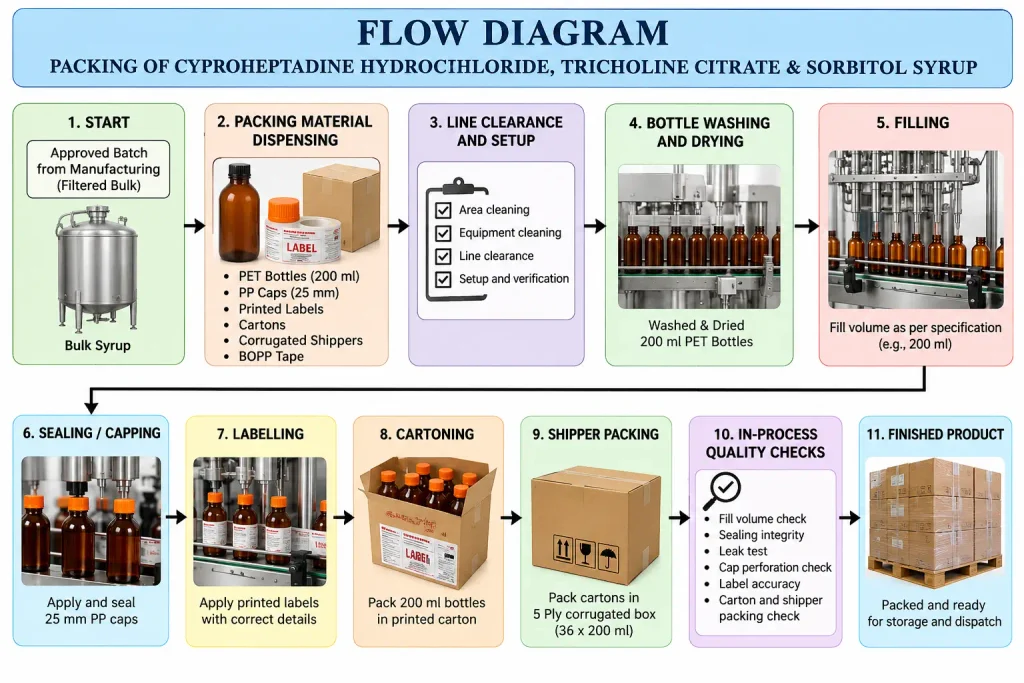
The labelled bottles are packed into individual cartons, followed by secondary packaging in corrugated shippers. Throughout the process, critical in-process quality checks include fill volume verification, sealing integrity, leakage testing, cap perforation inspection, label accuracy, and packaging quality. Finally, packed units undergo reconciliation, yield verification, and documentation before transfer to the designated finished goods storage area. This structured packaging workflow ensures product traceability, packaging consistency, prevention of mix-ups, and regulatory compliance, supporting effective pharmaceutical quality assurance and batch documentation.
2. Critical Process Parameters (CPP) and Critical Quality Attributes (CQA) of Cyproheptadine Hydrochloride, Tricholine Citrate & Sorbitol Syrup:
The Critical Process Parameters (CPP) and Critical Quality Attributes (CQA) of Cyproheptadine Hydrochloride, Tricholine Citrate & Sorbitol Syrup are essential for maintaining product quality, packaging integrity, and compliance with Good Manufacturing Practices (GMP).
Critical Process Parameters (CPP)
Critical Process Parameters are processing variables that must be monitored and controlled to ensure consistent packaging quality. Important parameters include bottle washing conditions, purified water temperature, filling volume, filling machine speed, sealing pressure, cap placement, labelling accuracy, and carton packing operations.

The Batch Packing Record specifies bottle washing with purified water at 50–60°C, hourly fill volume verification, sealing quality inspection, leak testing, and cap perforation checks. Proper line clearance, equipment cleanliness, and packaging material verification are also essential to prevent contamination and product mix-ups.
Critical Quality Attributes (CQA):
Critical Quality Attributes represent the physical, chemical, and packaging characteristics necessary to ensure the finished product meets established quality specifications. Important attributes include accurate fill volume, container closure integrity, freedom from leakage, correct product identification, label readability, packaging integrity, and protection against contamination. For this syrup, the specified composition per 5 mL includes Cyproheptadine Hydrochloride IP 2 mg, Tricholine Citrate 275 mg, and Sorbitol (70%) IP 3.575 g.
Conclusion:
Effective monitoring of CPPs and verification of CQAs help ensure consistent batch packing operations, minimize rejection, maintain product traceability, and support regulatory compliance.
Note: The parameters illustrated are potential CPPs and CQAs. Their formal criticality and acceptance criteria must be established through documented quality risk assessment, process validation, and approved specifications.