







1. Introduction – Paracetamol, Phenylephrine Hydrochloride & Cetirizine Dihydrochloride Suspension:
The Batch Packing Record (BPR) of Paracetamol, Phenylephrine Hydrochloride & Cetirizine Dihydrochloride Suspension is an essential pharmaceutical documentation system designed to ensure the systematic execution, monitoring, and verification of packaging operations in accordance with Good Manufacturing Practices (GMP). This pharmaceutical suspension contains three active ingredients: Paracetamol IP 125 mg, Phenylephrine Hydrochloride IP 5 mg, and Cetirizine Dihydrochloride IP 2 mg per 5 mL. Paracetamol acts as an analgesic and antipyretic, Phenylephrine Hydrochloride functions as a nasal decongestant, and Cetirizine Dihydrochloride is an antihistamine used to relieve allergic symptoms. The BPR provides comprehensive documentation of packaging activities, including packing material dispensing, line clearance, bottle washing, filling, sealing, labeling, inspection, and final packing. It establishes procedures for recording critical operational parameters such as fill volume, sealing quality, leakage testing, labeling accuracy, and packaging material reconciliation. Additionally, the document includes provisions for in-process quality checks, rejection analysis, yield calculation, batch traceability, and verification by authorized Production and Quality Assurance personnel. Proper implementation of the Batch Packing Record helps prevent product mix-ups, packaging defects, labeling errors, and documentation discrepancies. It also supports regulatory compliance, accountability, data integrity, and consistent product quality. The BPR serves as an important reference during internal audits, regulatory inspections, batch review, and finished product release. By maintaining accurate and complete packaging records, pharmaceutical manufacturers can ensure that every batch is packed under controlled conditions, supporting product identification, quality assurance, and patient safety.
Skip to PDF content2. Flow Diagram for Paracetamol, Phenylephrine Hydrochloride & Cetirizine Dihydrochloride Suspension (BPR):
The Flow Diagram for Paracetamol, Phenylephrine Hydrochloride & Cetirizine Dihydrochloride Suspension illustrates the sequential packaging operations performed under controlled conditions in accordance with Good Manufacturing Practices (GMP). The process begins with the receipt of approved bulk suspension and dispensing of packaging materials, followed by line clearance to ensure that the equipment and packaging area are free from previous product residues and materials. The bottles undergo washing before being transferred to the filling machine, where the suspension is filled according to the approved fill-volume specifications. Subsequently, the filled bottles are sealed using suitable caps to maintain container integrity and prevent leakage or contamination.
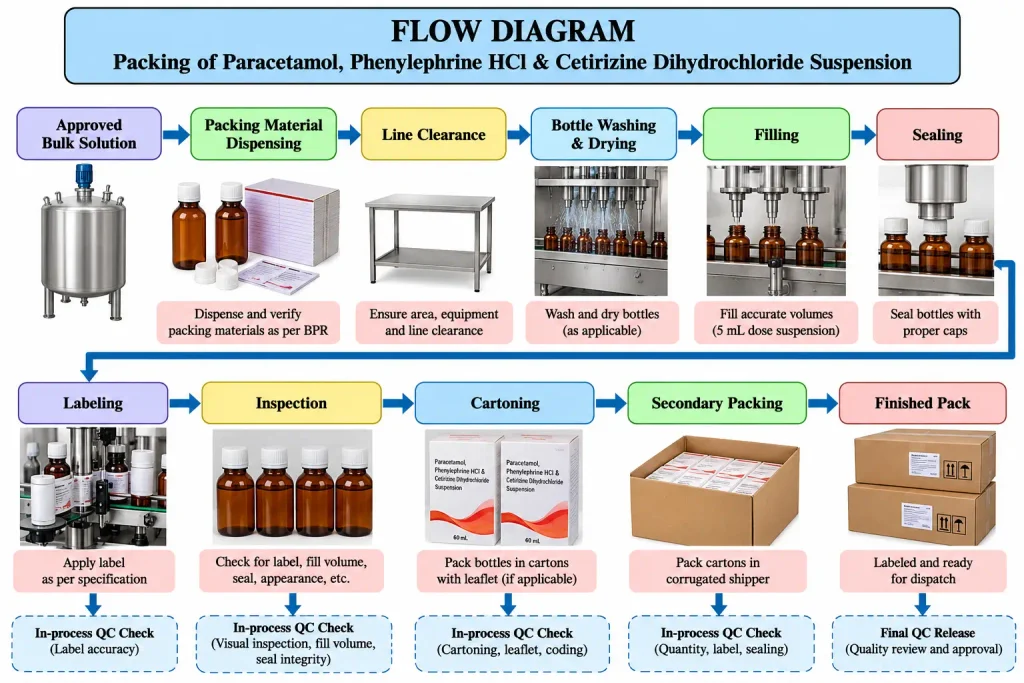
The sealed bottles are labeled with essential product information, including the product name, batch number, manufacturing date, expiry date, and other approved labeling details. In-process quality checks are performed to verify fill volume, sealing quality, leakage, labeling accuracy, and visual appearance. After inspection, acceptable bottles are packed into individual cartons and subsequently into corrugated shippers. Packaging materials are reconciled, rejected units are documented, and the finished packs are transferred for storage following the applicable quality approval procedures. The flow diagram emphasizes process control, product traceability, packaging accuracy, quality assurance, and regulatory compliance, ensuring that each packaging stage is properly monitored and documented.
3. Critical Process Parameters (CPP) and Critical Quality Attributes (CQA) for Paracetamol, Phenylephrine Hydrochloride & Cetirizine Dihydrochloride Suspension (BPR):
The Critical Process Parameters (CPP) and Critical Quality Attributes (CQA) of Paracetamol, Phenylephrine Hydrochloride & Cetirizine Dihydrochloride Suspension are essential for ensuring consistent product quality, packaging integrity, and compliance with Good Manufacturing Practices (GMP).
Critical Process Parameters (CPP) are operational variables that require monitoring and control during pharmaceutical packaging. Important parameters include bottle washing conditions, filling accuracy, fill volume, sealing quality, cap integrity, labeling accuracy, and secondary packaging operations. During filling, periodic volume checks help ensure that the required quantity of suspension is dispensed into each bottle. Proper sealing and leak testing prevent leakage, contamination, and deterioration of the product.
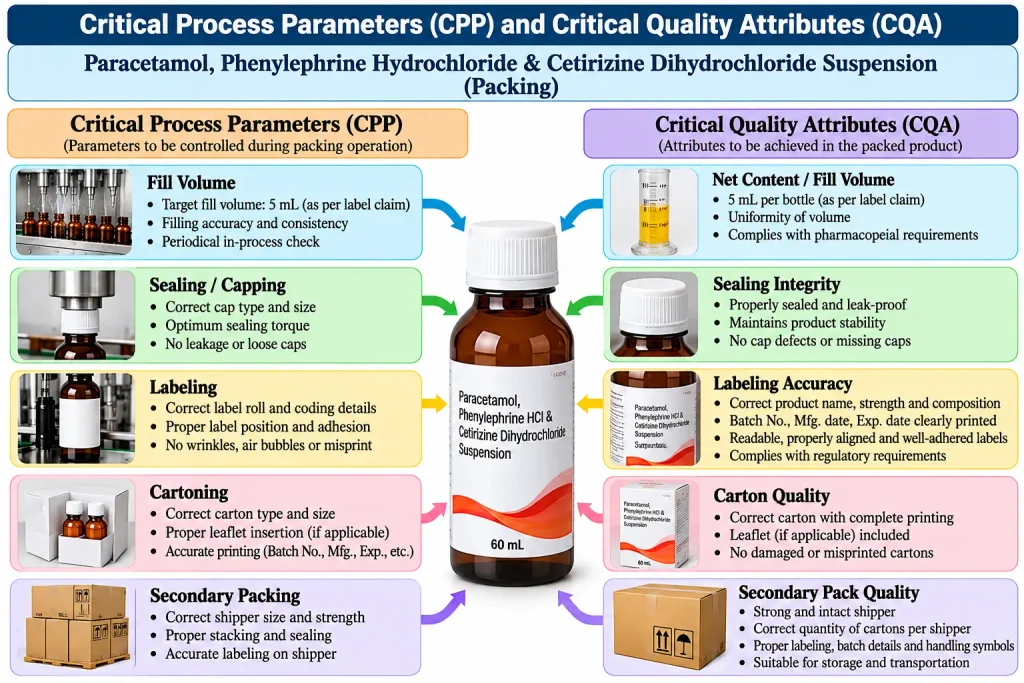
Critical Quality Attributes (CQA) are the physical, chemical, microbiological, and packaging characteristics that must meet predefined acceptance criteria to ensure product quality and safety. Important packaging-related CQAs include accurate net content, container-closure integrity, correct labeling, absence of visible defects, and proper carton and shipper quality. Product-related attributes such as assay, uniformity, microbial quality, and physical stability are controlled through approved specifications and relevant quality testing. The Batch Packing Record (BPR) documents in-process checks, rejection analysis, packaging material reconciliation, and verification by authorized Production and Quality Assurance personnel. Effective monitoring of CPPs and verification of CQAs help minimize packaging defects, prevent product mix-ups, maintain batch traceability, and ensure that the finished pharmaceutical suspension meets established quality standards.
Note: The exact criticality, operating limits, and acceptance criteria of CPPs and CQAs must be established through documented risk assessment, process validation, approved specifications, and applicable regulatory requirements.