







1. Introduction:
The Batch Packing Record (BPR) for Paracetamol, Phenylephrine HCl & Cetirizine Dihydrochloride Suspension is a vital document maintained by the Quality Assurance (QA) Department to ensure compliance with Good Manufacturing Practices (GMP). It provides a structured record of all packaging operations, starting from line clearance, bottle washing, filling, sealing, labelling, packing, reconciliation, and destruction of rejected materials. This suspension contains Paracetamol IP 125 mg, Phenylephrine HCl IP 5 mg, and Cetirizine Dihydrochloride IP 2 mg per 5 ml, formulated in a syrupy base with flavour and Sunset Yellow FCF. The BPR ensures that every stage of the process is documented, checked, and verified by Production, QA, and Stores personnel. By maintaining detailed records of in-process checks, rejection analysis, and reconciliation of printed materials, the BPR safeguards product quality, patient safety, and regulatory compliance, making it an essential part of pharmaceutical manufacturing.
Skip to PDF content2. Flow Diagram:
The Batch Packing Record (BPR) for Paracetamol, Phenylephrine HCl & Cetirizine Dihydrochloride Suspension is a comprehensive document prepared by the Quality Assurance Department to ensure strict adherence to Good Manufacturing Practices (GMP). It serves as an official record of all packaging operations, including line clearance, bottle washing, filling, sealing, labelling, packing, reconciliation, and destruction of rejected materials.
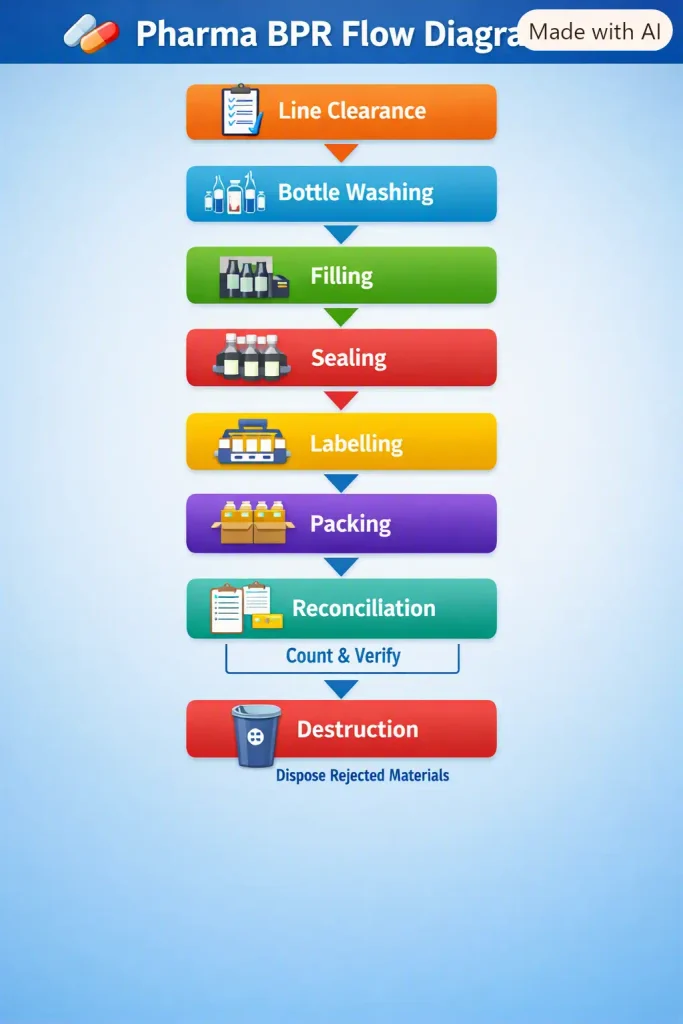
Each 5 ml of the suspension contains Paracetamol IP 125 mg, Phenylephrine HCl IP 5 mg, and Cetirizine Dihydrochloride IP 2 mg, formulated in a syrupy base with flavour and Sunset Yellow FCF. The BPR ensures that every stage of the process is properly documented, checked, and verified by Production, QA, and Stores personnel. This record guarantees product quality, consistency, and regulatory compliance, ensuring that only safe and accurately packed pharmaceutical products reach the market.
3. CPP & CQA in Pharmaceutical Process:
The Critical Process Parameters (CPPs) and Critical Quality Attributes (CQAs) are essential components of pharmaceutical manufacturing that ensure product quality, safety, and consistency. CPPs refer to the key operational variables that directly influence the quality of the final product, such as filling speed, sealing temperature, labelling accuracy, torque of cap sealing, and inspection frequency. These parameters must be controlled within defined limits to maintain process stability. CQAs, on the other hand, represent the measurable properties of the finished product that determine its quality, including fill volume consistency, seal integrity, label adherence, microbial contamination, appearance, and absence of particulates or leakage.
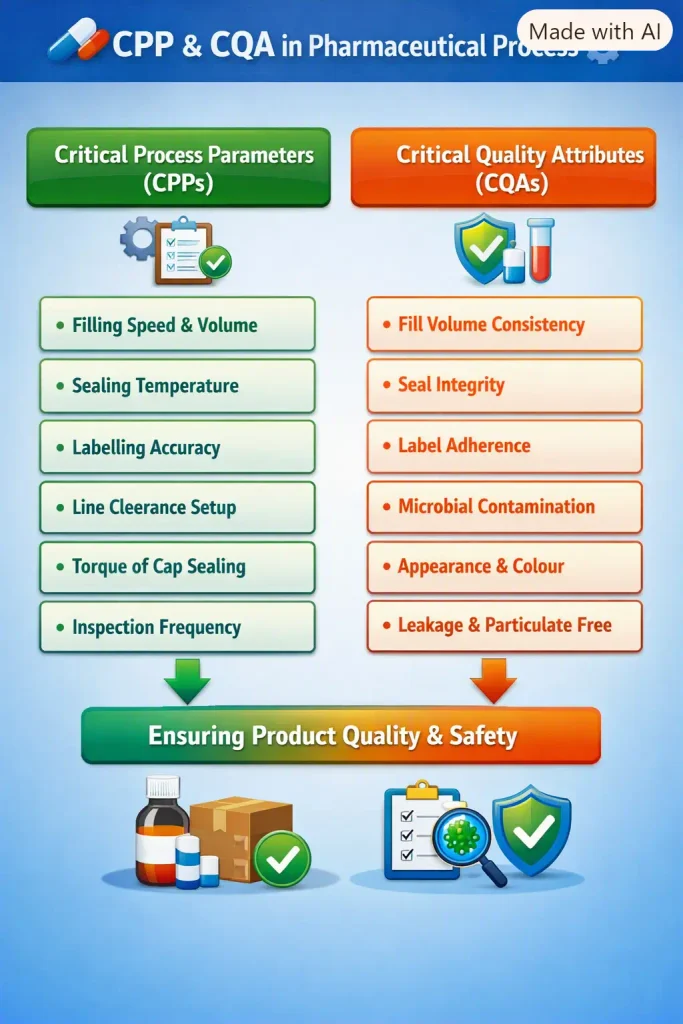
Together, CPPs and CQAs form the foundation of a robust Quality by Design (QbD) approach, ensuring that every batch meets regulatory standards and patient safety requirements through continuous monitoring and validation of process performance.