







1. Introduction – Povidone-Iodine Ointment Batch Packing Record:
Povidone-Iodine Ointment is a topical pharmaceutical preparation formulated with Povidone-Iodine IP 5.0% w/w, providing 0.5% w/w available iodine, incorporated into a suitable water-soluble ointment base. The product is packed in tubes and is intended to maintain its quality, identity, strength and integrity throughout the packing, storage and distribution process. The Batch Packing Record (BPR) provides a controlled and documented system for recording every activity performed during the packing operation. The BPR covers essential packing activities including receipt and verification of bulk product, dispensing of primary, secondary and tertiary packaging materials, overprinting controls, line clearance, tube filling, sealing, coding, carton packing and shipper packing. It also provides provisions for documenting in-process checks, recoverable and non-recoverable rejections, sampling activities, defects or deviations and packing material accountability. Special emphasis is placed on line clearance before starting filling and packing operations to prevent product mix-ups, contamination and incorrect use of printed packaging materials. During tube filling, critical checks such as tube cleanliness, empty-tube inspection, filling weight, cap closure and sealing condition are recorded at defined intervals. The BPR specifies a target filled weight of 20.3 g with an acceptable filling range of 20.0–21.8 g. Subsequent carton and shipper packing checks ensure correct batch coding, manufacturing and expiry details, MRP and shipper contents. Proper completion and review of this BPR provides documented evidence that Povidone-Iodine Ointment has been packed consistently according to approved instructions and established quality requirements.
Skip to PDF content2. Povidone-Iodine Ointment Packing Process:
The packing process of Povidone-Iodine Ointment is carried out through a controlled sequence of activities designed to maintain product quality, correct identification and packaging integrity. The process begins with receipt of the approved bulk ointment from the manufacturing area, followed by verification of batch details, quantity and product status. Approved primary, secondary and tertiary packing materials are then dispensed according to the authorized packing requirements. Before commencement of packing, line clearance is performed to ensure that the area, equipment and materials are clean and free from remnants of any previous product. The bulk ointment is subsequently filled into suitable printed tubes. During filling, in-process checks include tube cleanliness, empty-tube inspection, filling weight, cap closure and sealing condition. The BPR specifies a target filled weight of 20.3 g with an acceptable filling range of 20.0–21.8 g.
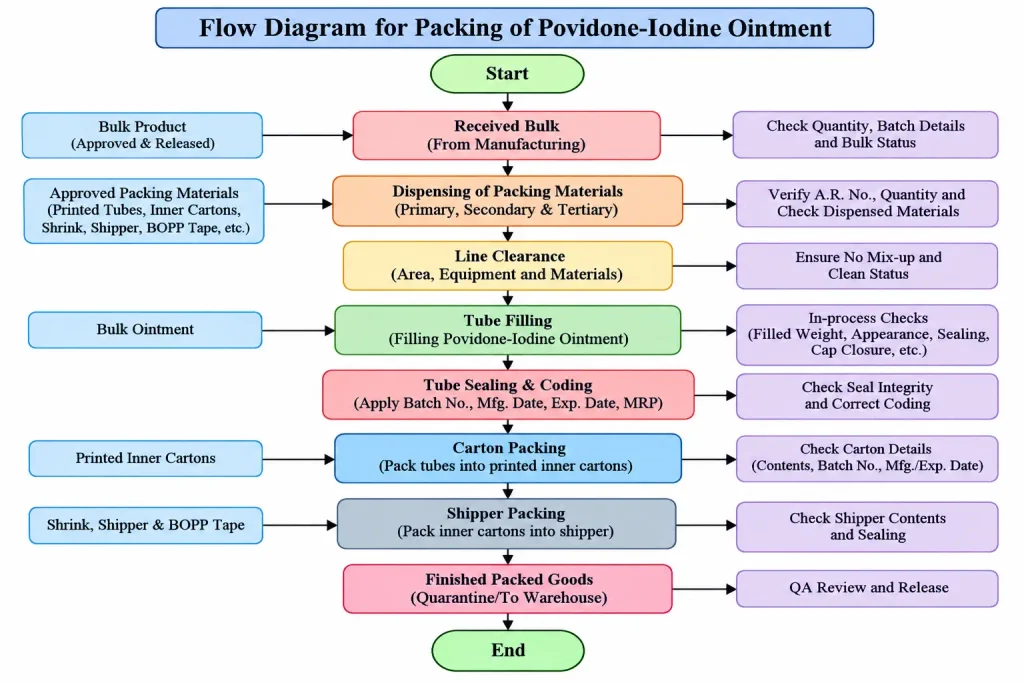
After filling, the tubes are sealed and coded with required batch details, manufacturing date, expiry date and other approved information. The filled tubes are packed into printed inner cartons, followed by shrink packing and placement into shippers. Carton and shipper details are periodically checked during packing. Finally, packing material accountability, rejection details, sampling, deviations and yield are documented before QA review and release of the finished packed product.
3. CPP and CQA for Packing of Povidone-Iodine Ointment:
Critical Process Parameters (CPP) and Critical Quality Attributes (CQA) are essential controls used to ensure consistent packing quality of Povidone-Iodine Ointment. The packing process begins with receipt of approved bulk ointment, followed by tube filling, sealing and coding, carton packing, shrink packing and final shipper packing. During bulk receipt, important controls include verification of approved batch status, bulk quantity and proper product identification. During tube filling, the BPR specifies a target weight of 20.3 g with an acceptable filling range of 20.0–21.8 g. Tube cleanliness, filling operation, cap closure and sealing are also monitored during in-process checks.
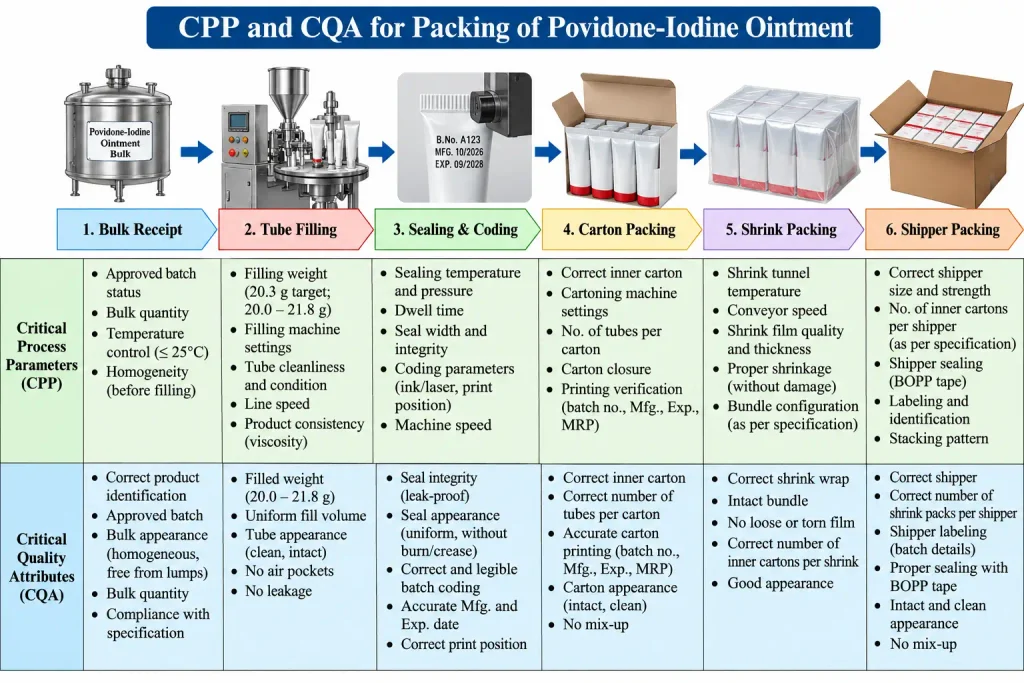
For sealing and coding, attention is given to proper seal condition and correct printing of batch number, manufacturing date, expiry date and other required details. Carton packing requires verification of correct tube coding, carton coding and proper packing of tubes into cartons. Shipper packing includes verification of shipper contents, weight and correct identification details. The BPR also provides for recoverable and non-recoverable rejection recording during packing operations. Effective monitoring of CPPs and CQAs helps prevent mix-ups, incorrect coding, leakage, underfilling, overfilling and packaging defects, thereby supporting consistent product quality and traceability.