






1. Introduction to Cetirizine Dihydrochloride, Phenylephrine Hydrochloride & Paracetamol Tablets (BPR):
Cetirizine Dihydrochloride, Phenylephrine Hydrochloride & Paracetamol Tablets are combination pharmaceutical formulations commonly used for the symptomatic relief of cold, allergic rhinitis, nasal congestion, headache, fever, and associated respiratory discomfort. This formulation combines three active pharmaceutical ingredients (APIs) with complementary therapeutic actions. Cetirizine Dihydrochloride is a second-generation antihistamine that helps alleviate allergic symptoms such as sneezing, runny nose, watery eyes, and itching by blocking histamine H1 receptors. Phenylephrine Hydrochloride is a sympathomimetic agent used as a nasal decongestant, although evidence of its effectiveness at recommended oral doses is limited. Paracetamol is an analgesic and antipyretic agent that helps relieve mild to moderate pain, headache, body aches, and fever. The Batch Packing Record (BPR) is an essential Good Manufacturing Practice (GMP) document that provides detailed instructions and records for pharmaceutical packaging operations. It includes packaging material issuance, line clearance, equipment verification, coding, blister or strip packing, carton packaging, in-process quality checks, reconciliation, and final yield calculations. The BPR ensures product identification, traceability, packaging accuracy, regulatory compliance, and data integrity throughout the packaging process. Proper documentation supports batch review, quality assurance, deviation investigation, and final product release in accordance with established GMP requirements.
Skip to PDF content2. Manufacturing and Packaging Flow Diagram for Cetirizine Dihydrochloride, Phenylephrine Hydrochloride & Paracetamol Tablets (BPR):
The Batch Packing Record (BPR) Flow Diagram illustrates the systematic packaging process of Cetirizine Dihydrochloride, Phenylephrine Hydrochloride & Paracetamol Tablets in accordance with Good Manufacturing Practices (GMP). It highlights essential packaging operations, quality control checkpoints, and documentation requirements to ensure product quality, safety, and traceability. The packaging process begins with the receipt and verification of approved bulk tablets and packaging materials. Packaging area line clearance is performed to prevent product mix-ups, contamination, and cross-contamination. Packaging equipment is checked for cleanliness, operational readiness, and correct machine settings.
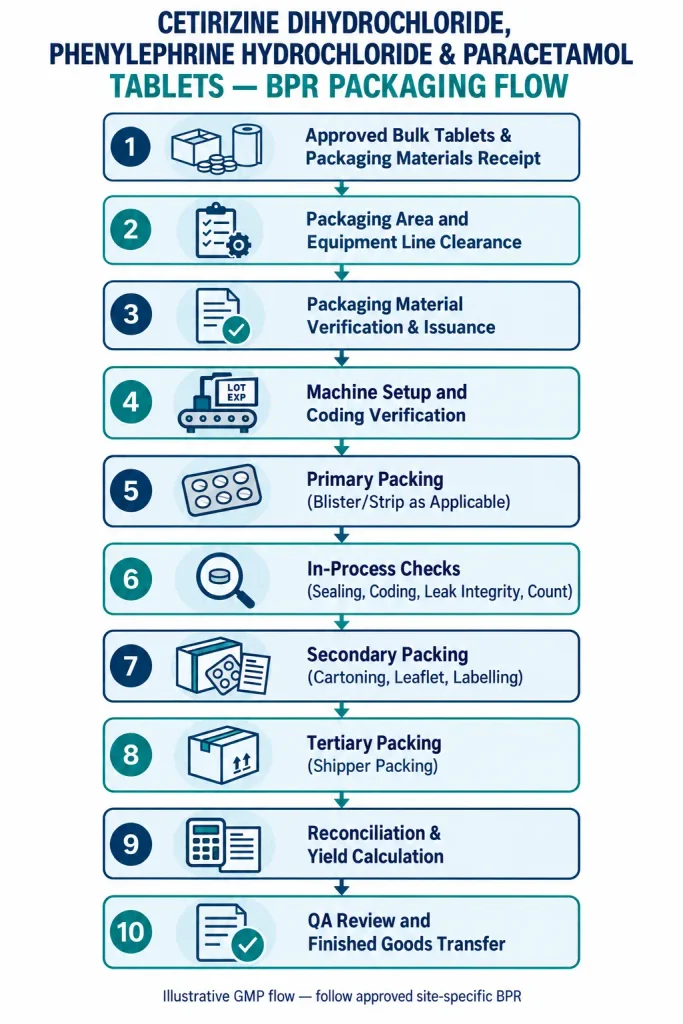
During primary packaging, tablets are packed into approved blister or strip packs, as applicable. Critical in-process checks include sealing integrity, leak testing, coding verification, visual appearance, and tablet counting. Secondary packaging involves inserting packed tablets into cartons with approved labels and patient information leaflets, where applicable. Subsequently, tertiary packaging is performed using designated shipping cartons. The process concludes with packaging material reconciliation, yield calculation, BPR verification, and Quality Assurance review. This structured packaging flow supports regulatory compliance, batch traceability, packaging accuracy, and data integrity. It helps ensure that finished pharmaceutical products meet established quality specifications before authorized batch release and distribution.
3. Critical Process Parameters (CPPs) and Critical Quality Attributes (CQAs) for Cetirizine Dihydrochloride, Phenylephrine Hydrochloride & Paracetamol Tablets:
Critical Process Parameters (CPPs) and Critical Quality Attributes (CQAs) play an essential role in ensuring the quality, safety, integrity, and regulatory compliance of pharmaceutical packaging operations. Proper monitoring and control of these parameters help maintain product quality throughout the packaging process. Critical Process Parameters (CPPs) include blister-forming temperature, forming pressure, sealing temperature, sealing pressure, dwell time, machine speed, tablet feeding alignment, and printing settings. These parameters require appropriate monitoring and control to prevent packaging defects and maintain consistent product quality.
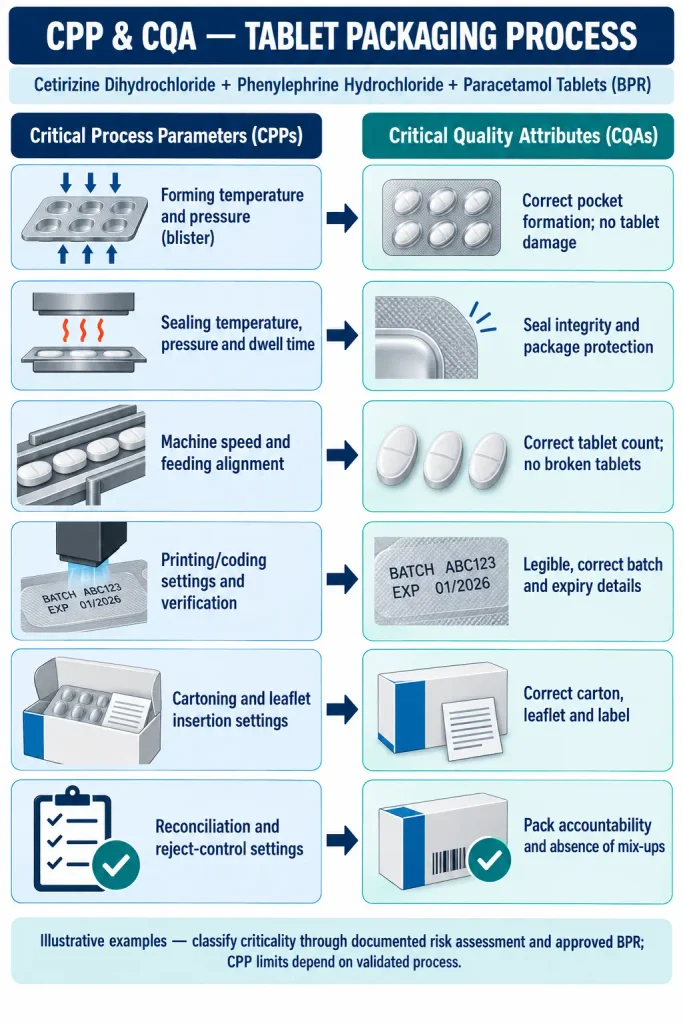
Critical Quality Attributes (CQAs) associated with tablet packaging include blister integrity, sealing quality, protection against moisture, tablet integrity, correct tablet count, accurate batch coding, legible manufacturing and expiry details, and correct packaging components. During primary packaging, critical checks ensure proper blister formation, sealing integrity, and protection against environmental exposure. Secondary packaging operations involve verification of cartons, labels, package inserts, and product identification details. In-process quality control checks include visual inspection, leak testing, coding verification, rejection monitoring, and packaging material reconciliation. Effective control of packaging parameters through validated procedures, documented risk assessments, and approved acceptance criteria helps prevent product mix-ups, packaging defects, and quality failures while ensuring GMP compliance, batch traceability, and patient safety.