






1. Introduction to Paracetamol, Phenylephrine HCl & Cetirizine Dihydrochloride Tablets IP – Batch Manufacturing Record (BMR):
Paracetamol, Phenylephrine Hydrochloride, and Cetirizine Dihydrochloride Tablets IP are a combination pharmaceutical formulation intended for the symptomatic relief of common cold and allergic conditions, including fever, headache, nasal congestion, sneezing, and runny nose. Each uncoated tablet contains Paracetamol IP 325 mg, Phenylephrine Hydrochloride IP 10 mg, and Cetirizine Dihydrochloride IP 5 mg. Paracetamol acts as an analgesic and antipyretic, reducing pain and fever. Phenylephrine Hydrochloride functions as a nasal decongestant, while Cetirizine Dihydrochloride acts as an antihistamine to relieve allergic symptoms. The Batch Manufacturing Record (BMR) provides comprehensive documentation of manufacturing activities, ensuring product quality, consistency, traceability, and compliance with Good Manufacturing Practices (GMP). The manufacturing process involves raw material dispensing, sifting, dry mixing, wet granulation, drying, sizing, blending, lubrication, compression, and blister packaging. Each processing stage requires appropriate equipment clearance, environmental monitoring, in-process quality checks, and documentation. Critical quality parameters include tablet weight variation, hardness, thickness, friability, disintegration, assay, and content uniformity, as applicable to approved specifications. The BMR also documents material reconciliation, manufacturing yields, deviations, quality control testing, and Quality Assurance verification. Proper implementation ensures consistent manufacturing operations, regulatory compliance, and reliable product quality throughout the production lifecycle.
Skip to PDF content2. Manufacturing Process Flow Diagram of Paracetamol, Phenylephrine HCl & Cetirizine Dihydrochloride Tablets IP:
The manufacturing process of Paracetamol, Phenylephrine Hydrochloride, and Cetirizine Dihydrochloride Tablets IP involves sequential operations performed under controlled Good Manufacturing Practices (GMP) conditions to ensure consistent product quality and safety. The process begins with raw material dispensing, followed by sifting and dry mixing of active pharmaceutical ingredients and excipients. A starch-based binder paste is prepared and added during wet granulation using a Rapid Mixer Granulator (RMG). The wet granules are dried in a Fluid Bed Dryer (FBD), followed by sizing through a multimill. Dried granules undergo blending and lubrication to achieve uniform distribution and suitable flow properties.
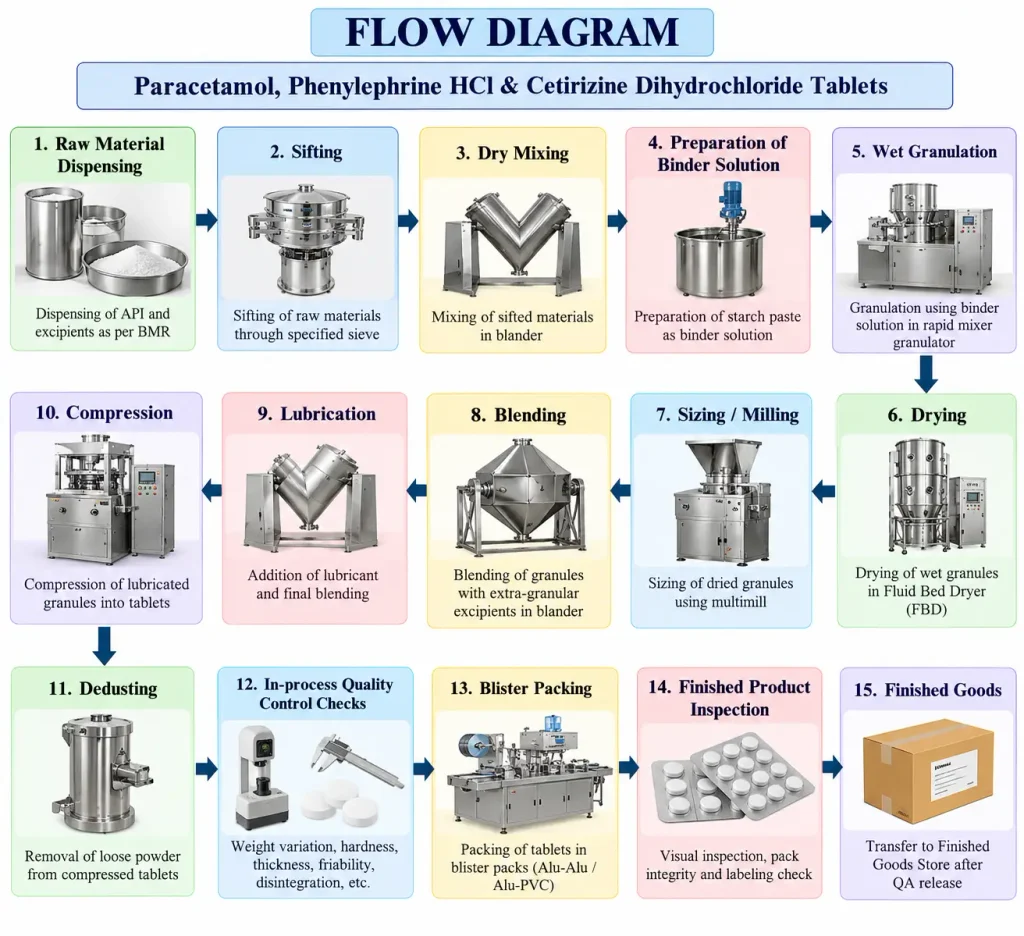
The lubricated granules are compressed into tablets using a rotary compression machine. In-process quality checks include tablet weight variation, hardness, thickness, friability, and disintegration. Finally, tablets undergo dedusting, blister packaging, visual inspection, and finished product quality testing. Following Quality Assurance approval, the finished products are transferred to the finished goods store.
3. Critical Process Parameters (CPP) and Critical Quality Attributes (CQA) of Paracetamol, Phenylephrine HCl & Cetirizine Dihydrochloride Tablets IP:
Critical Process Parameters (CPP) and Critical Quality Attributes (CQA) play an essential role in ensuring the consistent quality, safety, and efficacy of Paracetamol, Phenylephrine Hydrochloride, and Cetirizine Dihydrochloride Tablets IP.
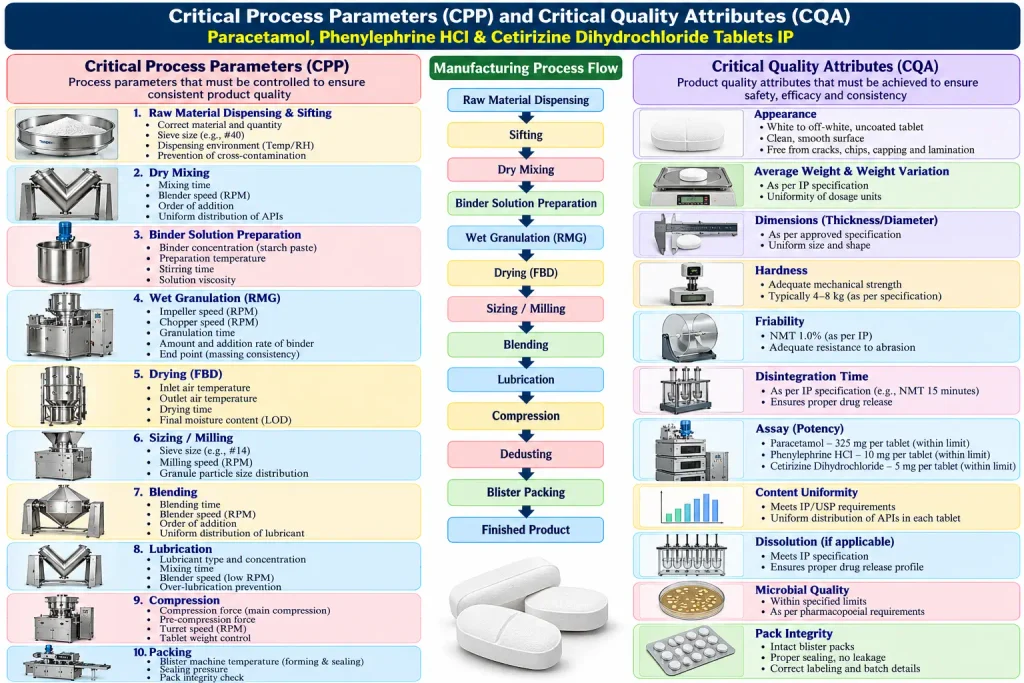
Critical Process Parameters (CPP) are manufacturing variables that require appropriate monitoring and control to maintain product quality. Important process parameters include sifting mesh size, dry mixing time, blender speed, binder preparation conditions, granulation time, impeller and chopper speed, drying temperature, and granule moisture content. During blending and lubrication, mixing duration and equipment speed are monitored to achieve uniform distribution of active ingredients and excipients. Compression parameters, including compression force, turret speed, and tablet weight, influence the physical characteristics of the finished tablets.
Critical Quality Attributes (CQA) represent the physical, chemical, and microbiological properties necessary to meet established product specifications. These include tablet appearance, average weight, weight variation, thickness, hardness, friability, disintegration, assay, content uniformity, dissolution, and microbial quality, as applicable. Packaging quality attributes include blister seal integrity, correct labeling, and protection against contamination and moisture. Effective monitoring of CPPs and verification of CQAs, based on documented risk assessments and approved specifications, support GMP compliance, batch-to-batch consistency, and reliable pharmaceutical product quality.