







1. Introduction to Paracetamol, Phenylephrine HCl & Cetirizine Tablets – Batch Packing Record (BPR):
The Batch Packing Record (BPR) for Paracetamol, Phenylephrine Hydrochloride & Cetirizine Tablets is an essential pharmaceutical documentation system designed to ensure that all packing activities are performed systematically in accordance with Good Manufacturing Practices (GMP), approved Standard Operating Procedures (SOPs), and established quality standards. Paracetamol, Phenylephrine Hydrochloride & Cetirizine Tablets are combination tablets containing three active pharmaceutical ingredients. Paracetamol acts as an analgesic and antipyretic, Phenylephrine Hydrochloride functions as a nasal decongestant, and Cetirizine Dihydrochloride is an antihistamine. This combination is intended to provide symptomatic relief from conditions associated with common colds and allergies.
Each uncoated tablet contains:
- Paracetamol IP – 325 mg
- Phenylephrine Hydrochloride IP – 10 mg
- Cetirizine Dihydrochloride IP – 5 mg
The specified packing configuration is 25 × 10 tablets in clear packaging, with instructions to store the product in a cool and dry place. The BPR provides comprehensive documentation covering packaging material dispensing, line clearance, overprinting verification, machine setup, blister or strip packing operations, in-process quality checks, carton and shipper packing, rejection analysis, material reconciliation, and final yield calculations. Critical packing parameters, including sealing temperature, forming temperature, machine speed, leak testing, environmental conditions, and packing quantities, are monitored and recorded to maintain product quality and packaging integrity. Additionally, the BPR establishes accountability through documented verification and approvals by Production and Quality Assurance personnel. Proper completion of the record ensures batch traceability, minimizes packaging errors, supports regulatory compliance, and provides documented evidence of controlled pharmaceutical packing operations. The BPR serves as an important reference for batch review, quality assurance, product release, regulatory inspections, and pharmaceutical audit readiness.
Skip to PDF content2. Flow Diagram – Packing Process of Paracetamol, Phenylephrine HCl & Cetirizine Tablets (BPR):
The Flow Diagram of Paracetamol, Phenylephrine Hydrochloride & Cetirizine Tablets illustrates the sequential operations involved in pharmaceutical tablet packing, ensuring product quality, packaging integrity, batch traceability, and compliance with Good Manufacturing Practices (GMP). The packing process begins with the dispensing and verification of packaging materials, including printed aluminium foil, PVC film, cartons, labels, and shippers. All materials are checked against approved specifications and documented in the Batch Packing Record (BPR). Following material verification, line clearance is performed by Production and Quality Assurance personnel to confirm that the packing area and equipment are clean and free from previous product materials.
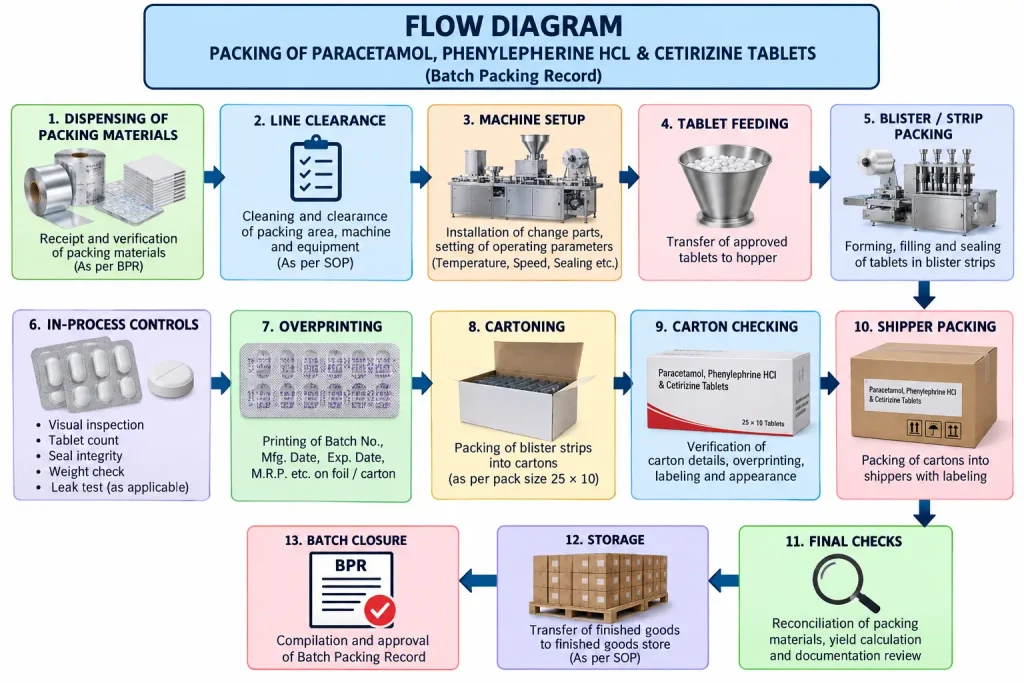
The packing equipment is then set up with appropriate operating parameters, including forming temperature, sealing temperature, machine speed, and sealing conditions. Approved tablets are transferred to the packing machine for blister or strip packaging. During packing, in-process quality control checks are conducted to monitor tablet count, sealing integrity, packaging appearance, and leakage. These checks help identify defective packs and maintain consistent packaging quality. The packed tablets undergo overprinting verification to ensure the accuracy of batch numbers, manufacturing dates, expiry dates, and other required labeling information. Subsequently, the blister or strip packs are placed into cartons according to the approved 25 × 10 packing configuration. Cartons are checked for correct labeling, appearance, and quantity before being packed into appropriately identified shippers. The final stages involve packing material reconciliation, rejection analysis, yield calculation, documentation review, and transfer of finished goods to the designated storage area. The completed BPR is reviewed and approved by authorized Production and Quality Assurance personnel to support batch traceability, regulatory compliance, and final product release.
Conclusion: The flow diagram provides a systematic representation of the tablet packing process, highlighting critical control points and documentation requirements necessary to ensure consistent packaging quality, minimize errors, and maintain pharmaceutical GMP compliance.
3. Critical Process Parameters (CPP) and Critical Quality Attributes (CQA) of Paracetamol, Phenylephrine HCl & Cetirizine Tablets (BPR):
The Critical Process Parameters (CPP) and Critical Quality Attributes (CQA) of Paracetamol, Phenylephrine Hydrochloride & Cetirizine Tablets play an essential role in ensuring packaging quality, product safety, and compliance with Good Manufacturing Practices (GMP). Critical Process Parameters include packaging material specifications, machine speed, forming temperature, sealing temperature, tablet feeding, overprinting accuracy, and carton-filling operations. Proper monitoring and control of these parameters help prevent packaging defects, product mix-ups, and quality deviations. During blister or strip packing, sealing conditions, machine settings, and packaging material quality are monitored to maintain packaging integrity. In-process checks include leak testing, tablet count verification, visual inspection, and confirmation of printed information.
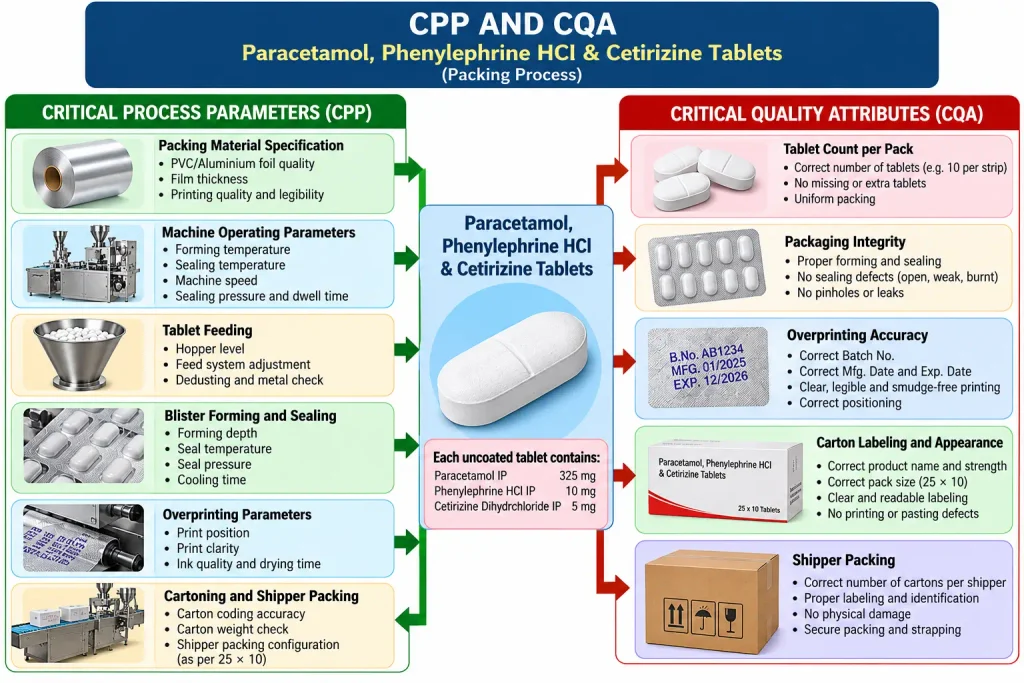
Critical Quality Attributes include correct tablet quantity, blister integrity, accurate batch details, legible printing, appropriate carton labeling, and secure shipper packing. These attributes help ensure that finished products meet established packaging specifications and quality requirements.The Batch Packing Record (BPR) documents line clearance, equipment setup, in-process inspections, rejection analysis, material reconciliation, and final yield verification. Effective CPP monitoring and CQA verification minimize packaging errors, maintain product traceability, and support consistent pharmaceutical quality.
Conclusion: Systematic control of packaging parameters and verification of quality attributes ensure GMP compliance, reliable packaging operations, and documented batch quality assurance.